


By Lebone Rodah Mosima and Simon Nare
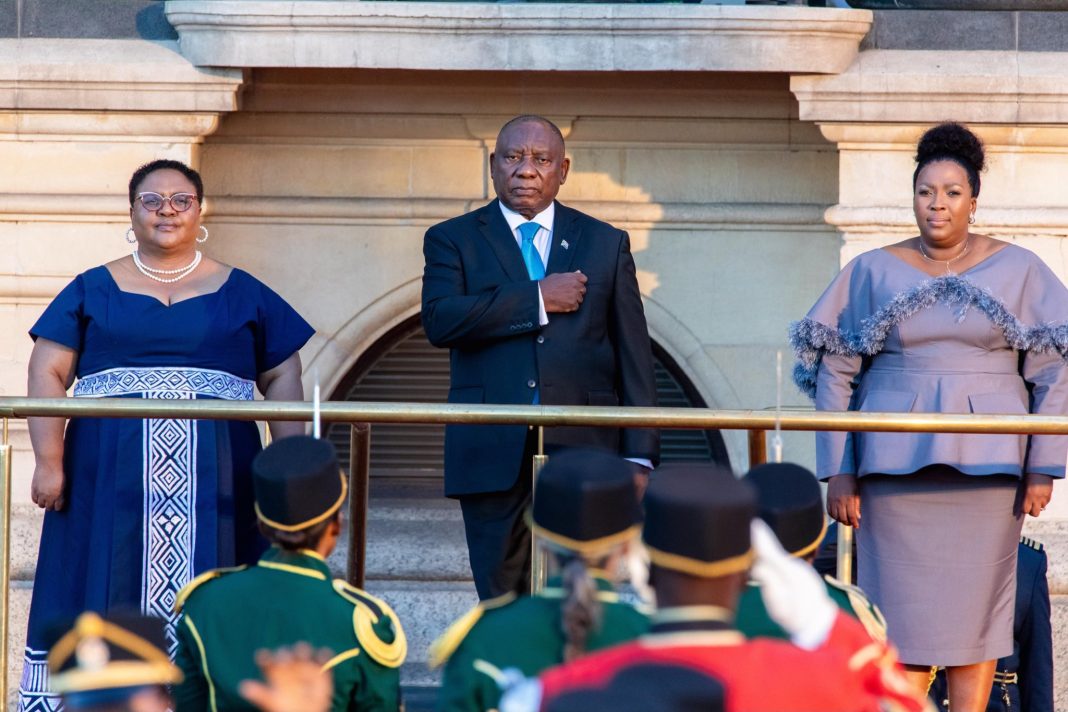
Leading South African political parties have delivered mixed reactions to President Cyril Ramaphosa’s 2026 State of the Nation Address (SONA), with some welcoming aspects of the speech while others dismissed it as recycled rhetoric lacking urgency and accountability.
Several parties said they would reserve final judgment until the national Budget is tabled to determine whether the President’s commitments are adequately funded.
The EFF said the address confirmed what it described as “serious rot” in the justice system.
Party leader Julius Malema cited testimony by Ekurhuleni Metro Police Department acting chief Julius Mkhwanazi at the Madlanga Commission, saying it exposed deep dysfunction, including the need for State Security to vet SAPS and metro police structures.
Malema said the commission had revealed that parts of local government were being run “like a spaza shop”. The EFF further criticised Ramaphosa for failing to decisively break from past SONA promises, noting that commitments made in 2025 — including lifting growth above 3% — had not materialised, with growth remaining weak at around 1.5%.
“In 2026, that target has quietly disappeared,” the party said, accusing the President of presenting macroeconomic indicators as proof of recovery while communities continue to face water outages, collapsing municipalities and violent crime.
The EFF also criticised the deployment of the South African National Defence Force (SANDF) to gang-affected provinces, saying it reflected a failure to implement promised police reforms, intelligence coordination and broader criminal justice restructuring.
uMkhonto we Sizwe Party leader Mzwanele Manyi described the address as a waste of time and money, arguing that the President should have delivered it virtually from the Union Buildings, as he did during Covid-19.
“There was no point in coming here to hear more of the same,” Manyi said, criticising unmet growth and job creation promises, rising unemployment and what he called a “corruption-inspired, man-made water crisis.”
The Build One South Africa (BOSA), led in Parliament by Mmusi Maimane, said the speech lacked bold reform and measurable targets.
While acknowledging progress such as South Africa’s exit from grey-listing, Maimane said projected growth of 1.2% was insufficient to create jobs.
“Our economy is incapable of creating the requisite jobs at its current pace,” he said, linking slow growth to crime and insecurity.
BOSA later described the address as “weak and empty”, criticising the lack of urgency on policing, infrastructure collapse and unemployment, and calling for decisive crime-fighting reforms rather than military deployments.
The party also questioned delays in establishing the National Water Infrastructure Agency and criticised repeated infrastructure proposals, including the mooted high-speed rail project, saying they were announced repeatedly without delivery.
Rise Mzansi leader Songezo Zibi said the crises facing South Africa were well known and that what was needed was urgency and accountability.
“We have heard big promises made in the past, yet when the Budget is delivered weeks later, there is rarely an indication that government has aligned its funding with its commitments,” he said.
The Democratic Alliance (DA) welcomed aspects of the address, particularly economic reforms under the Government of National Unity (GNU).
Party leader John Steenhuisen said economic recovery was underway, inflation had moderated and debt appeared to be stabilising, but warned that reform must accelerate.
“We will hold the President to his promises, because South Africa cannot afford a future where corruption weakens the police and the rule of law hangs by a thread,” Steenhuisen said.
The DA reiterated calls to replace BEE with what it termed a more inclusive empowerment model, to unbundle and concession ports and rail, professionalise the public service, outlaw cadre deployment and strengthen accountability in public finances.
It also supported energy reforms, particularly private investment in transmission, but said Eskom should not retain a monopoly and that assets must be transferred to the National Transmission Company of South Africa.
Steenhuisen further welcomed the declaration of a State of Disaster to combat Foot-and-Mouth Disease, saying it would accelerate support to farmers and veterinary services.
The United Democratic Movement (UDM) leader Bantu Holomisa supported the SANDF deployment, saying it signalled that the GNU was prioritising national security.
Holomisa said the Defence Department was ready to roll out soldiers once Parliament gave the green light.
The African Christian Democratic Party (ACDP), led by Kenneth Meshoe, welcomed Ramaphosa’s commitment to act on the Madlanga Commission findings but argued that public trust in the justice system would not be restored while the Phala Phala controversy remained unresolved.
“It will not be restored as long as the Phala Phala shadow is hanging over him,” Meshoe said.
Overall, reactions to the 2026 SONA reflected deep divisions: while some parties acknowledged incremental economic progress and reform signals, critics across the political spectrum said the address oscillated between celebrating recovery and declaring crises — without clear timelines, enforceable targets or evidence that funding would match ambition.
INSIDE POLITICS