


By Johnathan Paoli
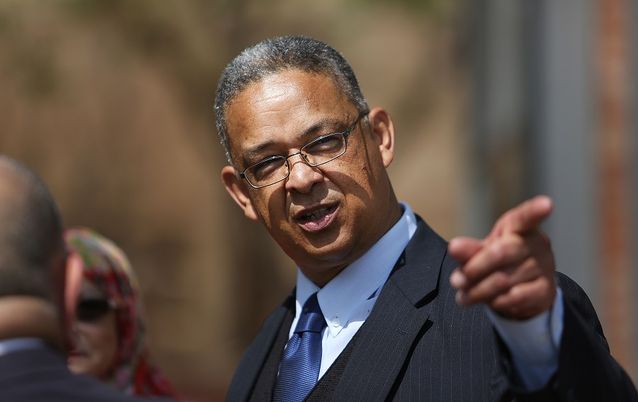
The ad hoc parliamentary committee probing allegations of corruption and political interference in the criminal justice system resumed its work after the break with Advocate Bongiwe Mkhize formally taking over as evidence leader, questioning former Independent Police Investigative Directorate (IPID) head Robert McBride on the investigation into former acting National Police Commissioner Lt-Gen Khomotso Phahlane.

Committee chairperson Soviet Lekganyane noted that it was Mkhize’s first time leading evidence before the committee and instructed members that she would be applauded once she concluded her session.
ALSO READ: Cartels in the newsroom, Khumalo says some journalists are part of cartel communication department
Mkhize, who replaced Advocate Lerato Zikalala as evidence leader, began by asking McBride about the so-called “Phahlane task team”.
McBride testified that when he returned to IPID following his suspension in 2016, two senior investigators had been dismissed, forcing the unit to “scrape an investigation together”.
One of the matters requiring urgent attention was the Phahlane investigation. McBride said he initially tasked Mandla Mahlangu to handle the matter, later joined by two additional investigators.
At Mahlangu’s request, Cedrick Nkabinde was later added, with the grouping becoming colloquially known as a “task team”.
McBride explained that the task team designation arose because the investigation dealt with alleged systemic corruption spanning multiple provinces.
ALSO READ: Eleven School children killed in scholar transport crash in Vaal
He likened it to previous IPID task teams, including one established to deal with the Marikana matter before his tenure.
He confirmed that it was standard practice to seconde investigators from provincial offices when head office lacked capacity, noting that complaints against Phahlane originated from Gauteng, the Eastern Cape and nationally.
In outlining the substance of the investigation, McBride said the complaints included the procurement of defective forensic equipment, where paint brushes were allegedly purchased instead of specialist fingerprint brushes.
He said exhibits, including rhino horn and narcotics, were allegedly going missing from Phahlane’s forensic laboratory and ending up on the streets.
Complaints were lodged by a SAPS colonel, members of POPCRU and private investigator Paul O’Sullivan.
McBride further testified that IPID investigated allegations that Phahlane was living in an R8 million house he could not afford, had received money from a service provider, and used vehicles that were not declared in the official gift register.
He said IPID viewed the vehicles as linked to gratification, adding that they were allegedly sold at prices above market value.
He confirmed that Nkabinde activated the criminal investigation.
He told the committee that a search warrant was executed at Phahlane’s home in January 2017 and that one allegation concerned a service provider installing a surround sound system at the residence.
ALSO READ: WATCH: ActionSA Ekurhuleni mayoral candidate Xolani Khumalo hands himself to SAPS for assault charge
Although Phahlane later paid for the installation, McBride said this did not negate the initial alleged offence.
Phahlane later abandoned a court application to set aside the search warrant.
McBride said concerns later arose about Nkabinde’s integrity after he was earmarked for a post in the national commissioner’s office, an appointment that was halted by former commissioner Kehla Sitole.
He also testified that whistleblowers, including service providers and an estate manager, leaked information to O’Sullivan, explaining why O’Sullivan had detailed knowledge of the case.
He said the Forensic Data Analysts (FDA), a sole supplier of evidence management software, effectively held SAPS “hostage”.
Addressing O’Sullivan’s role, McBride described him as the “go-to person” for disgruntled SAPS officers with information, saying he often had good intelligence but also sought attention and credit.
He said O’Sullivan was not an IPID member but had resources and contacts.
McBride testified that during his suspension, investigations into Phahlane stalled or were prematurely closed, and that he only discovered on his return that an operative from Crime Intelligence had been tasked with probing the matter.
McBride acknowledged that O’Sullivan accompanied IPID investigators to Phahlane’s home to point out the scene, explaining that logistical constraints and racial dynamics influenced the decision.
ALSO READ: Inequality and unease are rising as elite Davos event opens with pro-business Trump set to attend
He said Phahlane later complained to Parliament about the visit, resulting in IPID investigators having to account to a suspect before MPs; a situation McBride described as unprecedented and improper.
He accused Crime Intelligence of manufacturing a narrative around a supposed security breach at Phahlane’s home and testified that a team led by Jan Mabula disrupted the investigation.
McBride said IPID successfully litigated against that interference. He further alleged serious abuses by the Mabula team, warning against the glorification of “tough” policing at the expense of constitutional rights.
On Cedrick Nkabinde, McBride repeatedly accused him of dishonesty, opportunism and misconduct, rejecting claims that he had suspended Nkabinde.
He pointed to documentary evidence showing Nkabinde was suspended by provincial authorities in KwaZulu-Natal.
McBride said Nkabinde resigned to avoid disciplinary proceedings and later turned against him after being removed from the task team.
McBride also criticised former Public Protector Busisiwe Mkhwebane, saying her investigation into IPID related to Nkabinde’s complaints was unlawful and later set aside by the courts for bias and procedural unfairness.
He argued the report was an attempt to derail disciplinary action.
The session ended with limited clarity-seeking questions from MPs amid procedural disputes.
ALSO READ: South Africa declares a national disaster over flooding and severe weather
McBride denied harbouring hatred toward any witness, dismissed claims that he circulated footage of an attack on Phahlane, and named Correctional Services Minister Pieter Groenewald as a GNU member who had previously threatened him.
He reiterated that decisions to prosecute Phahlane were not his to make.
Lekganyane adjourned the meeting, confirming that proceedings with McBride would continue on Wednesday at 11:00.
INSIDE POLITICS