


By Johnathan Paoli
The Parliamentary Portfolio Committee on Police has expressed its deep alarm over recent revelations implicating senior police officials and politicians in systemic corruption and criminal syndicate activity.
Delivering his address during a joint sitting of the Security Cluster in Parliament, committee chairperson Ian Cameron said the allegations signaled a crisis not just within the South African Police Service (SAPS), but across the broader criminal justice system.
“The allegations are not only damning to a few individuals but allege a systematic weakening of the police to enable corruption and undermining of the rule of law. The revelations paint a picture of a weak system, corruption riddled institution, and a system that can be manipulated at the whims of a connected few,” he said.
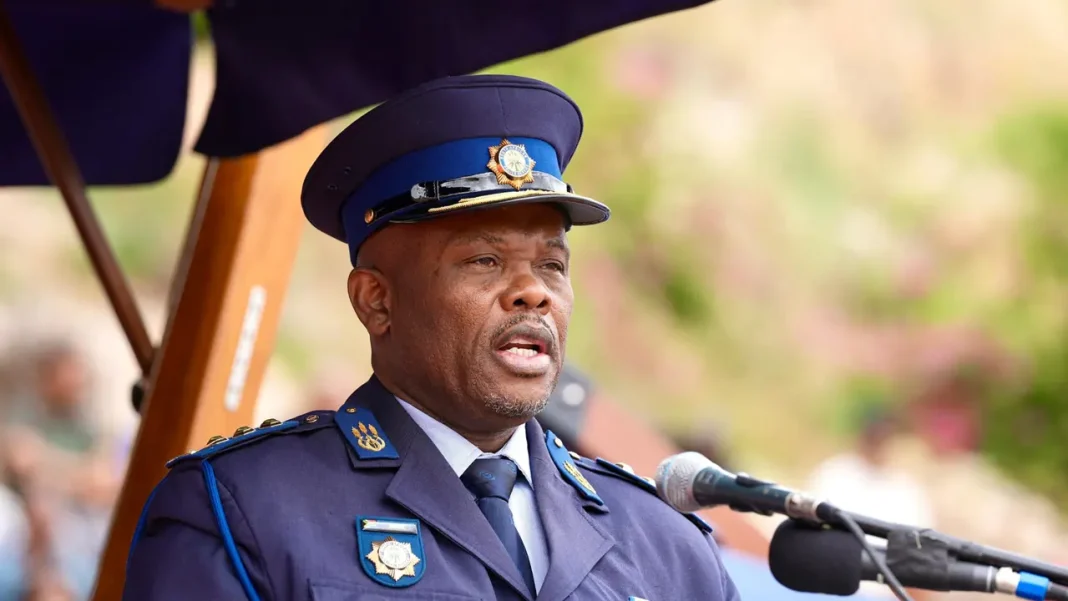
Cameron’s remarks followed explosive claims by KwaZulu-Natal Police Commissioner Lieutenant General Nhlanhla Mkhwanazi, who accused Police Minister Senzo Mchunu and Deputy Commissioner Shadrack Sibiya of obstructing high-profile investigations into political killings.
The chairperson warned that the country could not continue with criminals masquerading as police officers, urging President Cyril Ramaphosa to prioritise the establishment of a commission of inquiry to investigate the allegations.
Cameron criticised the lack of action on repeated committee calls for a comprehensive skills and lifestyle audit of senior SAPS and Crime Intelligence personnel.
He proposed several immediate interventions, including the appointment of a commission of inquiry with a clear timeline to probe the allegations, the freezing of dockets referenced by Mkhwanazi for independent review, independent lifestyle audits of all SAPS officers from brigadier level upward and a full vetting exercise for senior SAPS officials.
In addition, he called for a reconfiguration of the Crime Intelligence division; a national skills audit of all SAPS senior managers and additional resourcing for the Independent Police Investigative Directorate.
Cameron said the situation was exacerbated by SAPS’ failure to deal decisively with officers involved in misconduct.
Referring to 2023 figures provided by former police minister Bheki Cele, Cameron noted that of the 5000 SAPS officers arrested since 2019, 4000 were still in the employ of the police service.
“Words without action are hollow and erode the little trust that remains between the police and South Africans,” he stated.
He addressed the gap between arrests and convictions, citing Operation Shanela, which has netted over one million arrests since May 2023.
Cameron warned that unless SAPS strengthened its detective services and forensic laboratories, the high arrest numbers will remain largely symbolic.
He noted that one detective currently handled over 400 dockets, which clearly undermined justice and feeds public frustration.
Cameron criticised the omission of gender-based violence and femicide statistics from SAPS’ recent crime reports.
“This omission gives credence to the criticism of the credibility of the crime stats and directly undermines the fight against GBV,” he said, adding that the committee was investigating the reasons for this data exclusion and may summon officials to testify under oath.
While he welcomed the recent hiring of 4000 detectives and 300 crime intelligence officers, Cameron said more must be done.
He called for immediate attention to the 10111 emergency centres, which he described as “lifeblood” connectors between police and communities.
The committee will conduct oversight visits to assess service quality at these centres.
Cameron reiterated the need to restore SAPS credibility and trust.
“The SAPS must regain trust in communities as a way of ensuring effective interventions to combat crime,” he said.
Meanwhile, several political and civil society voices have rallied behind Mkhwanazi, praising his courage and calling for immediate action.
Johannesburg councillor Kabelo Gwamanda, speaking in his personal capacity, backed Mkhwanazi’s integrity and raised longstanding concerns about the appointment of Sibiya.
Gwamanda cited ongoing investigations into Sibiya’s prior role in the City’s Group Forensic and Investigation Services (GFIS) and questioned how someone under criminal scrutiny could be elevated to such a sensitive national role.
He detailed his own alleged political persecution, including a smear campaign and arrest without charge in 2024, blaming rogue law enforcement elements aligned with political factions.
Gwamanda demanded an impartial presidential investigation and warned against the politicisation of state security.
“South Africa deserves a justice system where accountability is not a privilege for the powerful but a right for all,” he stated.
The Mayibuye Consultation Process (MCP) joined the calls, demanding Mchunu’s immediate dismissal, reinstatement of the disbanded Political Killings Task Team, and a full parliamentary and judicial commission of inquiry.
The MCP said Mkhwanazi’s revelations “paint a deeply disturbing picture of a compromised national security apparatus” and urged protection for whistleblowers.
As the fallout continues, all eyes remain on the president’s next move and whether Parliament will heed the Portfolio Committee’s call to act decisively.
INSIDE POLITICS