


By Akani Nkuna
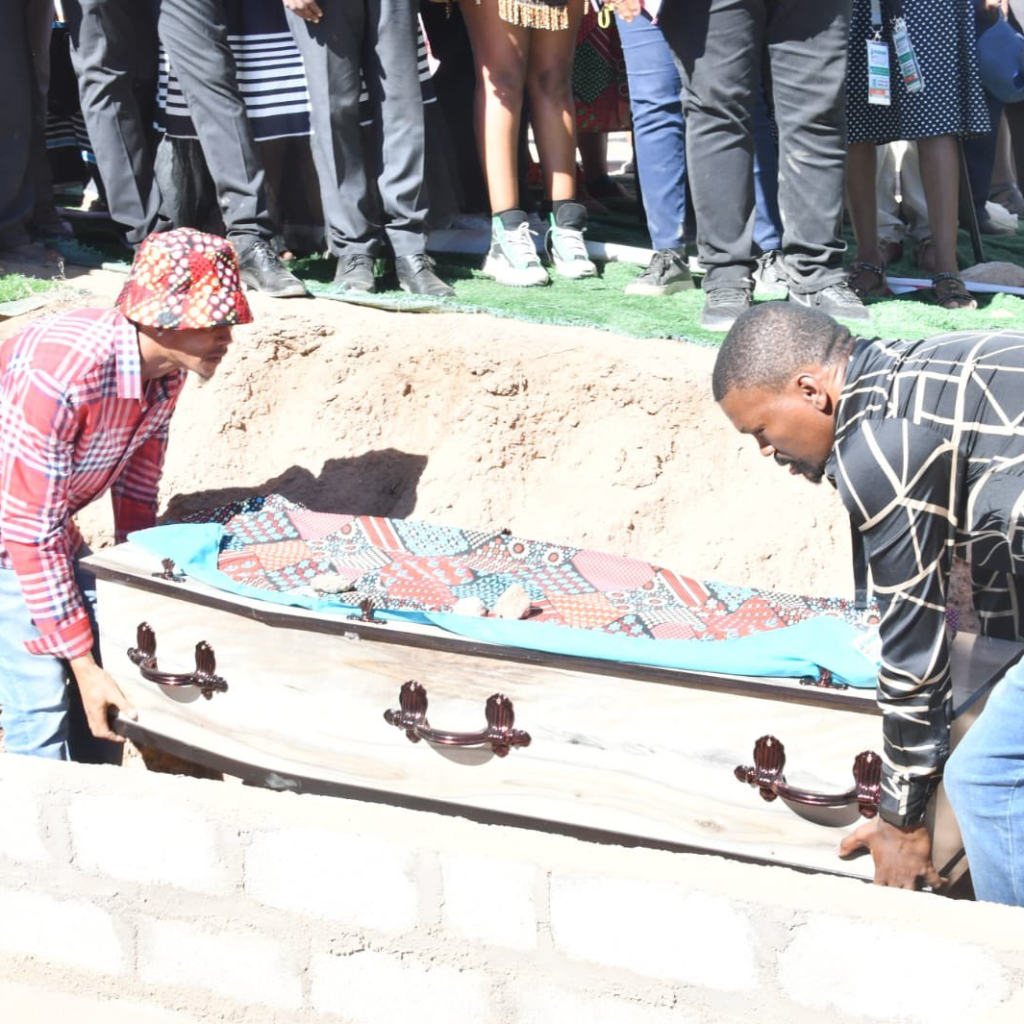
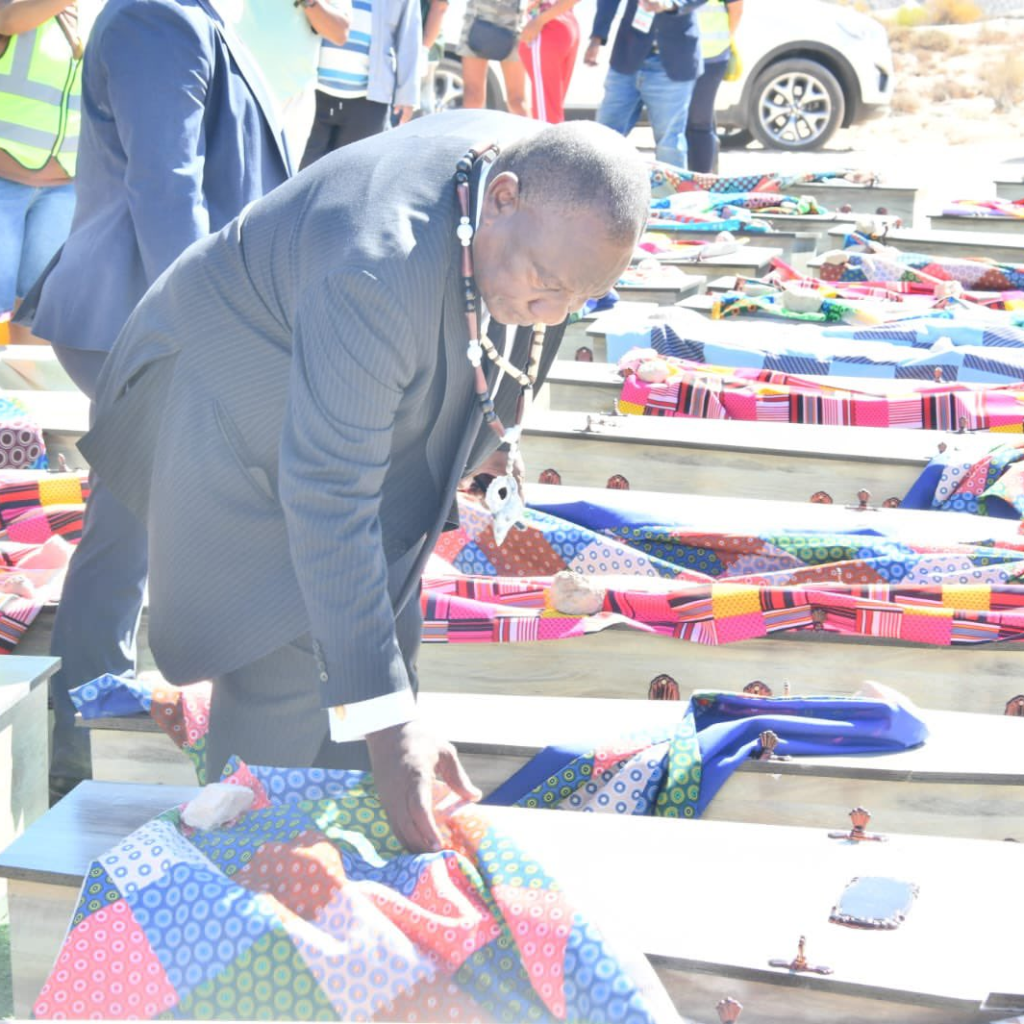
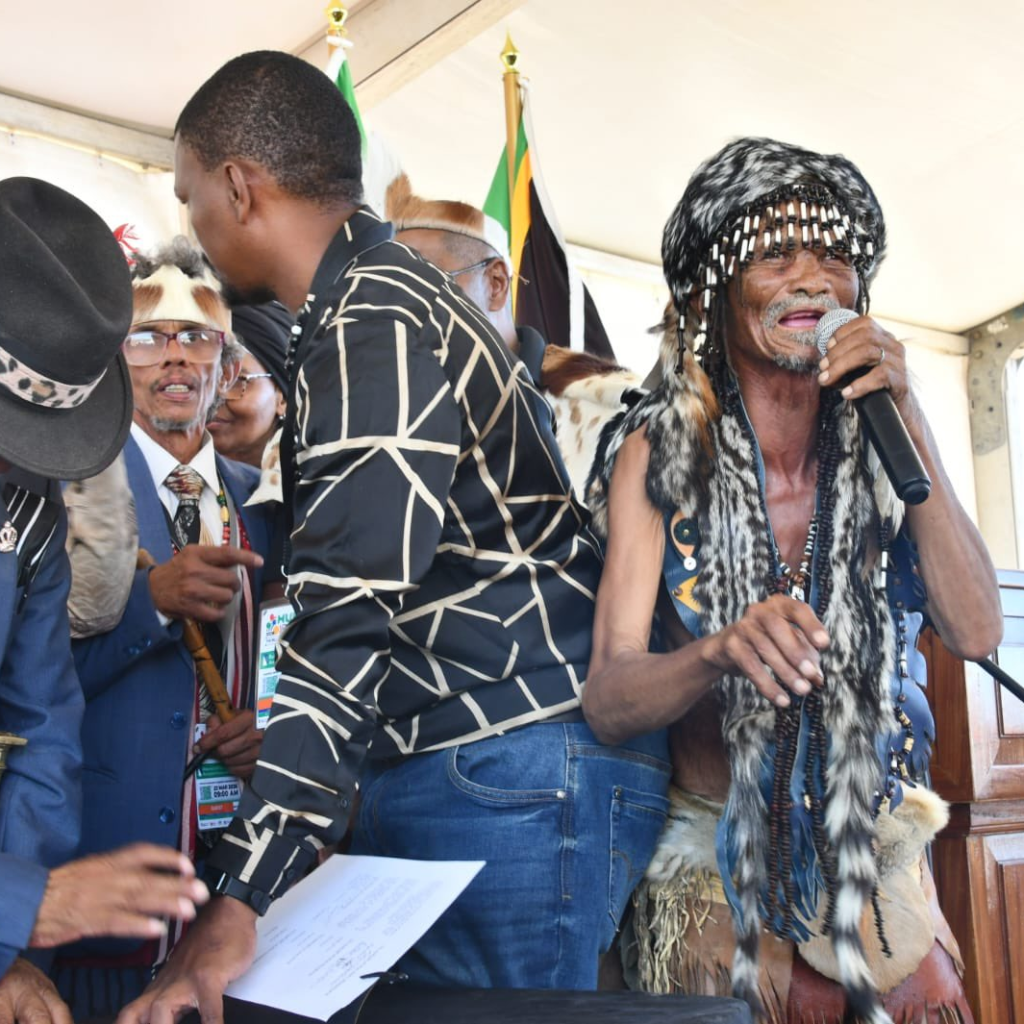
The ancestral remains of 63 Khoi and San peoples were finally reburied at the Kinderle Monument in Steinkopf, Northern Cape, during a sombre yet dignified ceremony attended by dozens of people from around the humid and arid Namaqualand region.
The remains of the Khoi and San people had been housed at the Hunterian Museum and were originally removed between 1868 and 1924 without the consent of the affected communities for race-based scientific research.
They were finally repatriated last year from the University of Glasgow in Scotland, where they had been kept at the Hunterian Museum.
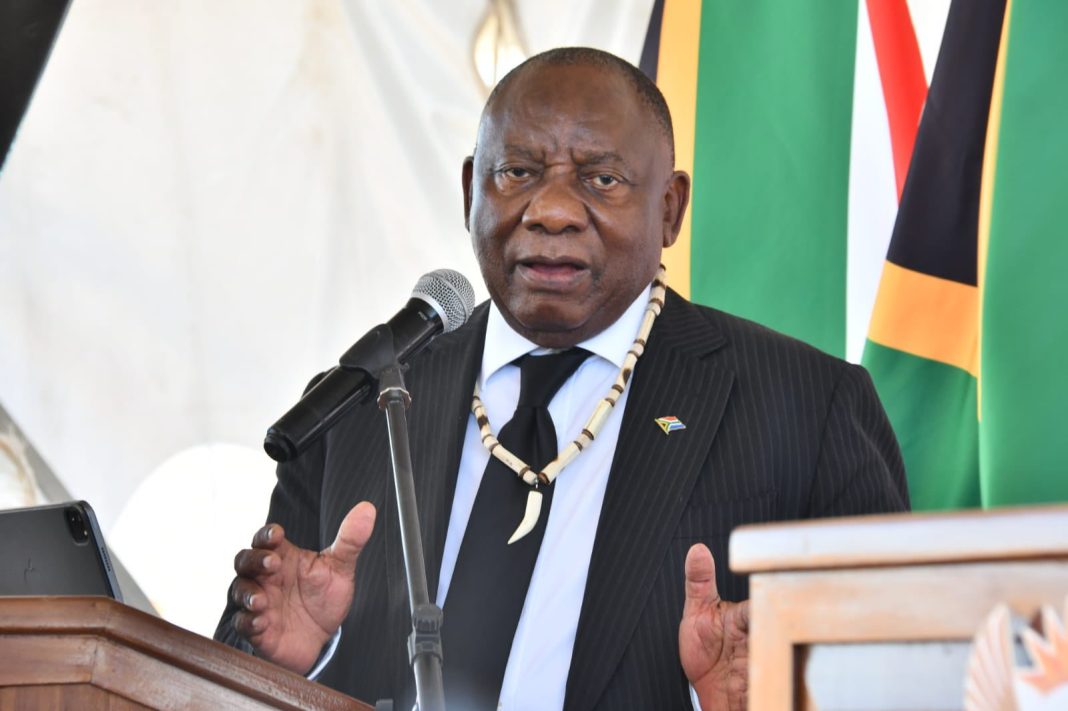
Delivering a keynote address at the solemn reburial ceremony held just outside Steinkopf in the Northern Cape, President Cyril Ramaphosa said the Nama, Khoi, Korana, Griqua and San people bore the brunt of European conquest of southern Africa.
He said that they were dispossessed of their land, and unimaginable violence was unleashed upon them.
“It is an honour to be here today as we lay our ancestors to rest,” said Ramaphosa.
“A dignified burial is but the least we can do as the democratic government to honour these, our countrymen and countrywomen, who were victims of a terrible past.”
Ramaphosa said as their remains are finally returned to the land from which they were taken, government will restore the dignity that was so cruelly denied to them in life and even in death.
“Repatriation is about healing the wounds of the past of colonialism and apartheid. It is about acknowledging that the past, no matter how painful, must be addressed with honesty and courage. To complete the healing process, there needs to be not only repatriation but there needs to be redress,” Ramaphosa said.
“So that there can be full closure on the pain of our people—the pain that they suffered. We do not only need an apology, we do not only need the repatriation, we also need redress.”
Ramaphosa urged the Scottish delegates present at the reburial ceremony to establish a policy framework through which redress can be undertaken, saying that he will lobby all key stakeholders in South Africa to apply pressure on their government to ensure that this task materialises.
“We call upon institutions across the world, particularly in Europe, to join us in this journey by returning what does not belong to them. What does not belong to them must be returned,” Ramaphosa added.
The reburial of the Khoi and San people is the culmination of a long journey and a collaborative partnership between government and various stakeholders.
They include the Iziko Museum, formerly the South African Museum, the South African Heritage Resources Agency (SAHRA), and the Hunterian Museum at the University of Glasgow in Scotland.
The repatriation and reburial of the Khoi and San ancestors reflect government’s commitment to restoring dignity to the country’s First Peoples and addressing historical injustices, according to Minister of Sport, Arts and Culture, Gayton McKenzie.
“The return and reburial of these ancestors is not only an act of remembrance but an act of justice. For far too long, the remains of our people were removed, studied and displayed without dignity or consent. As a democratic government, we are committed to ensuring that our ancestors return home and are laid to rest with the respect they deserve,” said McKenzie.
Chief Executive Officer of the South African Heritage Resources Agency, Advocate Lungile Malgas, said the reburial ceremony forms part of government’s broader country-to-country repatriation programme for human remains and heritage objects, which seeks to restore dignity to those whose remains were taken during the colonial and apartheid eras.
“It is a profound honour to witness the repatriation process of our ancestors’ mortal remains come full circle through this historic reinterment,” said Malgas.
“The reburial of ancestral remains is a moral and spiritual act that restores dignity to those who were unethically stripped of their identities and cultural practices and acknowledges the past injustices that scarred their cultural histories and heritage.”
Chairperson of the Iziko Council, Marvin Mdhluli, said the return of the ancestors represents a meaningful step toward acknowledging and redressing the historical injustices inflicted on Khoi and San communities.
“This long journey has unfolded through multiple phases of consultation and engagement, with its roots tracing back to the 1990s through the determined advocacy of Khoi and San communities and their leaders. Our shared objective remains the restoration of dignity to our ancestors, who were subjected to profound violations through racial science and unethical research practices, both locally and abroad,” said Mdhluli.
“As Council, we reaffirm Iziko Museums of South Africa’s unwavering commitment to upholding the principles of human dignity, social justice, and the recognition of our shared heritage.”
INSIDE POLITICS