


By Johnathan Paoli
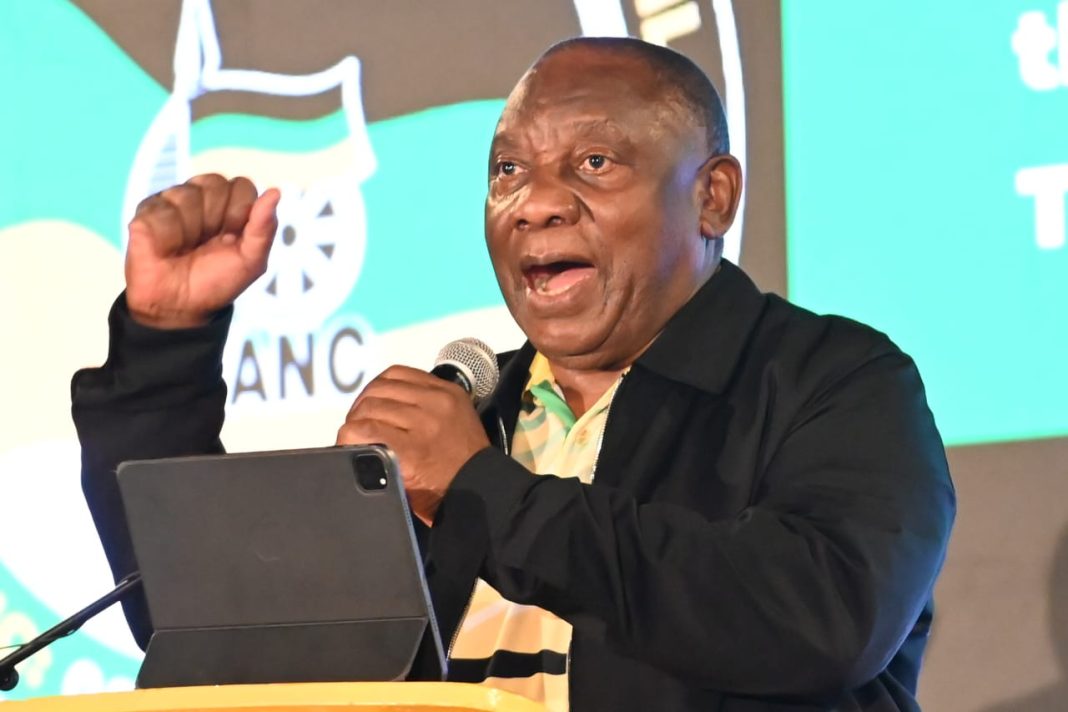
The ANC has drawn a line in the sand as tensions with the South African Communist Party (SACP) escalate, with ANC President Cyril Ramaphosa announcing that the National General Council (NGC) has resolved that SACP members serving on the ANC’s election committees and structures should recuse themselves.
The move follows the SACP’s decision to contest future elections independently.
Ramaphosa made the announcement on Thursday during his closing address at the Birchwood Hotel in Ekurhuleni, where the NGC wrapped up four days of intense political reflection, organisational review, and future planning.
“As we continue to persuade each other, we will need to request SACP members who have been participating in our joint election structures to recuse themselves,” Ramaphosa told delegates.
He added that several SACP members had already stepped aside voluntarily due to potential conflicts of interest.
“A number of them feel they will be conflicted, and they are recusing themselves until we solve this problem. And I have confidence that we will solve this,” he said.
His remarks followed the adoption of the NGC declaration, presented by ANC secretary-general Fikile Mbalula and approved without objection, with Gauteng’s Panyaza Lesufi and delegates from Limpopo moving its adoption.
Ramaphosa said the directive for SACP members to recuse themselves stemmed from deepening concern over the state and cohesion of the tripartite alliance — comprising the ANC, SACP and Cosatu.
He noted that the NGC had expressed “deep concern about the negative impact of the current state of the alliance on the ability of the progressive forces to execute a revolutionary agenda to defend and advance the National Democratic Revolution (NDR).”
At the centre of the friction is the SACP’s decision to contest the 2026 local government elections independently, fielding and financing its own candidates while maintaining its place in the alliance.
The NGC, Ramaphosa said, supported the NEC’s assessment that this stance presents both strategic and tactical risks to alliance unity. The SACP, however, insists that independent electoral participation is compatible with continued alliance membership.
SACP general secretary Solly Mapaila has been a vocal critic of the ANC-led Government of National Unity (GNU), arguing that the inclusion of the Democratic Alliance does not serve the interests of Black people and workers.
These tensions were evident throughout the NGC, including in the remarks of ANC Youth League president Collen Malatji, who said: “If you are contesting us, you cannot be with us. You cannot sit and strategise with us.”
ANC chairperson Gwede Mantashe — who continues to hold dual membership — attempted to de-escalate the situation earlier in the week, stressing that the ANC had not banned dual membership.
He added that individuals would make their own choices and confirmed that he intends to vote for the ANC.
The recusal matter formed part of a broader package of organisational renewal directives adopted by the NGC, outlined extensively in Mbalula’s closing and welcoming addresses.
He framed the gathering as a pivotal moment in the ANC’s “intensified renewal mission,” convened under the theme: Renewal to Make the ANC a More Effective Instrument of the People.
Mbalula said the NGC met at a historic inflection point — 70 years after the adoption of the Freedom Charter and approaching the 30th anniversary of the Constitution — while confronting what he described as an “existential crisis” within the movement.
While acknowledging democratic gains over the past three decades, including expanded basic services, strengthened labour rights and advances in women’s empowerment, he warned that poverty, unemployment, inequality and organisational decay continue to threaten both the ANC’s credibility and the broader national project.
The NGC reaffirmed the relevance of the NDR and adopted a Renewal Charter to 2032, centred on strict organisational performance standards and a reconfiguration of the alliance.
Delegates called for rebuilding state capacity, driving reindustrialisation, launching large-scale employment programmes, developing climate-smart infrastructure and strengthening local government.
They stressed that the 2026 local government elections would require the deployment of the ANC’s most capable cadres.
Mbalula also said the ANC must lead a year-long programme ahead of the Constitution’s 30th anniversary to defend democratic values amid rising attacks on constitutionalism, disinformation and social fragmentation.
The NEC was directed to translate the NGC’s recommendations into a binding renewal action plan for all ANC deployees and structures.
Ramaphosa concluded by saying that, despite the tensions, the movement had emerged “re-energised and determined” to restore unity and rebuild credibility.
INSIDE POLITICS