


By Simon Nare
President Cyril Ramaphosa has read the riot act to ANC councillors, warning them to shape up and deliver services or risk the party’s demise after the 2026 Local Government Elections.
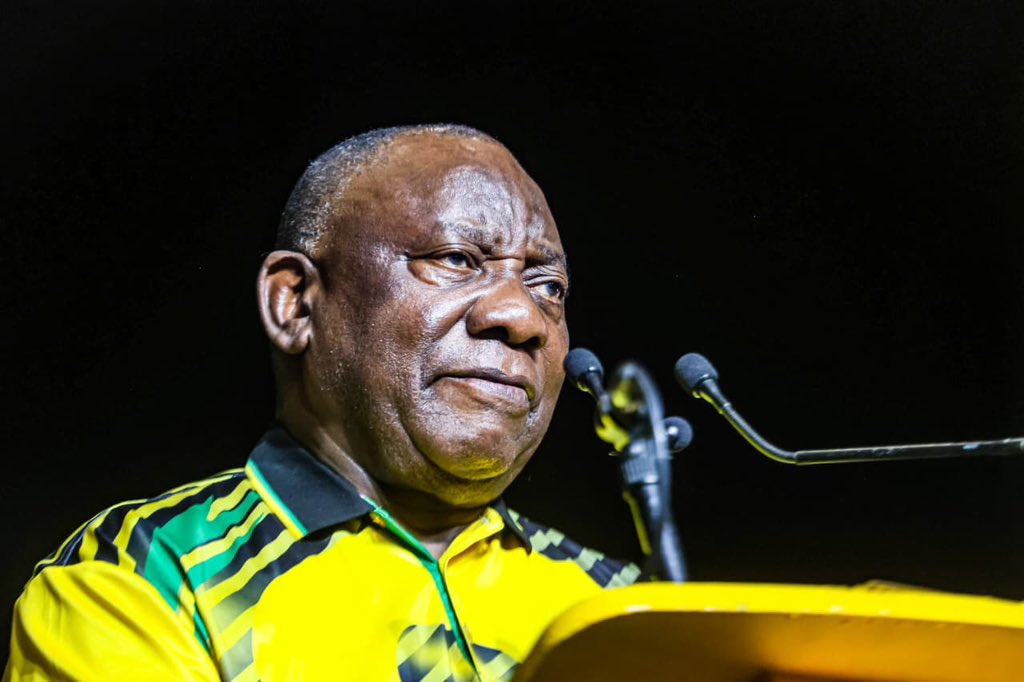
Addressing 4,800 councillors from across the country at an unprecedented roll call meeting at the Gold Rush Dome, FNB Stadium, in Johannesburg, Ramaphosa said councillors were the party’s foot soldiers who must win back the trust of communities on the ground.
The roll call formed part of preparations for the ANC’s upcoming local government election campaign, as the liberation movement faces its toughest test yet following its dismal showing in the 2024 national elections, where it lost its parliamentary majority and was forced into a Government of National Unity (GNU).
Ramaphosa warned councillors that restoring service delivery was key to winning back public support, urging ward representatives to be proactive in addressing residents’ concerns.
He said councillors should be the first on the scene in times of crisis—whether responding to victims of rape, sewage spilling onto the streets, or the maintenance of roads and potholes.
The president also condemned corruption in municipalities, saying it pained him that the auditor-general’s reports repeatedly found ANC-run councils at the centre of poor governance and financial mismanagement.
“You are the people comrades, gathered here who have a responsibility, the power and the authority to fundamentally transform our society. The transformation of our society relies on you, relies on what you do where our people live,” he said.
“And today we have got the full cohort that governs our country, at national level, at provincial level, at local level as well. And that cohort belongs to the ANC and no other party.”
Ramaphosa said as councillors, they had the privilege to change the country’s cause for development and the better future of the nation that the people yearned for was in their hands.
He added that there was a tendency that when leaders gather to talk, it was always about the dysfunctionality and corruption in local government and rarely better and good things are spoken of.
The great potential of how the local government can change the life of the people was hardly spoken of, adding that there were several positives and commendable aspects available across the country.
Often, said the president, councillors were dismissed as not knowledgeable, prone to mistakes but there was a growing good number of councillors who continued to improve themselves academically and technical qualifications.
“Some of you I know for a fact are studying quietly and privately obtaining your degrees and obtaining your masters degrees, and some are also doing their PhD degrees. I know that for a fact because once you are a councillor that councillorhood stays in you, that spirit never leaves you,” he said.
The president gave the councillors marching orders to go and interact with members of their communities so they can know their problems and their needs which would help the municipalities to deliver services.
He called for co-operations between municipalities and singled out the eThekwini municipality in KwaZulu-Natal, which he said has turned the corner with the introduction and intervention of the Presidential eThekwini Working Group.
He urged other municipalities to approach that municipality to take a leaf from them and share the knowledge.
He added that several initiatives introduced by municipalities have been overlooked and it was imperative to learn from each other.
Ramaphosa called on the councillors to take heed of the Action Plan which was read out to them by ANC Secretary General Fikile Mbalula that sets out to transform local government.
“Today we are focused on seizing the opportunities of transformation that exists in our cities, in our towns, in our villages and in our rural areas,” said Mbalula.
“We have agreed on the action that we must take as read out by SG (Mbalula) in the programm of action. We must take those actions to improve people’s lives and to realise the transformative potential of the local government where we are deployed.”
“We have agreed on the Action Plan for local government, built around six pillars as outlined by the Secretary-General, Fikile Mbalula,” Ramaphosa said.
He stressed that service delivery stood at the top of those pillars, adding that it was unacceptable that basic issues such as water shortages and leaks remained unresolved.
“Your marching orders today is that when there is a water leak, when there is sewage on the street, you must be the first to know and you must do something about it within 48 hours.”
“Because comrades it’s very simple, if there is such a leak in your house where you live, if there is ever going to be sewerage leaking into your yard and into your house as a councillor, you will make sure that you attend to it,” he said.
INSIDE POLITICS