


By Thebe Mabanga
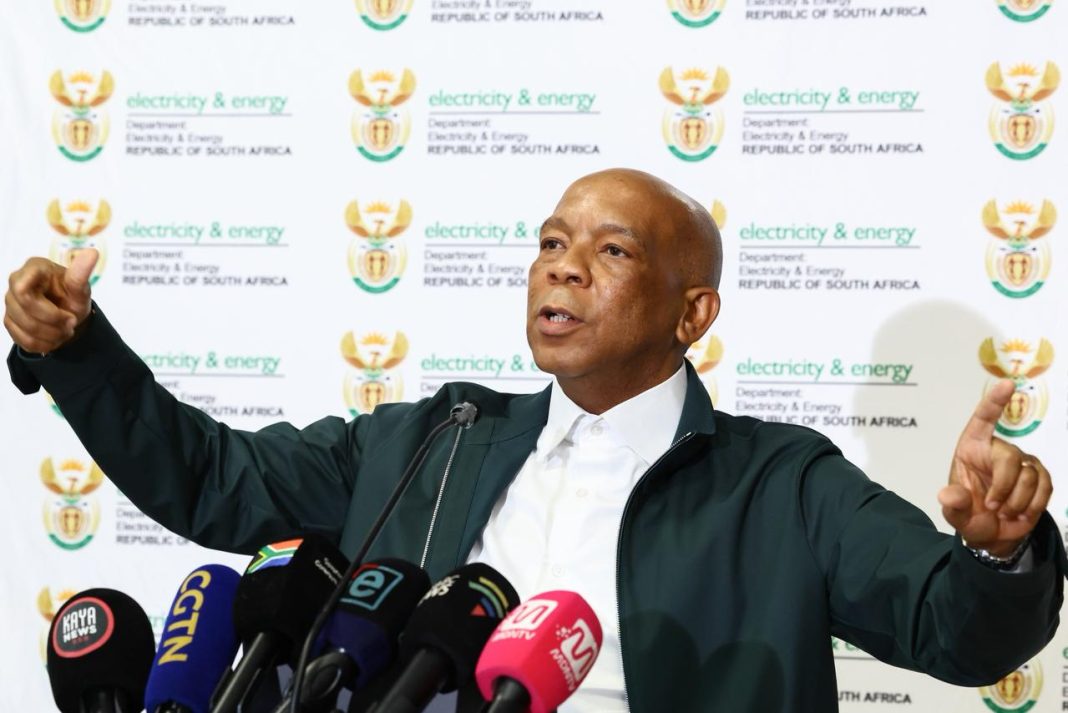
Electricity and Energy Minister Kgosientsho Ramokgopa has kick-started private sector participation in South Africa’s electricity transmission build programme by announcing seven prequalified bidders under the Independent Transmission Projects Procurement Programme (ITP).
At the same briefing, Ramokgopa announced R16 billion in renewable energy investments and confirmed ongoing negotiations to reopen two ferrochrome smelters operated by Glencore and Samancor in a bid to prevent job losses.
“This stage of the ITP Procurement Programme marks a defining milestone in government’s strategic drive to expand, modernise and strengthen South Africa’s transmission network through diversified delivery mechanisms and sustained private sector participation, in support of long-term economic growth, industrial development and national energy security,” Ramokgopa said.
He said additional generation capacity being procured between now and 2030, and beyond, is aimed at ensuring the country does not return to loadshedding, as occurred in the early 2000s when warnings of supply shortfalls went unheeded, resulting in rolling blackouts from 2008 onwards.
The seven preferred bidders will deliver more than 1 000 km of transmission lines alongside the National Transmission Company of South Africa (NTCSA), an Eskom subsidiary currently constructing just under 500 km of lines this year.
Ramokgopa said government envisages that, over time, the NTCSA will compete for transmission projects beyond South Africa’s borders, similar to state-owned entities from countries such as India and Brazil.
All the successful bidders have foreign technical partners, as South Africa currently lacks private sector transmission construction capacity, a space historically reserved for Eskom.
Transmission remains classified as a “natural monopoly”, with the state retaining ownership of assets to ensure equitable access, similar to the country’s rail and toll road systems.
The companies hail from the Middle East, Europe and China and include Adani Power Middle East, AREF Cobra Transmission, the EITP Consortium led by Okavango Projects, and the Transmission Africa Consortium led by China Southern Power Grid International.
Addressing union concerns, Ramokgopa rejected claims that the programme amounts to privatisation, stressing that private entities will build and operate the lines on a concession basis while ownership remains with the state.
The first phase of the transmission expansion programme is expected to cost R440 billion and will be supported by a Credit Guarantee Vehicle launched with R2 billion in seed funding from National Treasury.
Government is in talks with the International Finance Corporation and the World Bank to take equity stakes, with negotiations expected to conclude by March next year.
Ramokgopa also provided an update on the Renewable Energy Independent Power Producer Procurement Programme (REIPPPP), announcing that Bid Window 5 projects are now delivering 800 MW through seven solar and photovoltaic projects in the Western, Eastern and Northern Cape.
Under Bid Window 7, seven companies have been awarded contracts to deliver 1 760 MW out of a total 5 000 MW, representing R16 billion in investment and the creation of more than 4 000 jobs across solar, PV and onshore wind projects over the next two years.
Since the launch of the IPPPP in 2010, a total of 8 161 MW from 103 private sector projects has reached commercial operation.
On ferrochrome smelters, Ramokgopa confirmed negotiations with Glencore and Samancor following Section 189 notices issued earlier this year due to rising electricity costs, which account for up to 52% of production expenses.
While the current tariff of R2.12 per kWh has been reduced to 87 cents, the companies are seeking prices between 60 and 70 cents per kWh to remain competitive.
South Africa currently maintains around 4 000 MW of daily reserve capacity from coal, providing a buffer during periods of peak demand.
Ramokgopa also underscored the importance of localisation, revealing that South Africa will locally manufacture 350 MW transmitters following engagements in China.
“Localisation and industrialisation remain central pillars of South Africa’s economic strategy and are critical to rebuilding productive capacity, creating sustainable employment and strengthening economic resilience,” he said.
INSIDE POLITICS