


Thebe Mabanga
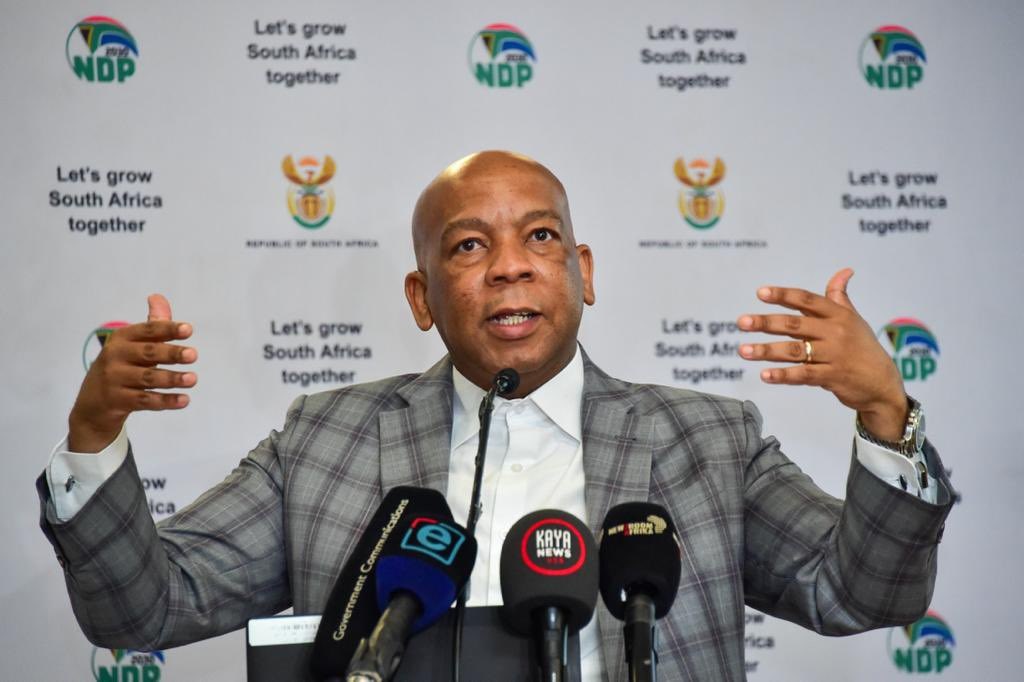
Electricity Minister Dr Kgosientsho Ramokgopa on Sunday unveiled the Integrated Resource Plan (IRP) 2025, South Africa’s new energy path to 2039.
It is an ambitious $126 billion (R2,2 trillion) investment programme that will see the share of coal in electricity generation fall from 58 % to 27 %, while solar and wind will contribute 40%.
Ramokgopa said the plan, which was first developed in 2010 and was last updated in 2019, would minimise the cost of electricity as well as the environmental impact of electricity supply to the economy. It would also “put loadshedding behind us,” he said.
“Electricity must be available, reliable and affordable, for households, for businesses, for industries. That’s how we grow our economy and reduce poverty,” he said.
IRP 2025 projects more than 105 000 MW of new generation capacity by 2039, with 6000 MW of new gas-to-power by 2030 deemed critical for energy security and a stable power system.
By 2030, SA plans to add more than 29 000 megawatts of new capacity to the grid, including 11 270MW of solar PV, 7 340MW of wind, 6 000MW of gas-to-power, 3 100MW of storage, and 5 400MW from distributed generation.
Coal, the dominant source of electricity generation since South Africa developed its industry from the 1900s, will see its share fall from 58% of total capacity to 27% by 2039, as renewable sources take over.
Solar and wind will collectively contribute over 40% of generation, while nuclear will grow from 2% to 5% with the planned addition of 5 200MW in new capacity.
The IRP makes the case for Natural Gas, but its sounds tenuous and has too many dependencies. Switching to natural gas would allow for decommissioning of 8000 MW baseload coal-fired plant, but urgent decisions would need to be made on its procurement and a commitment made by 2030.
If South Africa commits to natural gas by 2030, the plan provides for commissioning roughly 1,000 MW of gas-to-power each year from 2030 to 2040; if no commitment is made by 2030, the plan assumes about 2,000 MW over the entire decade.
The two biggest risks identified are that the development of upstream gas infrastructure takes time and would thus need an urgent decision, and there is dependency on imported gas, with mitigation through domestic production a risky option given limited success to date.
As part of its current trade negotiations with the United States, South Africa has offered to purchase $ 12 billion worth of Liquefied Natural Gas from that country over the next decade. The cost of gas alone is likely to anchor the price of electricity generated.
On the case for nuclear, the plan notes that South Africa has experience in operating a nuclear power plant safely and securely for more than forty years in the form of Koeberg power plant. South Africa also has a rich heritage of nuclear technology such as the now defunct Pebble Bed Modular Reactor (PBMR).
The plan acknowledges that nuclear technologies provide reliable baseload power, meaning it can replace coal in the long term, while complementing intermittent renewable energy generation and energy storage.
The plan then notes that to go beyond the currently envisaged 5200 MW of nuclear by 2039, the country must develop a Nuclear Industrialisation Plan outlining a roadmap towards nuclear generation capacity that can support the full nuclear value chain.
The plan would then make the case for 10 000 MW of nuclear for both power generation and industrial, or non-power generation, use.
South Africa’s biggest success against loadshedding currently has been to raise the Electricity Availability Factor (EAF) to consistently above 70%, a far cry from below 50% at the height of loadshedding in 2023.
INSIDE POLITICS