


By Johnathan Paoli
Search and recovery operations are continuing across the flood-ravaged regions of the Eastern Cape as desperate families search for missing loved ones following one of the province’s deadliest natural disasters in recent memory.
At least 86 people are confirmed dead, with that number expected to rise as bodies continue to be recovered in areas like Mthatha and Joe Slovo District Municipality.
In the aftermath of torrential rains earlier this week, Police Minister Senzo Mchunu, alongside senior South African Police Service (SAPS) officials, visited the region to assess the damage, support recovery teams and offer condolences to grieving families.
“We are dealing with a national tragedy. The devastation in communities like Mthatha is immense, and our search and rescue teams are working around the clock. Tragically, more bodies are still being recovered each day,” Mchunu said.
Three more bodies were found on Saturday, two at Mthatha Dam and one under storm debris nearby.
Many families have taken matters into their own hands, combing riverbanks and collapsed homes in search of the missing.
Among them is the family of a 16-year-old girl last seen on her way to school.
Believed to have been swept away by floodwaters, her family has launched their own search effort as hopes of a miracle fade.
Entire communities are in mourning, with temporary shelters now hosting hundreds of displaced residents.
Schools and churches have been repurposed as emergency accommodation centres, where aid groups are distributing food, blankets, and medical assistance.
National Disaster Management Centre (NDMC) head Elias Sithole confirmed that the response remains in the recovery phase, with rescue workers focusing on finding the deceased and accounting for those still unreported.
“We are prioritising recovery and safety, but we must also begin planning for long-term relocations. Many of the areas hardest hit are simply unsafe for resettlement,” Sithole said.
This reality has sparked a wider debate over informal housing developments in flood-prone areas.
Mthatha, once the administrative capital of the former Transkei, has grown rapidly in recent years due to high migration from rural villages in search of jobs, education, and healthcare.
With formal housing unable to keep pace, many have built makeshift homes in vulnerable zones near rivers and on unstable land.
Eastern Cape premier Oscar Mabuyane, addressing the crisis earlier this week, urged residents not to return to these areas, stressing that the province would explore resettlement options. However, concrete plans remain unclear.
There is no indication yet where people will be moved to and many residents are reluctant to leave areas where they’ve invested years of hard-earned savings into building homes.
Beyond the human toll, the floods have exposed critical infrastructure weaknesses.
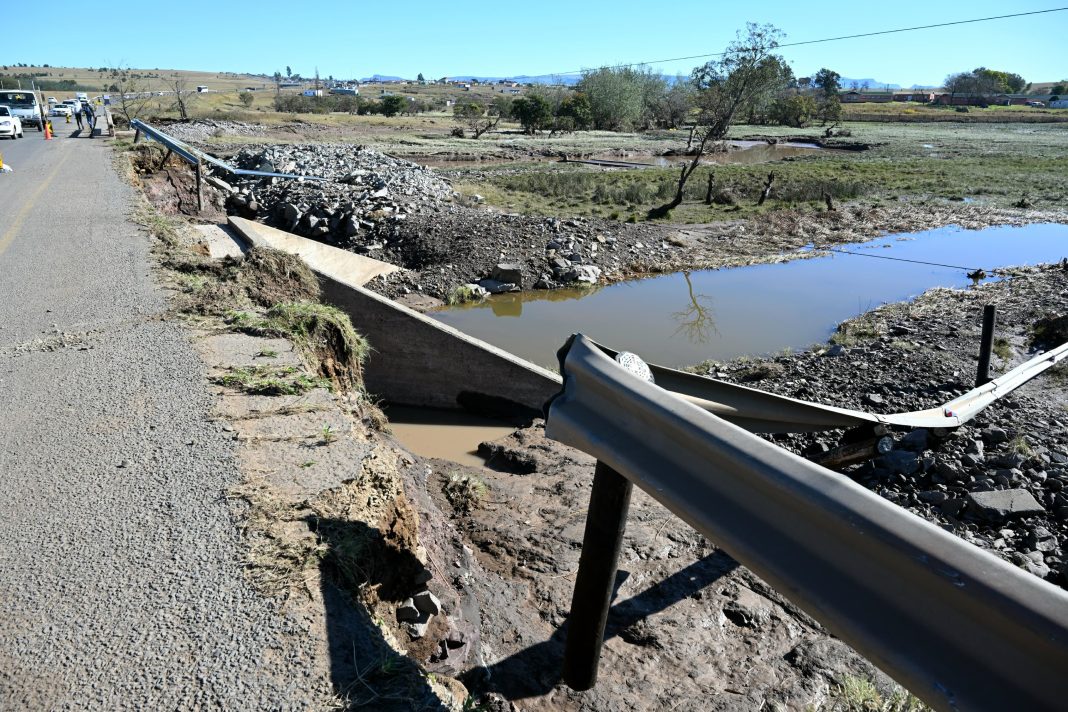
A scholar transport bus was swept away near Efata School for the Blind and Deaf, and several bridges and roads have been destroyed, complicating recovery logistics.
Adding to the suffering, criminal activity has emerged in affected areas.
Minister Mchunu condemned looters who have targeted abandoned homes, calling their actions “inhuman and vile.”
“It is rubbing salt into a bleeding wound. We will take harsh action against anyone preying on vulnerable families in their time of greatest need,” he said.
Police have increased patrols in shelters and evacuation zones following residents’ pleas for protection.
At least ten illegal firearms were also confiscated during recovery operations.
Meanwhile, rumours circulating on social media that the Mthatha Dam caused the floods due to an open sluice gate were categorically denied by the premier’s office.
Officials clarified that the dam uses uncontrolled spillways, which release excess water naturally once capacity is reached.
With more rain expected in coming weeks, officials warn that further flooding could occur if mitigation steps are not urgently implemented.
The NDMC, organisations and the provincial government have committed to continued humanitarian aid and community engagement.
INSIDE EDUCATION