


By Johnathan Paoli
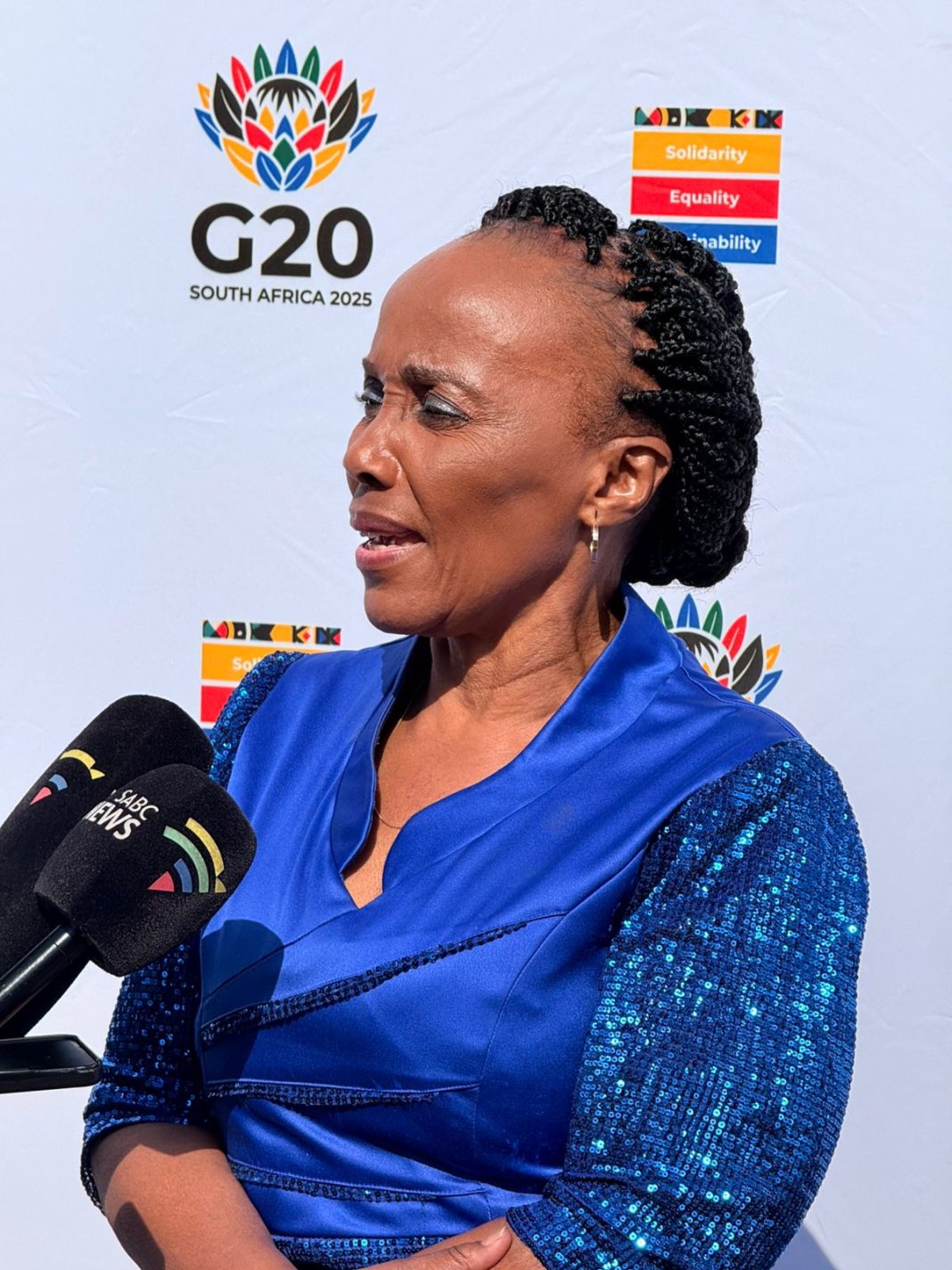
Minister in the Presidency for Women, Youth and Persons with Disabilities Sindisiwe Chikunga has outlined the country’s agenda for its G20 Presidency, pledging transformative action for women, youth, and persons with disabilities in the lead-up to the budget vote.
Chikunga affirmed South Africa’s commitment to using the global platform to drive lasting policy change and grassroots impact.
“The voices of women, youth and persons with disabilities must be heard. Allocation of budgets must embed the voices of the vulnerable and it must deliver meaningful outcomes in the lived realities of every South African,” the minister said on Thursday.
She emphasised the historic significance of the continent hosting the G20 Presidency for the first time.
The minister’s address highlighted the department’s leadership of the G20 Empowerment of Women Working Group (EWWG) and its ambitious agenda.
The EWWG, chaired by South Africa under the G20 umbrella, is focused on three priority areas. They include recognising and investing in the care economy, expanding women’s financial inclusion and strengthening the fight against gender-based violence and femicide.
She emphasised the undervalued and unpaid care work done primarily by women and called on G20 countries to redesign economic frameworks to reward and support such labour.
On economic participation, Chikunga pointed to the systemic exclusion of rural and informal women from accessing capital, credit and markets.
“Application systems are too complex. Most rural women don’t have Wi-Fi or transport. We must meet women where they are, not where the system assumes them to be.”
Chikunga also underscored that safety and security for women was not an add-on but the foundation of empowerment.
Chikunga has also proposed the establishment of a new G20 Disability Inclusion Working Group to position disability rights as a core global issue.
As part of South Africa’s G20 legacy, the department will also launch a Disability Inclusion Nerve Centre to be headquartered in the country.
It will improve data collection and planning, promote early childhood screening, train teachers in inclusive education, harness AI and technology for accessible services, and redesign systems to be universally inclusive.
“Too many persons with disabilities have been left out of opportunity. That must change,” Chikunga declared.
Chikunga noted that the G20 Presidency was being approached through a people-first lens, grounded in consultations across South Africa’s provinces.
“We have been to Taung in the North West and to Mkhondo in Mpumalanga. We are going to every corner to ensure this is The People’s G20,” she said.
These consultations form the foundation for the upcoming National Women’s G20 Conference, which will feed into the EWWG Ministerial in October and culminate in the G20 Leaders’ Summit in Johannesburg this November.
The minister emphasised that G20 outcomes must be simple, fair and meaningful to the daily realities of South Africans.
Chikunga announced a suite of domestic initiatives aligned with the G20’s inclusive vision.
Among them is the Transformative Industrialists Accelerator, a programme that is designed to propel women into leadership roles in high-growth sectors such as energy, digital platforms, agriculture, aerospace and manufacturing.
The department is also rolling out a Disability Inclusion Initiative aimed at addressing exclusion through improved service delivery, training and tech accessibility.
INSIDE POLITICS