


By Thapelo Molefe
South Africa’s water and sanitation systems are under mounting strain, with nearly half of the country’s wastewater treatment infrastructure now classified as being in a critical state, Water and Sanitation Minister Pemmy Majodina revealed on Tuesday.
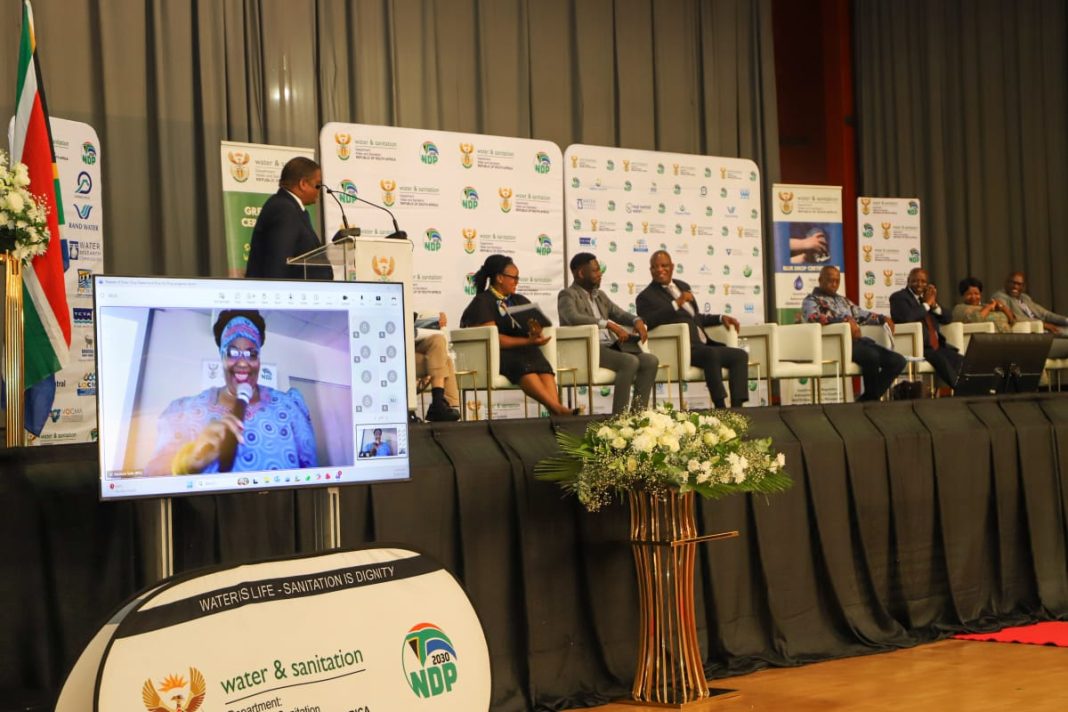
Releasing the 2025 Green Drop report alongside Blue Drop and No Drop progress updates, Majodina said the findings paint a “deeply concerning” picture of deteriorating infrastructure and uneven performance across municipalities.
“The findings of the 2025 Green Drop report are deeply concerning,” she said.
“The percentage of wastewater systems in a critical state has increased from 39%… to 47%.”
This translates to 396 out of 848 wastewater treatment systems assessed during the 2023 to 2024 municipal financial year now classified as critical.
At the same time, the number of systems performing at good or excellent levels has dropped sharply, while Green Drop certifications declined from 22 in 2022 to just 14 this year.
Majodina stressed that the crisis is not due to a lack of raw water supply, but rather failures in distribution, maintenance and governance.
“We do have water,” she said. “But does that water reach the communities? Yes and no… some of the water is not reaching communities because it is polluted or not of good quality.”
The Blue Drop progress report showed marginal improvement in drinking water quality, with low-risk systems increasing from 60.2% to 61.9%, while critical-risk systems declined slightly from 9.9% to 7.9%.
Despite this, Majodina warned that many systems remain unsafe and require urgent intervention.
“If it is not safe to drink the water from the tap, we must know we are violating the right to an environment that is not harmful,” Deputy Minister David Mahlobo said earlier in the briefing.
The No Drop report, which assesses water losses and system reliability, showed that non-revenue water losses remain alarmingly high at about 47%, indicating widespread leakage, inefficiency and poor infrastructure management.
Majodina linked the worsening state of water systems to systemic failures at municipal level, including poor maintenance, lack of skilled personnel and weak financial management.
“Infrastructure is in poor condition due to lack of maintenance… municipalities are failing to hire qualified staff,” she said.
She also cited corruption, vandalism and what she described as “water mafias” as contributing to the crisis.
“We are not going to tolerate any corruption and fraud in the water sector anymore,” she said, adding that officials have already been suspended and dismissed in ongoing disciplinary processes.
Provincial performance remains uneven. Gauteng and the Western Cape continue to perform relatively well, while Mpumalanga and North West have shown improvement.
However, the Northern Cape and Free State remain areas of serious concern, with high concentrations of failing systems.
Majodina said the government has established a national water crisis committee, led by President Cyril Ramaphosa, to coordinate urgent interventions.
“The water crisis that the country is facing is not about raw water supply… it is about reticulation and provision,” she said.
She warned that failure to act would have severe consequences for economic growth, public health and social stability.
“Communities cannot live with polluted rivers and broken systems,” she said.
“The time to act is now.”
INSIDE POLITICS