


By Johnathan Paoli
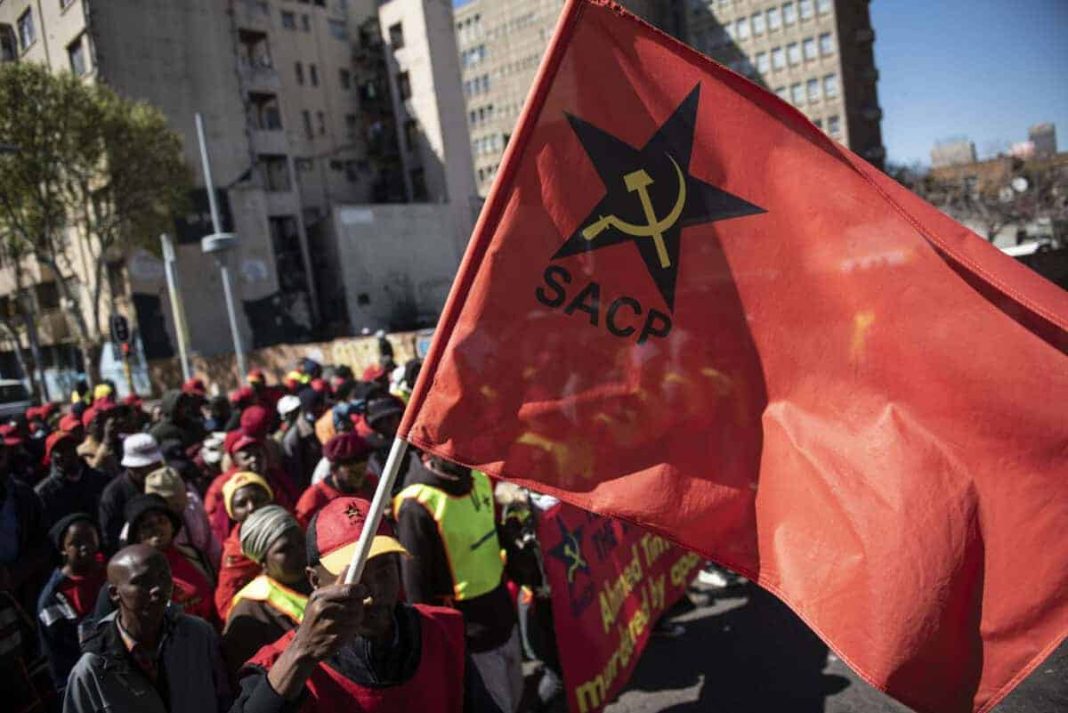
The South African Communist Party (SACP) has announced plans to march to the US Embassy in Pretoria on Thursday, protesting what it describes as the invasion of Venezuela and the capture of President Nicolás Maduro and his wife, Cilia Flores.
Condemnation of what the SACP termed US aggression was a recurring theme at the party’s 31st annual Joe Slovo Commemoration, held on Tuesday at Heroes Acre at Avalon Cemetery in Soweto, where party leaders, alliance partners and international guests gathered to honour the late anti-apartheid stalwart.
Delivering the keynote address, SACP General Secretary Solly Mapaila said the party viewed Washington’s actions as a grave violation of international law and an assault on the sovereignty of a United Nations member state.
He confirmed that the SACP, alongside allied organisations, would mobilise a protest march to the US Embassy, warning that American actions would not go unanswered.
“The US should never know peace in our country when they destabilise other countries,” Mapaila said.
He accused the United States of acting as a destabilising global force and called on South Africans to show solidarity with Venezuela and other nations facing external intervention.
Mapaila further argued that US conduct had exposed a dangerous imbalance in global power relations, saying American influence was in decline and increasingly reliant on coercion.
He urged progressive forces to focus on building a strategic economic and political bloc capable of defending its members, rather than reacting defensively to US actions.
In one of his most controversial remarks, Mapaila called on the South African government to reconsider its position on nuclear armament, arguing that the alleged invasion of Venezuela demonstrated the vulnerability of states without adequate deterrence.
“It is clear, the question of a nuclear-free zone must be reconsidered,” he said, claiming national sovereignty required credible means of defence.
The SACP leader described the United States as a serial violator of sovereignty, branding it a “butcher state” with a long history of intervention in the internal affairs of other nations.
He demanded the unconditional release of President Maduro, insisting that Venezuela’s political project represented “the most exciting socialism in the world” and could not be destroyed by military force.
Before Mapaila’s keynote address, President Cyril Ramaphosa also delivered a strongly worded condemnation of US actions, aligning the South African government’s position with the principles of international law and multilateralism.
Speaking in his capacity as ANC leader, Ramaphosa accused Washington of undermining Venezuela’s territorial integrity and violating the United Nations Charter.
“It is our commitment to international law and the United Nations Charter that informs our deep concern and rejection of the actions of the United States in Venezuela,” the president said.
“We reject utterly the actions that the United States has embarked upon and stand with the people of Venezuela and demand the release of President Maduro and his wife as well,” Ramaphosa added.
The president argued that the US actions posed a direct threat to the international rules-based order and represented a dangerous precedent if left unchecked, urging the United Nations Security Council to intervene decisively, warning that failure to uphold its mandate would further erode global governance and embolden unilateral aggression.
Ramaphosa framed South Africa’s stance as rooted in its liberation history and foreign policy values, emphasising that principles of sovereignty, equality and self-determination were applied consistently, not selectively.
He linked the Venezuela crisis to broader global challenges, including inequality, climate change and geopolitical instability, which he said were often intensified by dominant global powers acting outside multilateral frameworks.
He reaffirmed South Africa’s support for dialogue and peaceful resolution of disputes, stressing that coercion and unilateral action undermined prospects for lasting global peace.
Also addressing the gathering ahead of the keynote was Venezuelan Ambassador to South Africa, Carlos Feo Acevedo, who welcomed South Africa’s position and expressed gratitude for its adherence to international law.
“We appreciate the position and principle of South Africa in respecting international law, the UN Charter and the international legal framework that allows us all to live in peace and unity. This legal framework has been broken,” the ambassador said.
Despite acknowledging the severity of recent events, Acevedo struck a defiant tone.
“Yes, we have been struck, we have been defeated, and we have been humiliated, but we are confident,” he said.
The presence of Ramaphosa at the event was met with visible warmth, despite recent political tensions between the SACP and the ANC.
INSIDE POLITICS