


By Simon Nare
South Africa has set itself on a path of new discovery in conservation, a drive that seeks to draw deeply from indigenous knowledge while interrogating climate dynamics and the warnings science continues to sound about the dangers ahead.
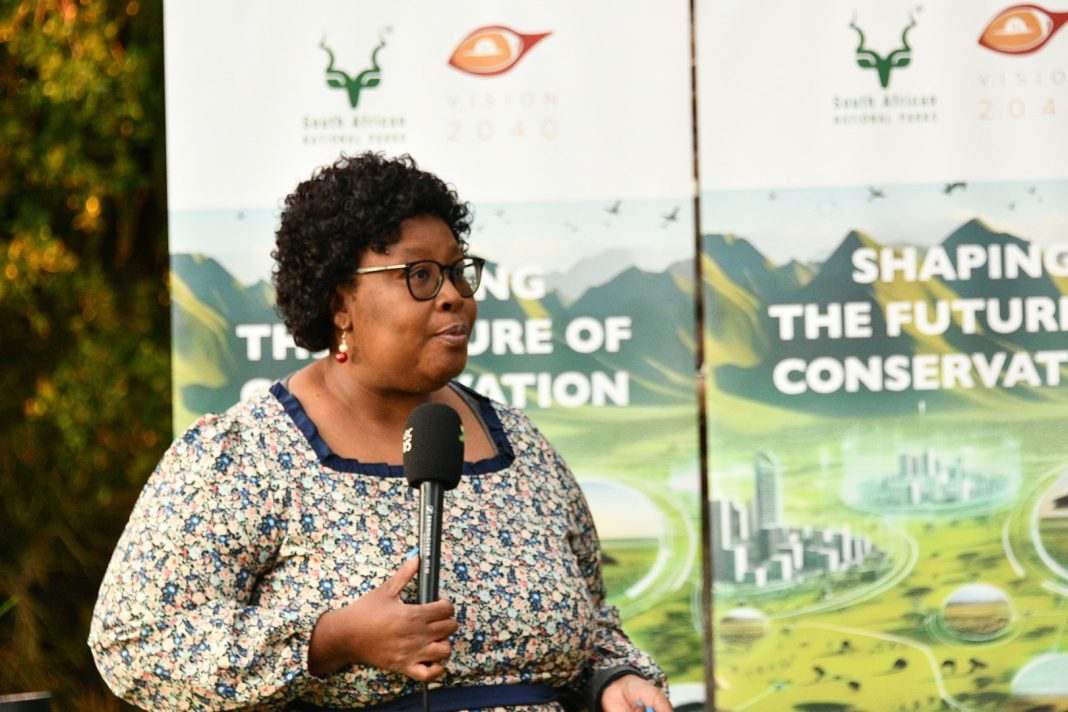
That is the buzz captured in the South African National Parks Vision 2040 Indaba, which got underway in Gqeberha in the Eastern Cape on Wednesday, where the conservation body has brought together experts, traditional leaders, and communities under one roof to confront these complexities.
According to JP Louw, SANParks national spokesperson, the gathering and the adoption comes after a lengthy process in which the institution wanted to make sure of what the citizens and the communities had to say on the matter.
Many concessions have been made, and it is now anticipated that fragmented protected areas are becoming ecologically interconnected with living landscapes that include communal land and commercially owned game farms.
With the backing of the Department of Environment, Forestry and Fisheries, led by Minister Dion George, SANParks has set itself ambitious goals to bring communities closer to the parks and form alliances in the pursuit of safeguarding the future.
In confronting these realities and acknowledging the challenges threatening conservation, SANParks has concluded that communities around protected areas must be part of the solution and best advised on the stewardship of parks.
SANParks board chairperson Pam Yako, in her opening address to the two-day Indaba, set the tone by telling the gathering that the institution needed to “turn the trajectory on its head” to achieve its goals in the next 15 years.
“The amount of time and depth of consultation we have embarked on is probably unprecedented in SANParks’ history. Yet here we are today, exactly a year after we unveiled Vision 2040, to reflect, account, and re-energise everyone to be part of this noble and ambitious journey. Vision 2040 is about repurposing the role of South Africa and shifting the approach to an inclusive, people-centred conservation,” she said.
This inclusive approach, bringing communities around national parks and seas into the fold, has the department and its minister excited.
George, speaking at the opening, stressed how local communities had for generations depended on the parks, yet were excluded by regulations.
He vowed to prioritise previously disadvantaged communities to ensure they benefit from the government’s new conservation drive.
The minister urged participants to make the Indaba a declaration of intent to revolutionise the sector and make it more inclusive.
Echoing this, Eastern Cape premier Oscar Mabuyane, standing alongside him, endorsed the concessions made and called for the revival of indigenous knowledge.
That call resonates with Nomathemba Langa of Inyama Yethu, a wild meat processor from Brits in the North West.
Running a hunting game farm, she said it was long overdue that indigenous communities were brought on board.
“The knowledge has been passed down to us from generation to generation. Our forefathers have been doing this for years, and they passed this knowledge to us. We are happy that they now want to incorporate us. We support this vision and are ready to play our part in it,” she said.
Similar sentiments were echoed by Morena Khalichia, who travelled from QwaQwa in the Free State where he farms oysters.
Like Langa, he believes the inclusion of indigenous people will add greater value to conservation.
This was a sentiment shared by most exhibitors at the gathering, who said they supported the drive and were ready for a future where more people “in the trenches” could be brought on board.
INSIDE POLITICS