


By Johnathan Paoli
The Ekurhuleni Metro Police Department (EMPD) applied its financial and procedural rules so rigidly that even a disinfection service donated by the Church of Scientology during Covid-19 was flagged as irregular.
But those same systems failed to stop a web of unlawful agreements that handed businessman and attempted murder accused Vusimusi “Cat” Matlala’s security and healthcare companies VIP privileges, tenders, and even blue-lights – rights normally reserved for law enforcement.
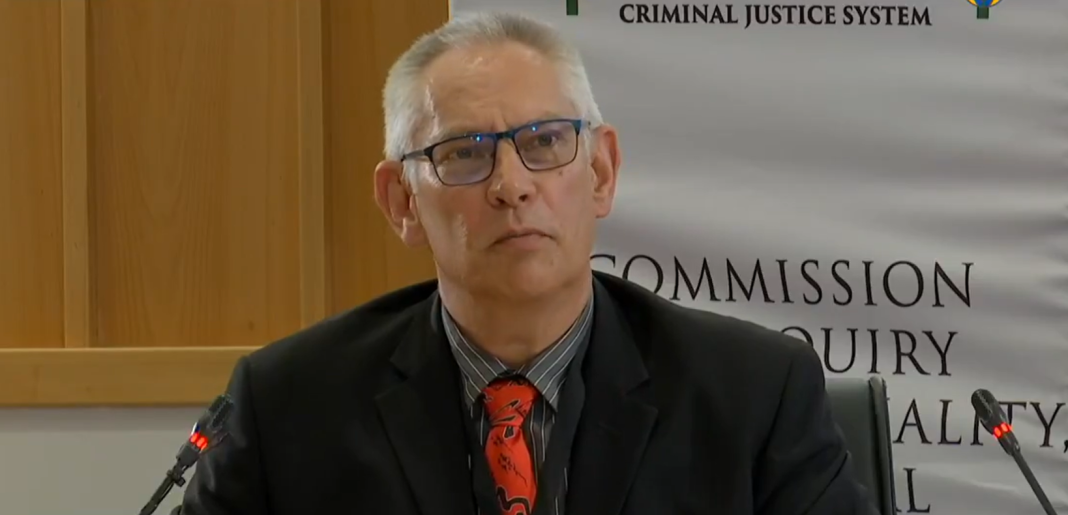
That contrast was evident in testimony on Monday by former EMPD Deputy Chief of Police Revo Spies, who continued his evidence before the Madlanga Commission, which is investigating alleged corruption and irregular procurement in the criminal justice system, including the metro police.
Spies described how strict internal controls, which once deemed a donated Covid-19 sanitisation service by the Church of Scientology, “irregular” because the proper donation processes were not followed, seemed to crumble when EMPD Deputy Brigadier Julius Mkhwanazi entered into questionable agreements with Matlala’s Cat VIP Security Services and its medical subsidiary Medicare 24 Emergency Medical Services.
According to Spies, neither of Matlala’s companies appeared on the EMPD’s approved supplier list, but they were given sweeping powers that effectively outsourced core law enforcement functions to private hands.
Two memorandums of agreement (MOAs), signed by Mkhwanazi in October 2021 and June 2022, allowed Cat VIP’s vehicles to be registered as EMPD cars, complete with blue and red lights, a privilege strictly reserved under South African law for official police and emergency vehicles.
Spies said the documents effectively authorised a private company to “act as policemen”, something he said was entirely outside the EMPD’s mandate.
In the first memorandum, Mkhwanazi explicitly agreed that EMPD would assist with registering Cat VIP vehicles as official EMPD vehicles, enabling their use of blue lights to respond to and on behalf of the metro police.
Spies told the commission that this amounted to the unlawful outsourcing of policing authority.
Under the second agreement, Matlala’s healthcare subsidiary was granted powers to draw blood at roadblocks and even to provide legal advice during drug busts — provisions that Spies said bordered on absurdity.
“If someone tried to give a police officer legal advice on a crime scene, that person would probably be arrested for obstructing justice,” he said.
The retired deputy chief said the memorandums were so poorly written that they appeared to have been drafted by illiterates, adding that even their supposed benefits were meaningless.
Cat VIP, for example, offered the EMPD a helicopter for just two hours a month, an offer Spies described as useless for law enforcement.
Despite mounting evidence, Mkhwanazi continued to insist that Matlala’s company had an official relationship with the EMPD and even the Hawks, citing incidents where Cat VIP allegedly participated in crime-fighting operations.
However, Spies testified that many of these claims were dubious or exaggerated, with no official EMPD involvement recorded in the cited operations.
The commission continues.
INSIDE POLITICS