


Simon Nare
The Standing Committee on Public Accounts (Scopa) has questioned the business viability of a private hospital that relies heavily on the Road Accident Fund (RAF) for its survival, and likened its operations to “looting” of the entity.
MPs on Tuesday grilled Sunshine Hospital chief executive officer Ken Ford during the watchdog’s ongoing enquiry into the financial matters of the RAF, focusing on its procurement and governance processes.
The committee heard how the hospital was forced to close its doors after the RAF failed to settle R300 million debt, which has to date accumulated R21 million in interest.
Ford, facing a barrage of questions from MPs about his relationship with the RAF, insisted that the hospital catered for patients other than accident victims whose medical expenses were paid by the RAF.
However, Ford could not answer why, if the hospital was not reliant on RAF, it had to close its doors because of the non-payment by RAF.
He also could not answer why state hospitals preferred to refer accident victims to his hospital.
Ford said the hospital did not hire doctors, they were working independently in the facility, and it was charging for services such as occupancy, the bed, medication, theatre time and various equipment that would be utilised on a patient.
He told the committee that the hospital did not have a contract in black and white with the fund but rather a gentleman’s agreement where patients would be referred to the hospital by state hospitals who were unable to render the services required by the accident victims.
Later, he told MPs, the hospital entered into a co-operative agreement with the RAF and the number of patients being referred began to spike. Some would be dropped off at the hospital by ambulances straight from accident scenes.
But MPs expressed concern as it appeared his business relied on the RAF for survival. It appeared his clients were only road accident victims whose medical bills were paid by the fund.
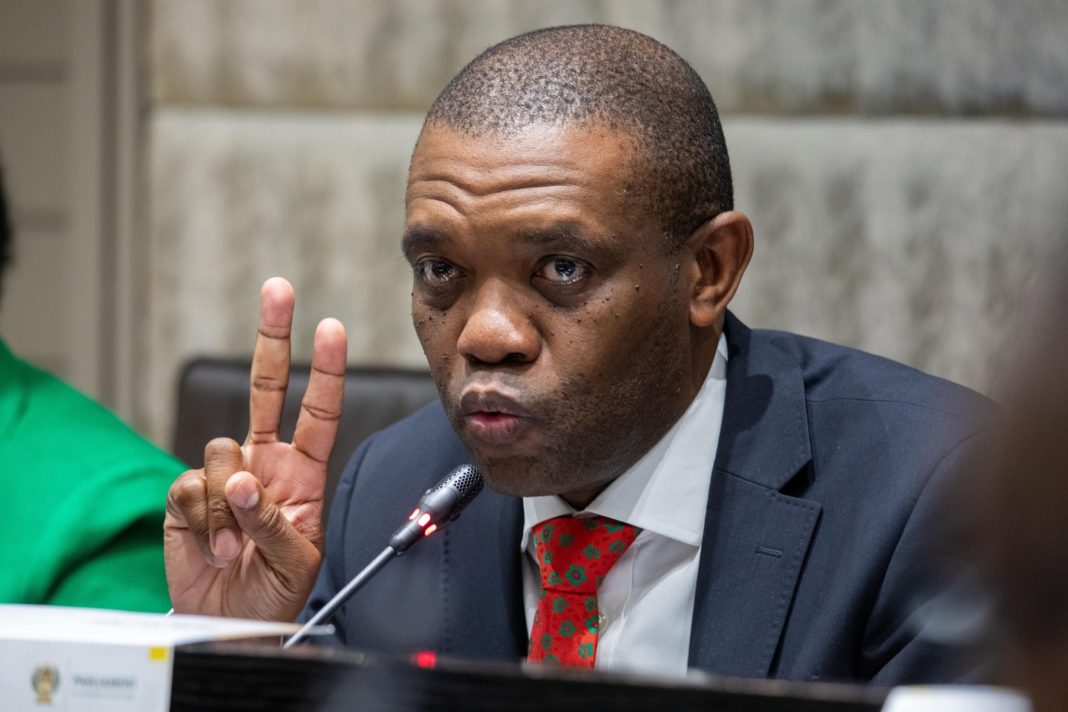
Scopa chairman Songezo Zibi asked Ford to help the committee understand why the hospital could not operate without the RAF.
“Why did the RAF’s inability to pay affect your ability to operate? That is the holy grail question,” said Zibi.
Ford struggled to answer and asked to use an analogy, saying it was a difficult question to answer. He said that accident victims made up the bulk of his clients and inadvertently when their bills were not footed, that affected the operation financially.
Zibi said he understood that he had to shut the doors, but still wanted to know why it was linked to RAF non-payment.
“I can’t answer that question,” responded Ford.
He told the committee how the hospital collapsed due to the RAF non-payment and was auctioned for a paltry R21 million. The company that attempted to buy it failed to honour the pledge, he said.
He said that it could be because the hospital had a reputation that it defrauded the RAF by inflating claims and people or companies did not want to touch it.
He maintained that thorough investigations were conducted after these allegations surfaced, but there was no evidence unearthed to suggest the allegations were true.
Ford said the fund short-paid in hundreds of cases and it never made it clear who it was short-paying — whether it was the doctor or the hospital — and the institution had approached the court to recoup some of the money.
“The financial management of the hospital was tough. The Road Accident Fund, although they paid inconsistently and erratically, for years up to 2020, they did pay. They paid something, so we built up a reserve, we didn’t go out and spend it. We built-up a reserve and then it suddenly stopped.
“And that is what put us in a position of consideration to close the hospital, because while there was a cash flow of, it might have been six months or one month sometimes, because they didn’t pay in any format,” he said.
He told the committee that the hospital with all its equipment was now a white elephant and perhaps the RAF could save itself lots of money by buying it and treating all its clients there.
Zibi asked Ford to submit financial statement in writing for the past decade, which would indicate revenue generated from accident patients and ordinary patients.
The committee undertook the oversight enquiry following allegations of maladministration of the RAF, which led to the suspension of its chief executive officer Collins Letsoalo, who has resisted invitations by the committee to appear as a witness.
The committee sent him a final letter to secure his appearance, but Letsoalo in various letters to Zibi challenged the authority of Scopa to conduct the oversight enquiry.
INSIDE POLITICS