


By Lungile Ntimba
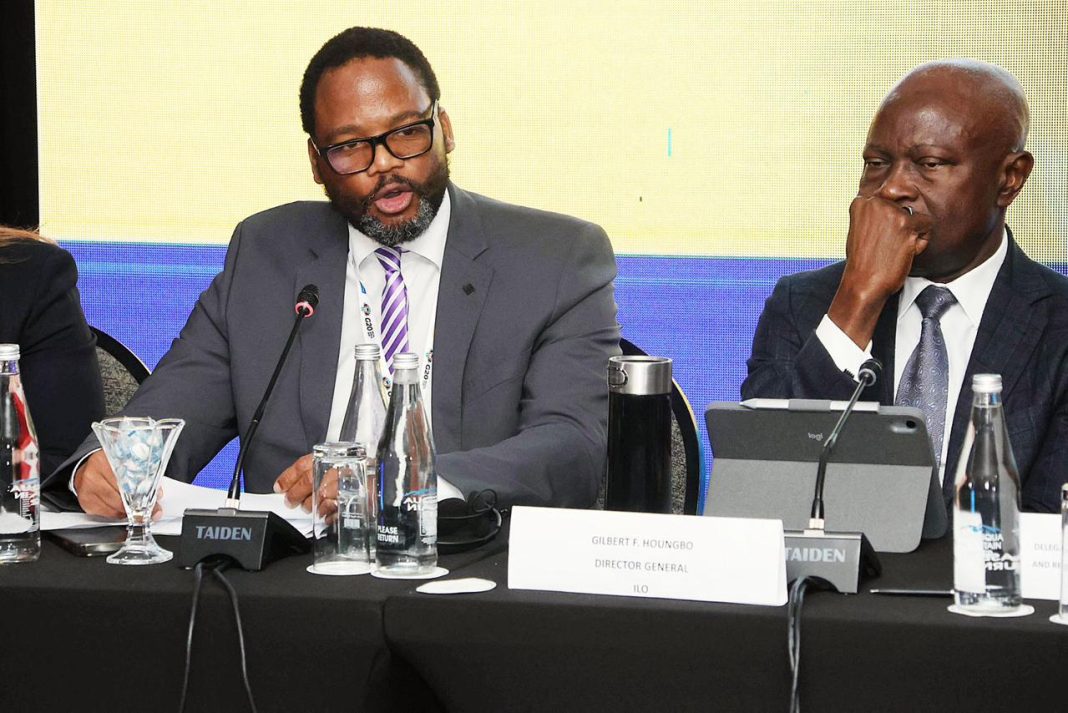
Employment and Labour Deputy Minister Jomo Sibiya has dismissed the notion that decent wages undermine economic competitiveness, urging global support for institutions that promote fair pay.
The deputy minister was addressing union leaders at the Labour 20 (L20) South Africa 2025 Summit. It was held under the theme: Fostering Solidarity, Equality and Sustainability through a New Social Compact.
“Let us be clear – fair wages, decent work and strong social protection are not barriers to growth, but they are the foundations of resilient future [ready economies]. The anticipated Employment Working Group declaration lays groundwork for these efforts,” said Sibiya.
“It recognises that full and productive employment, adequacy and sustainability of social protection systems, wage settings mechanisms grounded in rights and fairness are essential to build a just and inclusive societies. It calls on all of us to expand formalisation and reverse decoupling of wages from productivity.”
He welcomed the L20’s commitment to tackling labour market challenges, including rising inequality, declining real wages and the shrinking labour income share of GDP.
“The issues strike at the very heart of our societies and also manifest in growing hardship for working families, the erosion of social cohesion as well as pervasive sense among workers that growth is no longer working for them.
“For the Global South the value of labour has been steadily diminishing,” he said.
While productivity had risen, workers, particularly those at the lower end of the wage distribution, have not benefitted.
“The disconnect between the creation of wealth and its distribution is not only unjust, but also unsustainable.”
Sibiya said the country’s employment track was anchored in four key areas including, promoting inclusive growth and youth employment, accelerating gender equality, reversing the decline in labour income share and harnessing digitalisation to build an inclusive future of work.
He said genuine economic growth was closely tied to decent work.
Countries needed to actively shape policies and institutions to achieve fair labour market results and establish wage systems, whether through legislation or collective bargaining, that benefited workers and employers, Sibiya said.
He also raised concerns over the weakening of collective bargaining, saying workers needed to be empowered to manage their livelihoods and ensure they used their hard-earned salaries properly.
“South Africa’s own experiences offer important lessons. There is urgency for co-ordinated global action to face high levels of inequality and unemployment.”
Sibiya said social partners continued to play a vital role in shaping labour market reforms even amid structural constraints.
“We strongly believe that when working together as government with social partners that’s where solutions can be found. Our work is far from over. We must recommend social justice in our economic strategies,” he added.
The session aimed to facilitate dialogue between trade unions and G20 Labour and Employment Ministers on addressing inequality, boosting wages and increasing labour’s share of income.
INSIDE POLITICS