


By Johnathan Paoli
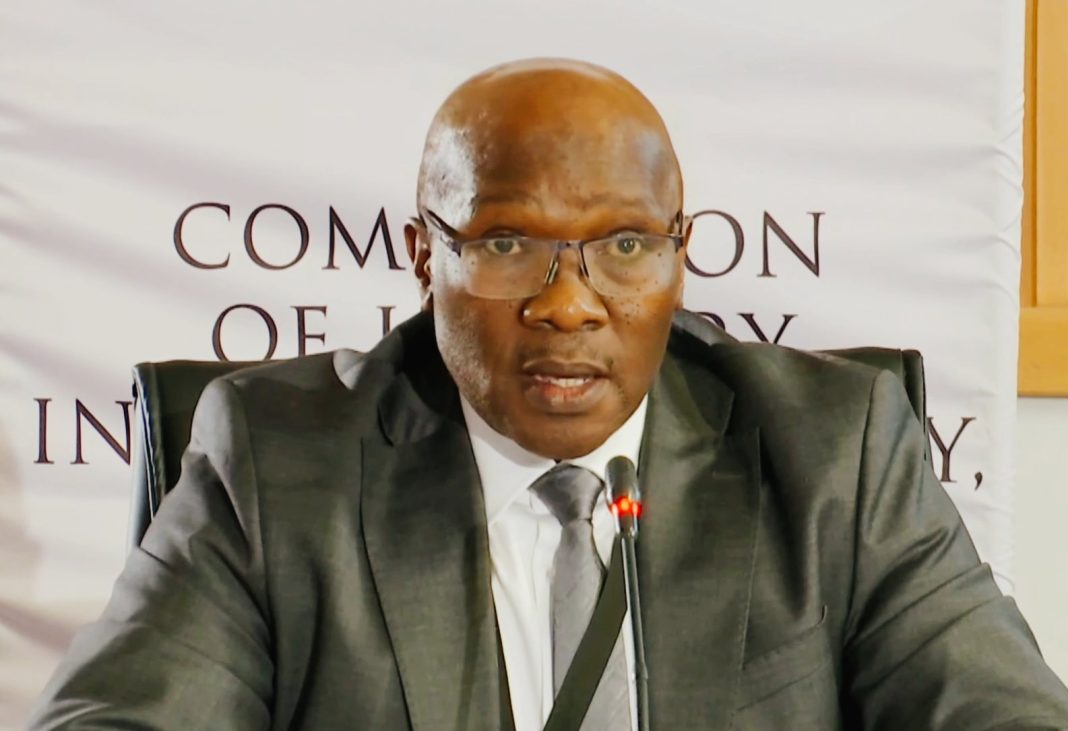
Crime Intelligence head Lieutenant-General Dumisani Khumalo returned to the witness stand at the Madlanga Commission on Wednesday, where he unpacked his strained relationship with suspended Deputy National Commissioner for Crime Detection, Lieutenant-General Shadrack Sibiya.
Led in evidence by Advocate Adila Hassim (SC), Khumalo began the session by clarifying allegations surrounding the alleged theft of valuables belonging to businessman, alleged underworld figure, and attempted murder accused, Vusimusi “Cat” Matlala.
“It came to my attention that General Sibiya urged Matlala to file false theft charges against me and my team. This was around the same time when key Political Killing Task Team (PKTT) operations were exposing corruption and the misuse of firearms in municipalities and private security companies,” Khumalo said.
He said the accusations that police had stolen Matlala’s Rolex watches and MacBook were false and fabricated, and that 18 unlicensed firearms were seized during a lawful compliance operation on 19 December 2024.
Those firearms, Khumalo claimed, were returned to Matlala eight days later.
He said the theft allegations were not only baseless but part of a broader attempt to discredit him and his team.
He testified that former Police Minister Bheki Cele had informed him in December 2024 that Matlala admitted Sibiya had drafted a false affidavit accusing Khumalo’s team of theft.
“Cele told me that Matlala came to see him, wearing the same Rolex he claimed was stolen. He said Sibiya had advised him to submit that affidavit to open a false case against myself and my members,” Khumalo said.
Khumalo’s testimony linked Sibiya directly to attempts to undermine the PKTT, alleging that the deputy commissioner actively conspired with Matlala to fabricate charges and feed damaging narratives to the police ministry.
He said that many of the weapons used in political assassinations were traced back to municipal security fleets or private contractors.
Despite its successes, Khumalo said the PKTT’s final weeks were consumed by chaos.
“From 6 to 31 December 2024, we were working around the clock. It was not a festive season for us. We were busy dealing with high-profile cases, including the kidnapping of Jerry Boshoga and the arrest of Katiso ‘KT’ Molefe for the murder of engineer Armand Swart,” he said.
Then came what Khumalo called the “New Year’s Eve bombshell” — a two-page letter from since suspended Police Minister Senzo Mchunu ordering the immediate disbandment of the PKTT and a freeze on all Crime Intelligence appointments.
Khumalo described how the letter, dated 31 December 2024, began circulating on social media on New Year’s Day before he officially received it two weeks later.
He stressed that neither he, the National Commissioner, nor other members of the Inter-Ministerial Committee (IMC) overseeing the PKTT were consulted about the disbandment.
Pressed by Hassim, Khumalo suggested that the decision may have stemmed from his deteriorating working relationship with Sibiya.
He detailed a stalemate over the composition of interview panels for senior Crime Intelligence appointments.
“I proposed a panel for approval, but Sibiya opposed it because he wanted his own. That dispute was reported to the ministry, and I suspect it influenced the minister’s directive to halt all appointments,” Khumalo said.
Khumalo inferred that the disbandment of the PKTT was politically timed, referring to “the activities of December”; a period marked by high-profile arrests, tenders under investigation, and growing tensions between factions within the police service.
He told the commission that on 22 January this year, he submitted a 27-page report to Mchunu detailing the PKTT’s operations, finances, and legal framework, but said the report was never acknowledged.
Khumalo said he remained baffled by how a unit that had achieved measurable progress in investigating political assassinations could be declared valueless, overnight.
The commission continues.
INSIDE POLITICS