


Thebe Mabanga
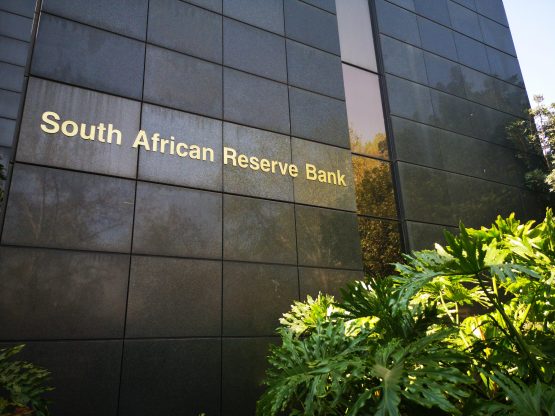
The balance on the country’s current account switched from a deficit of R72.0 billion in the third quarter of 2025 to a surplus of R50.2 billion in the fourth quarter, according to the South African Reserve Bank.
This is the first surplus since the third quarter of 2023.
A key driver was higher gold prices, which boosted exports, and a stronger rand, which made imports cheaper.
ALSO READ: Lamola warns SADC of Middle East economic shocks
The current account balance, as a ratio of gross domestic product (GDP), switched to a surplus of 0.6% in the fourth quarter of 2025 from a deficit of 0.9% in the third quarter.
The current account measures a country’s transactions with the rest of the world, including trade in goods and services as well as income flows. A surplus means total receipts exceeded payments.
South Africa tends to run a deficit during times of heavy infrastructure spending, when it has to import capital equipment.
Economists had mixed forecasts prior to the release of the data, with some expecting a small surplus, while others forecast a widening in the deficit.
Nedbank, for instance, expected the current account deficit to widen from the previous estimate of 0.7% of GDP in the third quarter to 1.0% in the fourth quarter.
ALSO READ: Chetty tells Parliament about law enforcement abuse of power
The Bureau for Economic Research (BER) forecast a slight current-account surplus in the fourth quarter, saying improved terms of trade — the ratio of export prices to import prices — were likely to support the trade balance. It warned, however, that a sustained rise in oil prices could renew pressure in the first half of 2026.
On an annual basis, the deficit on the current account narrowed to R35.2 billion (0.5% of GDP) in 2025 from R48.0 billion (0.7% of GDP) in 2024. The National Treasury in its February 2026 Budget had expected a deficit of 0.9% of GDP in 2025.
The country’s trade surplus widened substantially to R282.2 billion in the fourth quarter of 2025 from R169.0 billion in the third quarter of 2025 as the value of merchandise and net gold exports increased, while that of merchandise imports decreased.
The value of exports of goods and services in the fourth quarter of 2025 increased by R51.1 billion, reflecting higher prices, while the value of imports of goods and services fell by R54.4 billion due to lower prices caused in part by a stronger rand.
The index value of South Africa’s terms of trade, the ratio of import prices to export prices, (including gold) improved in the fourth quarter of 2025 to 117.2 from 110.8 in the third quarter of 2025 as the rand price of exported goods and services rose while that of imports fell.
ALSO READ: Give people 24-hour clinics, not bread per household, Malema tells Ramaphosa
For the full year in 2025, the trade surplus narrowed slightly to R212.1 billion (2.8% of GDP) from R214.3 billion (2.9% of GDP) in 2024.
The question now is what impact the current war in Iran might have on the current account in the first quarter and for 2026.
To gain insight, one must look back at this time in 2022, when Russia invaded Ukraine. Grain and energy prices shot up, and the latter is happening currently.
Whereas the Russian “military adventure” has lasted more than four years, the expectation is that the Iranian war will be over shortly. It all hinges on duration and, by extension, how long oil prices stay at current levels of $119.50 earlier in the week’s trade. By Friday, it was trading at about $101.34 a barrel.
In 2022, the Treasury forecast a surplus of 0.3% of GDP for the year. The budget, as Finance Minister Enoch Godongwana stated in an interview this week, was tabled the day before the Russian invasion. The actual result was a deficit of 0.5% in 2022.
South Africa’s current-account deficit was 1.6% of GDP in 2023, compared with National Treasury’s estimate of 1.8%. In 2024, the deficit narrowed to 0.6% of GDP.
The 2026 Treasury forecast, released before the start of the Iran War, of 1.0% of GDP, may turn out to be slightly pessimistic.
INSIDE POLITICS