


By Thapelo Molefe
South Africa’s official unemployment rate rose to 33.2% in the second quarter of 2025, up 0.3 percentage points from 32.9% in the first quarter, Statistics South Africa (StatsSA) announced on Tuesday.
The first quarter had already seen a rise from a more than one-year low of 31.9% recorded in the preceding six-month period, as the number of unemployed individuals increased by 237,000 to 8.228 million.
In the second quarter, the employment rate fell by 291,000 to 16.787 million, while the labour force declined by 54,000 to 25.015 million.
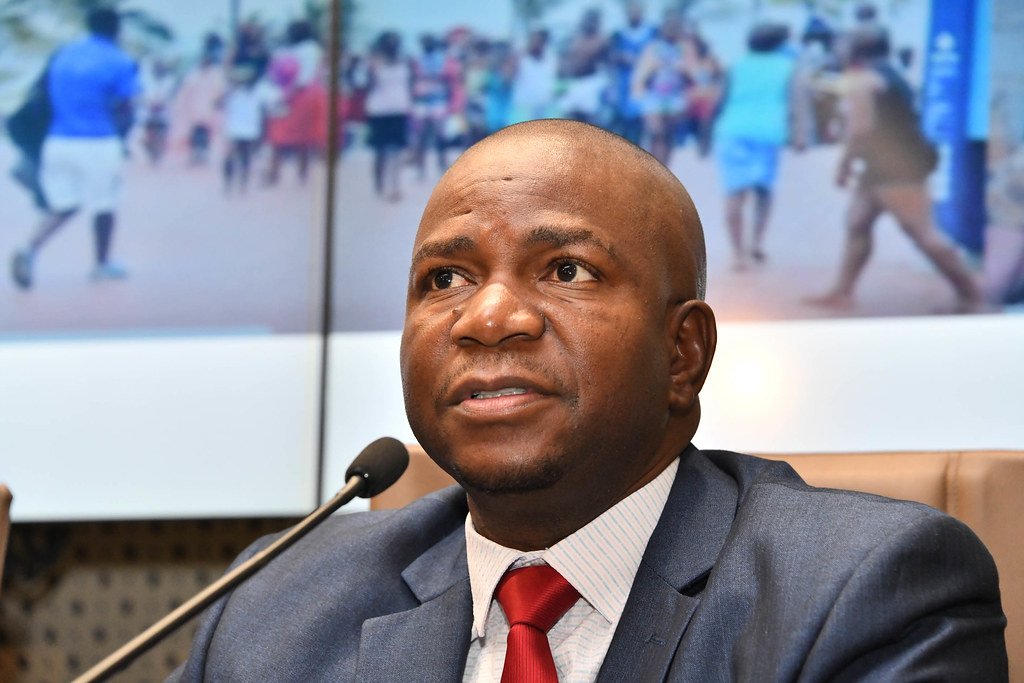
Briefing the media on Tuesday, Statistician-General Risenga Maluleke said the number of unemployed South Africans grew by 140,000 to 8.4 million, while the number of employed people rose slightly by 19,000.
He noted that this modest employment growth was insufficient to keep pace with the expanding labour force.
“The number of jobs we are creating as a country is not catching up with the gap of those that are unemployed,” Maluleke said.
“If the participation rate starts narrowing, it means we are starting to beat the problem. But right now, we are not there yet.”
When discouraged work seekers and those available for work but not actively seeking employment are included, South Africa’s expanded unemployment rate rises to 42.9%, representing 12.6 million people without jobs.
This figure includes 3.4 million discouraged work seekers and 800,000 people who were available to work but cited other reasons for not job-hunting.
In a statement, the Economic Freedom Fighters (EFF) described the latest figures as evidence of a “worsening job crisis” under the Government of National Unity (GNU), accusing it of lacking a coherent plan to reverse unemployment.
“Under their watch, South Africa’s economy has been reduced to survival mode, with no investment in productive sectors, no industrial expansion, no rural development, and no serious intervention to create jobs,” said EFF spokesperson Sinawo Thambo.
The party pointed to sectoral and provincial job losses — including 42,000 in community and social services, 24,000 each in agriculture and finance, 15,000 in transport, and 117,000 in the Western Cape — as proof of what it called the absence of a coordinated national development strategy.
The EFF renewed its call for an urgent, state-led mass public works programme focused on infrastructure, housing, industry, and rural development, alongside targeted plans to revitalise struggling sectors and provinces.
The North West province recorded the highest official unemployment rate at 40.1%, followed closely by the Eastern Cape at 39.5%, while the Western Cape had the lowest at 21.1%.
In terms of the expanded unemployment rate, North West again topped the list at 54.7%, followed by Mpumalanga and KwaZulu-Natal.
Maluleke said rural provinces were particularly hard hit because many residents live far from economic centres and often exhaust their last resources seeking work before giving up.
“These are people who are far away from places of work, and then they have to look for employment using their last cent until they are discouraged and then they sit,” he explained.
Youth remain the hardest hit, with the unemployment rate among 15–34 year-olds at 46.1%, well above the national average.
The absorption rate for those aged 15–24 is just 10.1%, meaning only one in ten in this group are employed.
Women also face higher unemployment levels than men, with a rate of 35.9% compared to 31% for men in the second quarter.
Black African women remain the most vulnerable, with an expanded unemployment rate of 51.4%, amounting to nearly six million women without jobs.
“Women, like young people, are trudging it hard in the labour markets. And when you are young and you are a black African woman, it’s even much worse,” Maluleke said.
By sector, trade contributed the largest employment gains, adding 88,000 jobs, followed by private households with 28,000 and construction with 20,000.
Losses were recorded in community and social services (-42,000), agriculture (-24,000), and finance (-24,000).
Employment in the informal sector declined by 19,000 to 3.3 million people, representing 19.8% of total employment. The formal sector grew slightly, adding 34,000 jobs to reach 11.5 million.
Maluleke expressed concern over the informal sector’s contraction, given its role in sustaining livelihoods for small traders, street vendors, and self-employed workers.
While Maluleke said it was too early to determine whether United States trade tariffs were affecting employment, he noted that agriculture’s job losses may reflect seasonal factors.
“Agriculture is seasonal. There are times when you are planting and ploughing and will always attract a lot of people, but after that, it may drop,” he explained.
Maluleke said the second-quarter results present a sobering picture of South Africa’s labour market.
“We are still in the field, tracking labour market dynamics throughout the year. For now, what is clear is that job creation remains far too slow to absorb the growing working-age population,” he said.
INSIDE POLITICS