


By Lebone Rodah Mosima
KwaZulu-Natal, Gauteng, Free State, North West and Mpumalanga have all been confirmed with active cases of the Foot-and-Mouth Disease (FMD) outbreak since the beginning of 2025, with 274 unresolved cases still recorded.
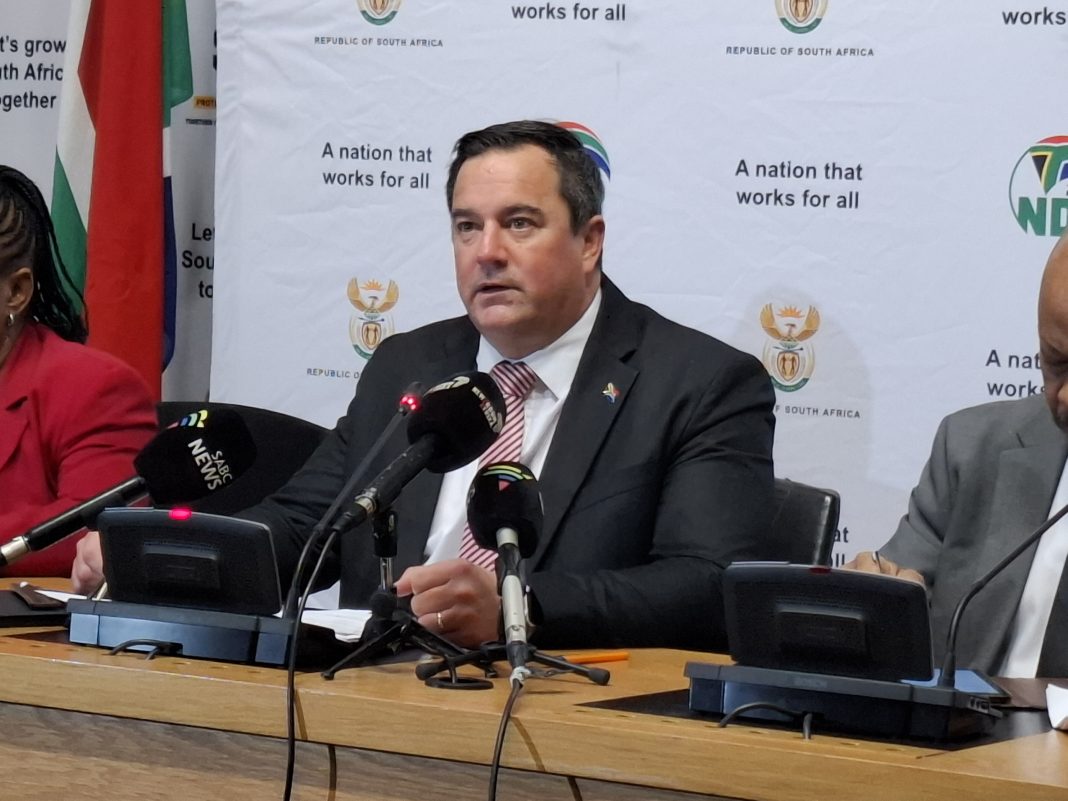
Agriculture Minister John Steenhuisen confirmed that by the end of May 2025, positive cases had been detected across all cattle farming systems — including commercial beef herds, breeding animals, feedlots, dairy cattle, and communal herds.
“In KwaZulu-Natal, the outbreaks have continued to spread westward, with confirmed cases in eDumbe, Dundee, Danhauser, Newcastle, Alfred Duma, Okhahlamba, Mshwathi, eDumbe and eMadlangeni local municipalities,” said Steenhuisen.
He added that the spread of the virus from KwaZulu-Natal into Mpumalanga was linked to a livestock auction in February 2025. By late May, further outbreaks were reported in Gauteng, the North West, western Mpumalanga, and the Free State.
Investigations suggest both farm-to-farm transmission and “pinpoint” introductions through livestock movements where biosecurity protocols were ignored, accelerating the spread of the disease.
Current outbreak numbers stand at 54 in Gauteng, 26 in North West, 9 in Mpumalanga, and 5 in the Free State.
Steenhuisen warned that responses to the outbreak have been fragmented, lacking enforcement and coordination. He proposed strengthened measures, including revising control zones, expanding diagnostic and sampling capacity, and increasing access to vaccines.
To supplement South Africa’s vaccine production, 900,000 doses were procured from the Botswana Vaccine Institute at a cost of R72 million. Of these, 500,000 doses have already been administered to cattle in KwaZulu-Natal, Mpumalanga, Limpopo, Gauteng, North West and the Free State.
“A mid-scale vaccine facility with a capacity of 150,000 to 200,000 doses per year is on track for commissioning in March 2026,” Steenhuisen explained.
“The Bosberaad recommended a phased, multidisciplinary approach, combining stronger existing controls with the PCP framework. This will be underpinned by legal reform, domestic vaccine production, improved diagnostics, livestock identification systems, and collaborative governance.”
The minister raised concern over farmers moving or privately treating cattle showing clinical signs without reporting them, calling such practices irresponsible and unlawful as they risk entrenching FMD as endemic in South Africa. Farmers are urged to cooperate fully with veterinary officials, report suspected cases immediately, and refrain from moving animals that show symptoms.
The Eastern Cape, which experienced outbreaks in 2024, has reported no new cases in 2025. Following extensive surveillance, the Disease Management Area (DMA) in the province was lifted.
The Northern Cape and Western Cape remain FMD-free, with no cases detected and no cattle vaccinated. Veterinary services in both provinces remain on high alert, though success depends heavily on farmers adhering to movement restrictions and biosecurity requirements.
Steenhuisen concluded that tackling FMD remains a serious national concern with major consequences for government, industry, and especially farmers. He stressed that only collective discipline and cooperation can safeguard the future of South Africa’s livestock industry.
INSIDE POLITICS