


Thebe Mabanga
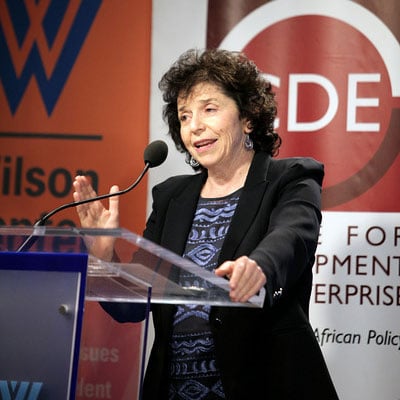
The Centre for Development Enterprise (CDE), a Johannesburg-based policy think tank, has called on government to make the labour market more flexible, scrap the Sector Education and Training Authorities (Setas) and loosen regulations in order to boost informal trade and tackle the country’s persistently high unemployment.
“More than 12 million South Africans want work but cannot find a job. For 17 years, 1 000 people have joined the unemployment queue every day,” said Ann Bernstein, executive director of CDE.
In a new report titled South Africa’s Unemployment Catastrophe: A call for Urgent Action, the CDE also calls for boosting the availability of low cost housing for creating viable economic centres.
More critically, the report dismisses government’s public work programmes such as the Presidential Youth Employment Initiative (PYEI) and the Extended Public Works Programme (EPWP) as inadequate to decisively address unemployment.
The CDE notes that at the heart of the unemployment conundrum is that “Over nearly two decades, South Africa’s labour force grew by 42 per cent, while total employment increased by barely 15 per cent. The result: millions more work-seekers chasing far too few opportunities.”
The CDE attributes high unemployment to challenges in electricity supply and logistics, a deepening fiscal crisis characterised by high levels of debt; high levels of corruption which eats away at resources meant for development, municipal collapse, and what the think tank calls “badly conceived and implemented economic transformation and industrial policies”.
“Each of these failures on its own would have slowed growth. Together, they have collapsed growth to little more than zero. And when an economy doesn’t grow, nor does the number of jobs,” said Bernstein. “Economic growth is by far the most potent lever for reducing unemployment.”
The CDE says consistent economic growth of 4% can lead to about 400 000 new jobs per year. This is slightly lower than the 5% to 7% economic growth rate thought to be required to reduce joblessness. Some may point out that where economic came relatively close to 4%, such as the early 2000s, job creation was nowhere near as high as suggested.
CDE’s report shows that public employment schemes such as the Expanded Public Works Programme, Community Works Programme and the Presidential Employment Stimulus are no substitute for structural reform.
“Public employment schemes provide only temporary relief and will never generate the millions of jobs South Africa needs,” said Bernstein.
Bernstein calls for political will to tackle vested interests. “President Ramaphosa seems unable to make the tough choices necessary to grow the economy and create jobs for the millions of unemployed. The country desperately needs bold and resolute leadership willing to confront vested interests and embrace the changes that are required.”
The CDE calls for reforms in four areas starting with the labour market. “South Africa’s labour market rules raise the cost of hiring and make it harder to employ unskilled and inexperienced workers.”
The think tank argues that labour market rules favour big business and unions and bargaining council agreement extend to companies that have not signed up to them. “By the National Minimum Wage Commission’s own estimation, the national minimum wage has destroyed almost 100 000 jobs.” the report notes.
It calls for loosening regulations and easing restrictions on labour brokers whose services it says “help expand opportunities and create entry points for people with no other connections to the labour market’.
The next area of reform is skills development. “Every year, South Africa spends tens of billions on skills development.” the report notes “But outcomes are dismal. SETAs are widely regarded as dysfunctional, while most Technical and Vocational Education and Training Colleges (TVETs) fail to provide young people with skills that employers need.”
The CDE then makes a contentious call that appears to be gaining traction, for SETAs to be scrapped, and the private sector be placed in charge of developing the skills it requires while it also calls for the overhaul of TVET Colleges.
The report calls for “unleashing the dynamism of small business” by listening to small business and what stifles enterprises and bringing private players like business incubators through a rigorous and competitive bidding process to provide solutions to grow small businesses.
In what appears to be a departure from its historical stance, the CDE advocates for the nurturing of the informal sector. “South Africa’s informal sector is unusually small. Informal jobs are precarious and low-paid, but they play an essential role in poverty alleviation in countries around the world.”
Proposed measures include regular consultation with informal traders, zero rating of trading licences and providing a transport subsidy and freeing up state land to provide low-cost housing and create dense, economically viable spaces.
“South Africa’s institutional environment pushes up the cost of employment and locks millions out of work,” said Bernstein. “We shouldn’t romanticise the informal economy, but we need to create more space for people to find their own livelihoods.”
The CDE report comes in the same week as the ANC unveiled a new, or some would say rebranded, ten-point economic plan that will see a “War Room” set up in the presidency.
The plan aims to use electricity tariffs and transmission investment to drive economic activity, accelerate the recovery of the freight and logistics sector and rebuild the chrome and manganese industries as it top three priorities.
But the plan also aims to “scale up labour activation and public employment programmes” that the CDE decries. The ANC also aims to focus on Small Medium and Micro Enterprises (SMMEs), drive growth in township and rural areas, and diversify trade partners and export market, a process that has been accelerated in the wake of United States President Donald Trump’s unilateral imposition of 30% tariffs.
INSIDE POLITICS