


By Simon Nare
Tourism Minister Patricia de Lille has urged her G20 counterparts to pursue sustainable collaboration in the sector, aiming to grow an industry that balances economic growth with environmental stewardship.
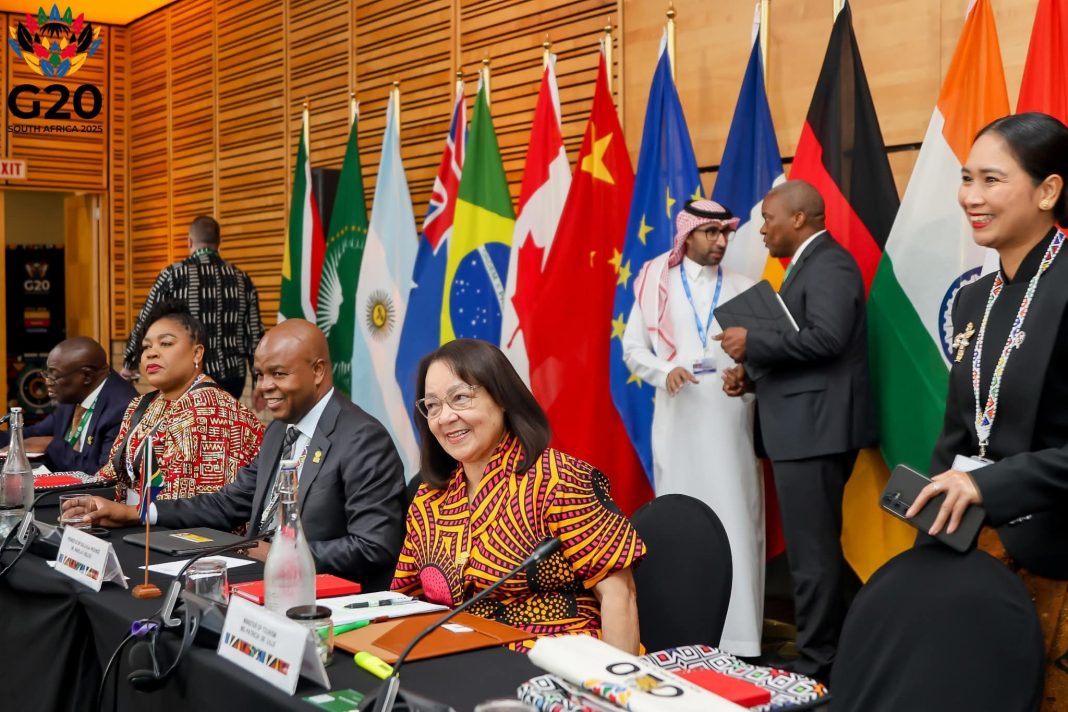
Opening the G20 Tourism Ministers’ Meeting at the iconic Kruger National Park’s Skukuza Rest Camp in Mpumalanga on Friday, De Lille called on the economic bloc to support private investment that drives long-term sustainability, inclusion, competitiveness, and resilience.
De Lille urged her G20 counterparts to lead with courage and purpose in building a tourism sector that balances growth with sustainability.
“Colleagues, the world is watching. Let us lead with courage, collaborate with purpose, and build a tourism sector that truly leaves no one behind. Investment must also support sustainability—whether in green infrastructure, eco-lodges, or low-impact services—so that growth today does not compromise the prospects of tomorrow,” she said.
De Lille described tourism as a powerful engine of global growth, contributing $2 trillion in export revenues, supporting 371 million jobs, and accounting for 10.3% of global GDP.
But she warned the benefits were unevenly shared.
By mobilising public and private capital, reducing investor risks, and ensuring funds reach community-based ventures and micro-enterprises, she argued, tourism could create jobs, reduce inequality, and build a fairer sector.
“We must reduce barriers, strengthen institutional frameworks, and provide the targeted enabling conditions for inclusive and sustainable growth through development finance. We also must mobilise private investment for long-term sustainability, inclusion, competitiveness, and resilience. This requires creating an investment environment that is transparent, predictable, and aligned with sustainability principles,” she added.
De Lille outlined four priorities under South Africa’s G20 Presidency for tourism: digital innovation, air connectivity, financing and investment, and resilient travel for sustainable development.
On digital innovation, she said technology is transforming how travellers plan, book, and experience their journeys, yet many small businesses struggle to keep pace.
“By equipping entrepreneurs with digital literacy, supporting incubators and networks for start-ups, and ensuring inclusive and ethical adoption of technology, we can open new opportunities. Digital innovation is not about replacing people, but about empowering them—helping small businesses thrive in a competitive environment.”
She emphasised that micro, small, and medium enterprises (MSMEs)—the backbone of the tourism economy—must undergo digital transformation to remain competitive and future-ready.
Turning to air connectivity, De Lille highlighted its critical role in driving international tourism.
Without efficient, affordable, and sustainable connections, she warned, destinations risk isolation.
She called for expanded regional and international links, streamlined visas and border procedures, and cleaner aviation technologies to boost tourism, trade, and cooperation.
“We must make travel smoother, more accessible, and more sustainable for all. As the G20 Tourism Report on Air Connectivity shows, G20 members—who account for 68% of all international tourist arrivals, 71% of international tourism exports, and 68% of all passenger fares—are well-positioned to lead this transformation in support of global mobility, equity, and prosperity,” she said.
INSIDE POLITICS