


By Thebe Mabanga
State-owned logistics company Transnet continued its recovery as it significantly narrowed losses and ramped up investment in capital equipment.
The ports, rail and pipeline operator delivered their financial results for the year to March this year at the Johannesburg Stock Exchange (JSE) on Friday Morning.
During the year under review and in the period since, Transnet also helped deliver a key economic reform programme for opening the railway network to third parties, officially ending its monopoly on the railway network.
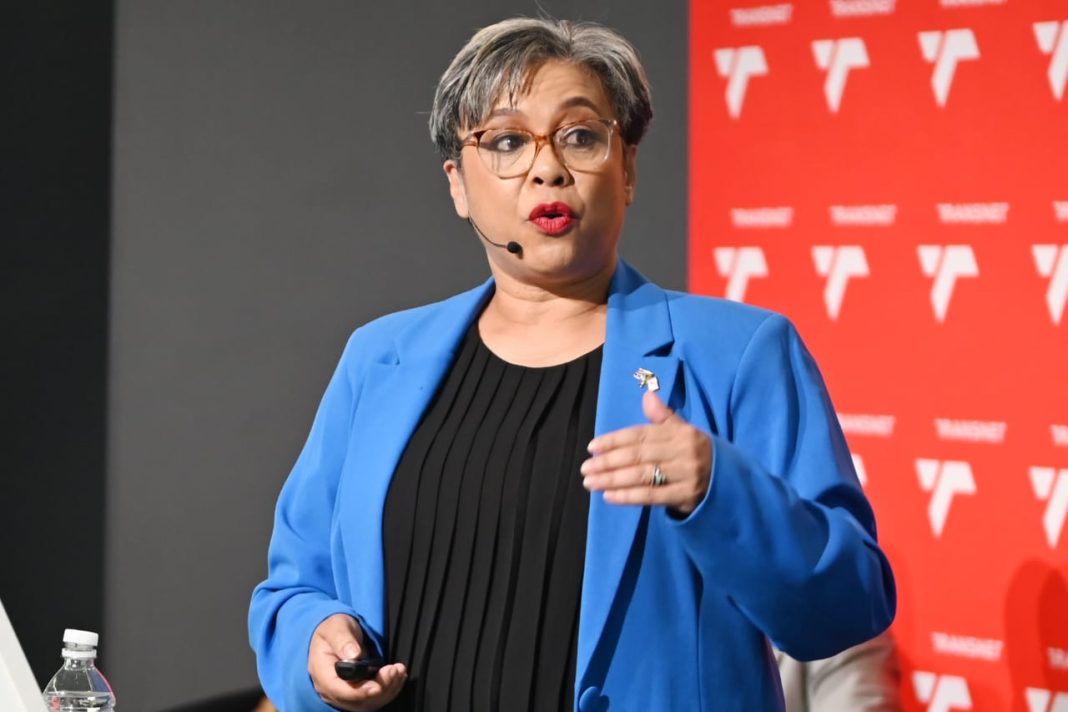
The Transnet Recovery Plan was rolled out in the last quarter of 2023 when the new board assumed office, and it gathered momentum in March 2024 with the appointment of a permanent executive team led by advocate Michelle Phillips.
For the year to March, revenue rose by 7.8% to R82.7 billion, while net operating expenses declined by 4.9% to R52.1 billion, pointing to a stronger profit outlook.
Earnings Before Interest, Tax, Depreciation and Amortisation (EBITDA) surged 39.4% to R30.6 billion, lifting the EBITDA margin to 37.0%.
Capital investment accelerated by 44.2% to R24.0 billion, largely directed at new port and rail equipment to boost efficiency. Most notably, Transnet’s annual loss narrowed by 74%, from R7.4 billion last year to R1.9 billion.
Cash generated from operations after working capital changes dipped slightly by 0.6% to R28.6 billion.
Gearing (debt-to-equity ratio) stood at 49.6%, while cash interest cover, including working capital changes, improved to 1.8 times, meaning Transnet could cover interest obligations and operating needs almost twice over with available cash.
Phillips attributed the revenue growth to tariff increases and higher automotive and rail volumes, though weaker pipeline and container volumes offset some gains.
She added that the focus is now shifting from operational recovery to transformation and long-term, sustainable growth.
“The improved revenue performance, reliable cash generation from operations, and stronger rail volumes collectively provide an adequate platform for Transnet to continue its drive towards sustainable profitability,” the company said in its results statement.
Transnet reaffirmed its commitment to cutting turnaround times, reducing congestion, and improving service predictability across rail, ports, and pipelines.
It said investments in equipment, digital systems, and operational excellence are already showing results.
As part of preparing for third-party rail access, Transnet established the Transnet Rail Infrastructure Manager (TRIM), formally separating infrastructure management from operations and enabling private operators to apply for slots. Another milestone was finalising the Draft Network Statement, which sets out access terms for key rail corridors, including weight limits and tariffs.
This has allowed Transport Minister Barbara Creecy to appoint 11 Train Operating Companies (TOCs) as the first participants in third-party access.
Transnet has also embarked on a Port Infrastructure Enhancement Programme, ramping up equipment purchases for port operations and opening opportunities for private players to help develop its container terminals.
INSIDE POLITICS