


By Johnathan Paoli
South Africa is facing a deepening economic crisis following U.S. President Donald Trump’s announcement of sweeping 30% import tariffs on South African goods, effective 1 August.
The move has triggered an outcry from unions, industry bodies, and opposition parties, who warn of devastating consequences for jobs, trade, and investor confidence.
The tariffs are widely seen as a signal of the impending collapse of the African Growth and Opportunity Act (AGOA), threatening duty-free access to the United States for over 6,000 South African products, including vehicles, citrus, textiles, and minerals.
Agriculture Minister and DA leader John Steenhuisen described the tariffs as a “crippling blow” to the economy and a “national emergency” for exporters and workers alike.
“The South African economy—already contending with record-high unemployment—cannot absorb further shocks to its export-dependent sectors,” Steenhuisen said.
Steenhuisen emphasized that South Africa’s already-struggling economy, burdened with the world’s highest unemployment rates, cannot withstand further shocks to its export-driven sectors.
“We stand in solidarity with every entrepreneur, farmer, manufacturer and miner whose livelihoods are now in jeopardy. The President has a small window until August 1 to restore confidence and improve trade relations. We trust this opportunity will not be squandered,” he said.
Steenhuisen called on the ANC to implement urgent structural reforms to cushion the impact.
His list included liberalising energy markets, improving rail and port infrastructure, reforming the Expropriation and BEE Acts, and addressing endemic corruption.
The citrus sector, while only sending around 5%–6% of its produce to the US, is particularly vulnerable due to its reliance on seasonal exports from rural Western and Northern Cape communities.
Citrus Growers’ Association CEO Boitshoko Ntshabele, warned that a 30% tariff would render South African citrus uncompetitive, potentially devastating entire towns like Citrusdal.
“The threat of a punitive US tariff means many of our growers are unable to plan for the entire season. Producers may be forced to divert exports to other saturated markets, causing oversupply and depressing global prices,” Ntshabele said.
He added that South Africa’s counter-seasonal supply is complementary to US citrus production, suggesting that a mutually beneficial exemption for fresh produce is still possible.
Similarly, the Automotive Business Council is reviewing the impact of the announcement.
CEO Mikel Mabasa previously noted that the US is the third-largest export destination for South African vehicles, with R35 billion in exports last year, fearing the new tariffs could trigger plant closures and job losses in an already strained sector.
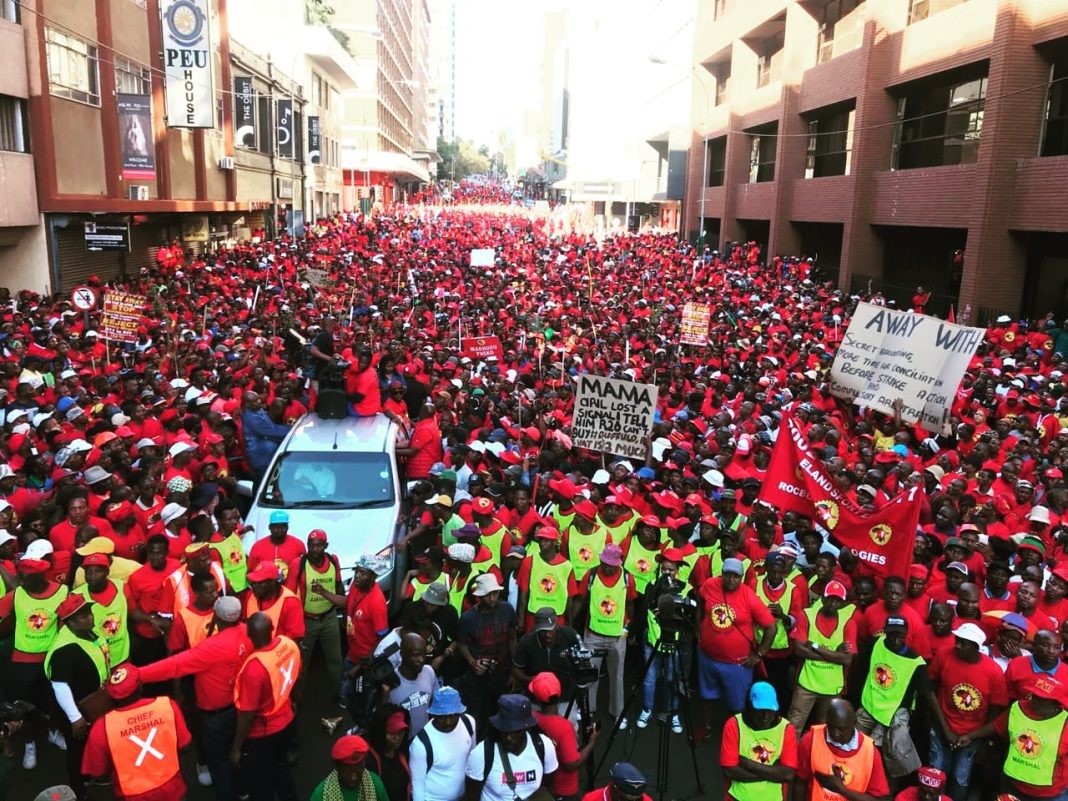
The South African Federation of Trade Unions (Saftu), led by General Secretary Zwelinzima Vavi, described Trump’s tariffs as “economic warfare against the Global South” and a direct assault on South African jobs and sovereignty.
“Trump’s proposal is not about fair trade. It is an attack on multilateralism, solidarity, and the right of developing countries to industrialise. A blanket tariff punishes countries equally — regardless of their carbon emissions, labour standards, or developmental levels. It makes no distinction between wealthy polluters and poor nations struggling to uplift their people,” Saftu said in a scathing statement.
The union federation warned that key sectors such as steel, textiles, agro-processing, and vehicles, all heavily reliant on US markets, would suffer massive job losses and community collapse.
Saftu linked the tariff threat to broader systemic weaknesses in South Africa’s economy, including load shedding, logistical backlogs, and decaying infrastructure.
The federation rejected the National Development Plan as a failed policy and instead called for a shift toward a worker-centred development model grounded in the United Nations Sustainable Development Goals (SDGs).
The union proposed urgent government action, including convening a national economic crisis summit, diversifying trade partners, and fighting back at the World Trade Organisation (WTO).
Despite the alarm, Steenhuisen believes diplomacy is still possible.
Speaking in Parliament, he pointed to the revised implementation deadline as a sign that negotiations may still be fruitful, adding that South Africa’s agricultural attaché in Washington is already working to resolve trade tensions.
He urged a coordinated national response to mitigate the fallout, especially for farmers and exporters whose competitiveness depends on access to the U.S. market.
“The real risk is that our products become uncompetitive against those of countries not facing the same punitive tariffs. Without urgent reforms and proactive diplomacy, we risk losing jobs, markets, and credibility,” Steenhuisen warned.
INSIDE POLITICS