


By Johnathan Paoli
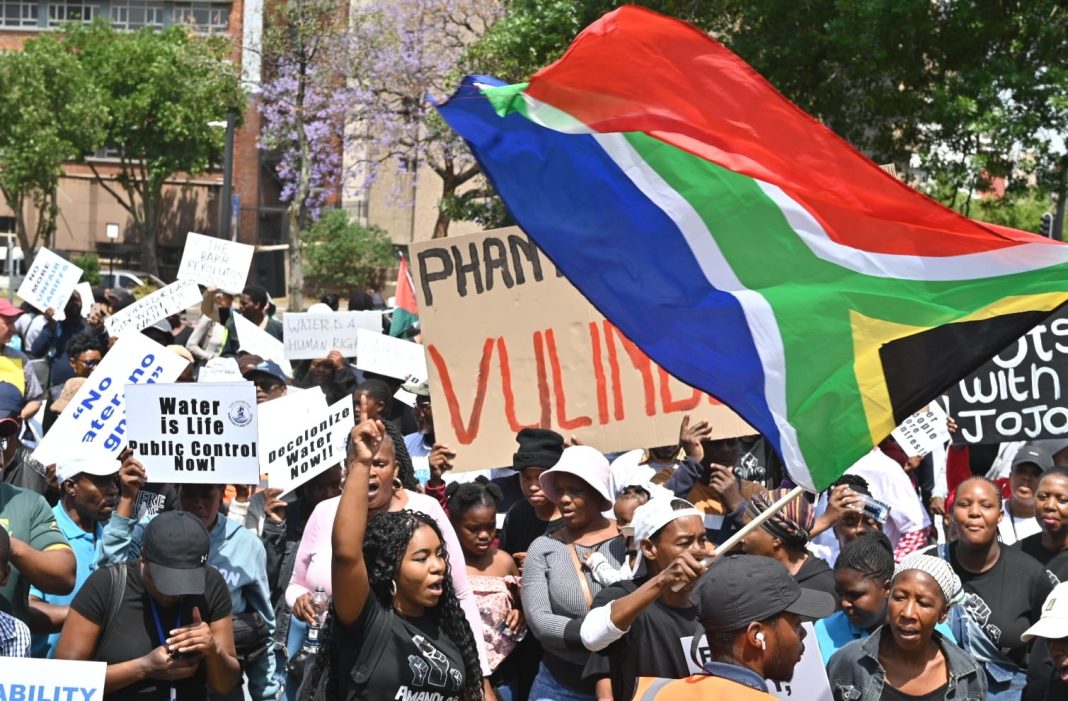
The streets outside the Johannesburg Council Chambers in Braamfontein were transformed into a sea of placards on Saturday as residents, civil society groups, and community leaders united to tell the metro, its mayor and councillors that the city’s water crisis — the result of a ‘dysfunctional government’ — must be prioritised.
Johannesburg’s water crisis has pushed residents to the breaking point, with intermittent supply, dry taps, and failing infrastructure — the result of years of maintenance neglect — now defining daily life for communities.
The protest opened with a solemn prayer from Reverend Tshepo Matubatuba, who urged those gathered to stand together in the struggle for justice.
“We are all fighting for access to water, which is more than just a human right. It is the source of life and the lifeline for all of creation,” he declared.
His words set the tone for a demonstration marked by unity across class, faith, and political divides.
Protest organisers repeatedly reminded attendees that the gathering was people-led, not party-political; a stance reinforced by the chant that echoed through the crowd: “People before politics!”
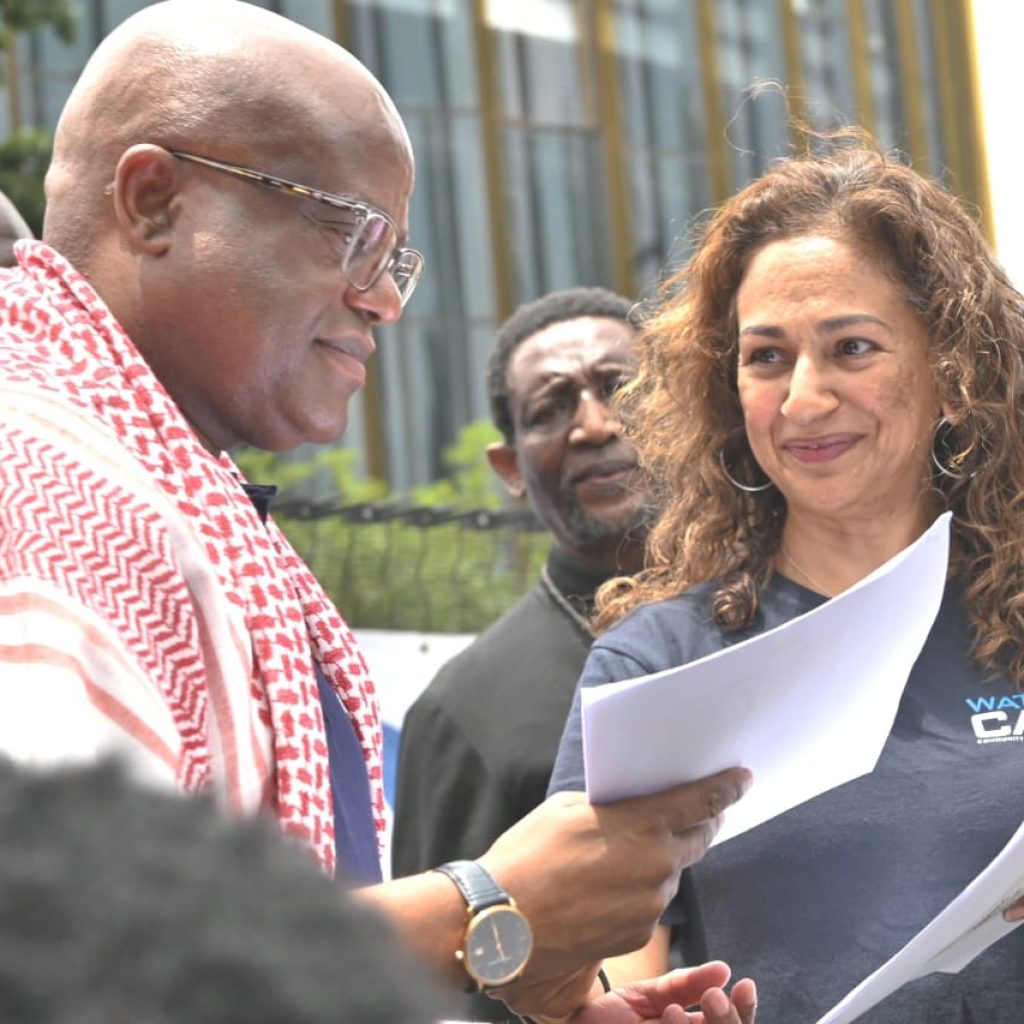
Dr Ferrial Adam of the Water Community Action Network (WaterCAN) read the memorandum of demands to the large crowd before handing it over to Johannesburg Mayor Dada Morero.
Her address struck at the heart of the city’s collapsing system.
“We are gathered here because the systems that are supposed to serve us are broken. We are tired of living with a dysfunctional government that blames everything on everyone instead of fixing the issues,” Adam said.
She called for the city to restore water as a basic right, not a privilege.
“Our hospitals, our schools, our businesses are struggling to operate without water. We are not just speaking about water, we are speaking about power, accountability, and the right to dignity,” she said.
From Thembelihle, community activist Simpiwe Zwane painted a harrowing picture of families living without reliable access.
“If education is the key to success, how will my child get the key when they go to school at 8am and come back at 10am because there is no water? Come to the people and work with them to find sustainable solutions, Mayor,” she said.
Her plea was met with thunderous applause from the crowd, reflecting the frustration of residents who say they have been ignored for too long.
The youth contingent of the protest, led by Obakeng Kgatshe of the Ahmed Kathrada Foundation’s youth programme, reminded officials that young people are among those most affected.
“This crisis is disrupting schools in an already fragile education system. It’s exposing us to mafias who are using our resources to enrich themselves. May they know that we are not afraid of them,” Kgatshe said.
Phumla Williams of the Joburg Crisis Alliance delivered one of the most forceful speeches of the day, condemning government inaction and corruption.
“We want you to take the demands of the people more seriously than the demands of the water-tanker mafias. Water is our right and we are entitled to it,” she said, addressing the mayor.
Williams blamed the city’s long-running water outages on years of neglect and mismanagement.
“This is completely preventable. There’s been no proactive maintenance, no transparency, and no political will to fix what’s broken. We have paid our rates in full, now the city must do its job,” she said.
Ingrid Bester, of the Water Crisis Committee and Water Forum, urged cooperation rather than confrontation.
“We are not your enemies. We are your partners, ready to help rebuild trust and restore dignity. But we will not stay silent while our constitutional rights are ignored. We do not want your jobs, we just want you to do your jobs,” she told the crowd.
Bester warned that if political parties cannot put residents first, they will face the consequences at the polls.
“In 1994, we queued for freedom. Today, we are rising again to reclaim the promise that was made,” she said.
Ruso Majidja of Professionals and Vendors for Change framed the protest as part of a larger civic awakening.
“Sustainable water provision is a national and continental concern. We, the citizens of South Africa, are the messiah we have been waiting for. This protest is a call to action for Johannesburg citizens to fix their own city,” he said.
Majidja emphasised that fixing Johannesburg’s infrastructure crisis requires ethical leadership and competent professionals in municipal management.
Morero accepted the memorandum and briefly addressed protesters, acknowledging their frustrations and promising to respond.
He commended civil society’s courage, saying: “Your role in holding the government accountable is vital. We hear your demands, and we will respond.”
Protesters have warned that failure to act swiftly would result in continued demonstrations and possible citywide shutdowns.
INSIDE POLITICS