


By Thebe Mabanga
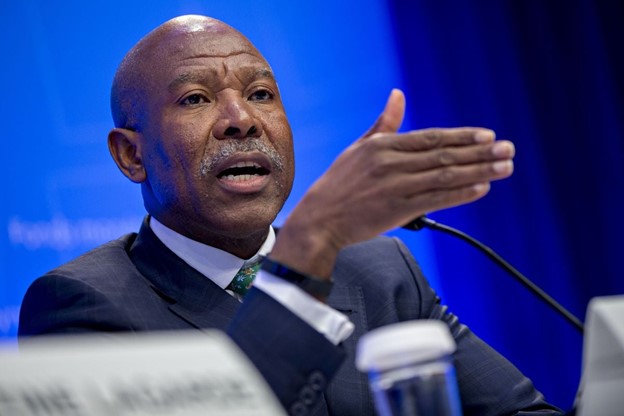
On Thursday, Reserve Bank Governor Lesetja Kganyago will announce the Monetary Policy Committee’s (MPC) decision following its last bi-monthly meeting of the year.
The Committee should cut rates by 50 basis points, but don’t be surprised if it keeps them on hold.
Kganyago and his band of conservative merry men and women will seize on the newly unveiled 3% inflation target—brandishing it like a shiny new toy—as the perfect excuse to hold.
This comes after Stats SA reported on Wednesday that October inflation edged up to 3.6%, its highest level in a year but still below the Reuters forecast of 3.7%.
Upward pressure came from housing, utilities, and fuel, while food and non-alcoholic beverages also played a role.
The new lower target is a victory for Kganyago and his market cheerleaders.
After nudging the target to 4.5% almost two years ago, he again leaned on Finance Minister Enoch Godongwana—not just to review the target, but to announce it earlier than planned during the Medium-Term Budget Policy Statement, instead of the main Budget in February next year.
Godongwana’s claim that the new target will only be implemented over the next two years is both strange and deluded.
If so, why rush to announce it now?
And what is the Reserve Bank expected to do until then—let inflation breach 4% and shrug?
Kganyago has already made it clear he intends to use the new target to anchor expectations, and in his mind, that begins immediately.
The problem with Kganyago’s approach is that he seems to disregard the 2010 directive issued by the late Finance Minister Pravin Gordhan to then-Governor Gill Marcus, urging her to consider sustainable growth and employment when setting rates. Marcus understood that brief.
Facing an economy emerging from the global financial crisis, she cut the repo rate aggressively from 2009 to 2014.
Kganyago, however, revealed his attitude early: he argued that interest rates don’t directly or immediately influence growth or employment, but are merely transmissive—requiring several steps by other actors before the effects reach the real economy.
Since those steps are outside his control, he appears unbothered about aiding the process with a cut.
So while inflation sits outside the new target, GDP growth in the third quarter was 0.8%, and the broader outlook does not exceed 1.8% until at least 2027.
The Quarterly Labour Force Survey shows 248,000 new jobs, yet 3.5 million people remain discouraged jobseekers.
Raymond Parsons of North-West University Business School asks whether unemployment has peaked at the low-30% range.
Even if it has, complacency would be reckless. The current level is unsustainably high, and the broader definition—above 40%—is even more alarming.
In its preview of the MPC meeting, Nedbank notes: “Next week’s meeting is a difficult one to call.
Our inflation forecasts suggest reason for caution, but the upside risks to the outlook appear limited.”
Yet the bank also warns that “monetary policy seems a bit restrictive for an economy lacking any meaningful momentum,” prompting it to shift from a hold to a 25-basis-point cut.
Weak growth and tepid employment, South Africa’s exit from the FATF grey list, the first ratings upgrade in 16 years, and a population in need of festive cheer—not to mention trauma from the drama and comedy playing out at the Madlanga Commission and Parliament’s ad hoc committee—all argue for Kganyago to cut by the biggest margin since the pandemic five years ago.
Whether the Hawks on the MPC can be swayed remains to be seen.
Brian Kantor, the mellifluous sage at Investec and UCT, often reminds us that “democracies are consumer-led societies.”
Consumers need low, stable interest rates to work their magic. American and Asian consumers have shown this repeatedly, using robust spending to carry economies through crises.
Kganyago would do well to heed those words.
INSIDE POLITICS