By Johnathan Paoli
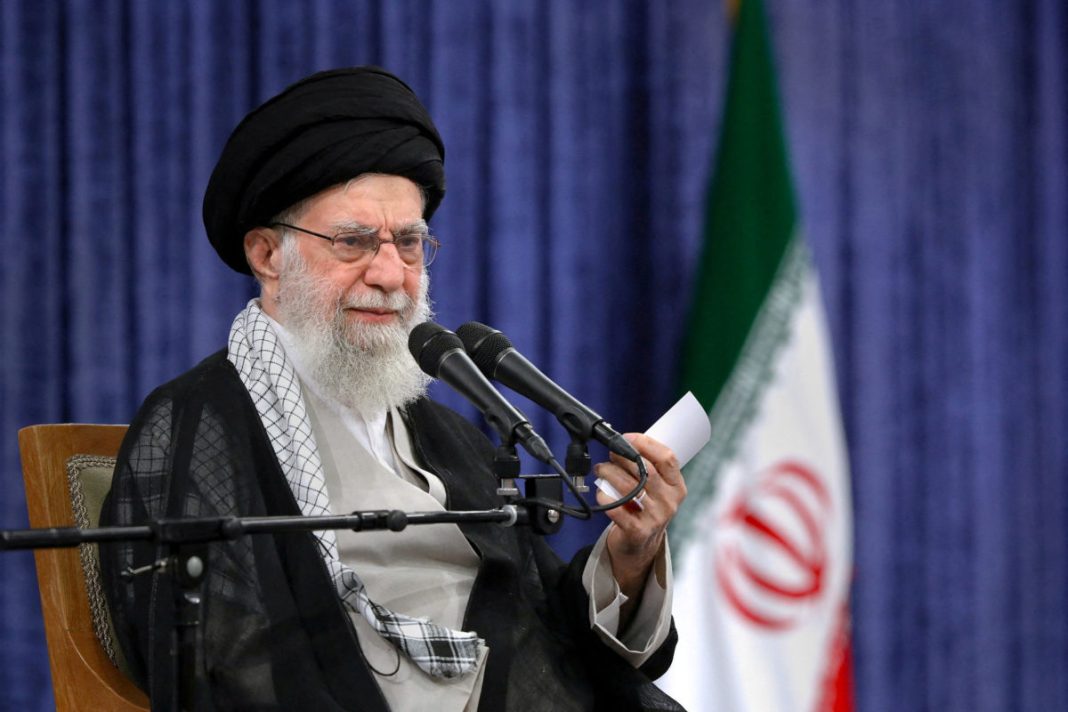
Iran has officially confirmed the death of its supreme leader, Ayatollah Ali Hosseini Khamenei, triggering shockwaves across the Middle East as world leaders warned of escalating conflict and regional instability following a massive joint military assault by the United States and Israel.
Iranian state television announced early Sunday morning that the 86-year-old cleric was killed during coordinated US-Israeli strikes that targeted military and government facilities across the country.
Authorities declared a 40-day national mourning period, underscoring the gravity of the moment for the Islamic Republic as it confronts an unprecedented leadership crisis.
US President Donald Trump welcomed Khamenei’s death, hailing it as a decisive blow to Iran’s ruling system and warning Tehran against retaliation.
“He was unable to avoid our Intelligence and Highly Sophisticated Tracking Systems and, working closely with Israel, there was not a thing he, or the other leaders that have been killed along with him, could do. This is the single greatest chance for the Iranian people to take back their Country,” Trump wrote.
The strikes mark a dramatic escalation in US involvement in Iran, representing the second direct attack by the Trump administration in eight months amid faltering negotiations over Tehran’s nuclear programme.
Iranian officials said Khamenei was killed at his office during the opening phase of the assault.
His death ends a 35-year rule in which he exercised final authority over all major state decisions, including military strategy and nuclear policy.
Iran’s parliamentary speaker, Mohammad Bagher Qalibaf, delivered the first high-level televised response from Tehran, vowing retaliation.
He labelled US and Israeli leaders as “filthy criminals who would face devastating blows”.
“You have crossed our red line and must pay the price. We will deliver such devastating blows that you yourselves will be driven to beg,” Qalibaf said.
Meanwhile, Iran’s Islamic Revolutionary Guard Corps (IRGC) said it has launched strikes against 27 US military bases across the region, as well as the headquarters of the Israel Defense Forces and a defence complex in Tel Aviv.
In a statement carried by Iranian state television, the IRGC said the attacks were part of a sustained military campaign and warned that further strikes were imminent.
The IRGC said it “will not allow sirens to become silent” in Israel or at American bases in the region, pledging “an even stronger attack against enemy facilities and targets”.
However, it has not yet been confirmed by the US or Israel.
Qatar’s Interior Ministry said eight people were wounded early Sunday in Iranian attacks, bringing the total number injured in the country to 16 since strikes began the previous day.
Authorities described material damage as limited but urged residents to remain indoors and keep roads clear for emergency services.
Emergency alerts instructed people to stay in safe locations.
Unrest also flared in Iraq, where protesters gathered in Baghdad to denounce Khamenei’s killing.
Reports indicate gunfire and smoke near the heavily fortified Green Zone, home to Iraqi government buildings and the American embassy.
Regional and international leaders urged restraint, with Egyptian Foreign Minister Badr Abdelatty calling for de-escalation and prioritising diplomacy to prevent what he warned could become “comprehensive chaos”.
“There is no alternative to dialogue to address the current crises,” he said.
Reports have indicated that the Secretary of Iran’s Supreme National Security Council, Ali Larijani, has confirmed that an interim leadership council will assume authority until a new supreme leader is selected.
Larijani said the council will consist of the Iranian president, the head of the judiciary and a jurist from the Guardian Council, in line with constitutional provisions governing a leadership vacuum.
Khamenei, who became supreme leader in 1989 after succeeding revolutionary founder Ayatollah Ruhollah Musavi Khomeini, presided over decades of confrontation with the West.
INSIDE POLITICS