
- Advertisement -

Mashatile: SA cuts TB infections by 61%, but deaths still lag target

- Advertisement -

Must read

By Akani Nkuna

Deputy President Paul Mashatile, in his capacity as Chairperson of the South African National AIDS Council (SANAC), says the national TB programme has achieved remarkable success in reducing the TB incidence rate — the number of new cases each year — with a 61% decline recorded by 2024.

This comes as government efforts to reduce TB infection and disease continue to gain ground.

However, TB remains a major public health concern and is still the leading cause of death, particularly among people living with HIV.

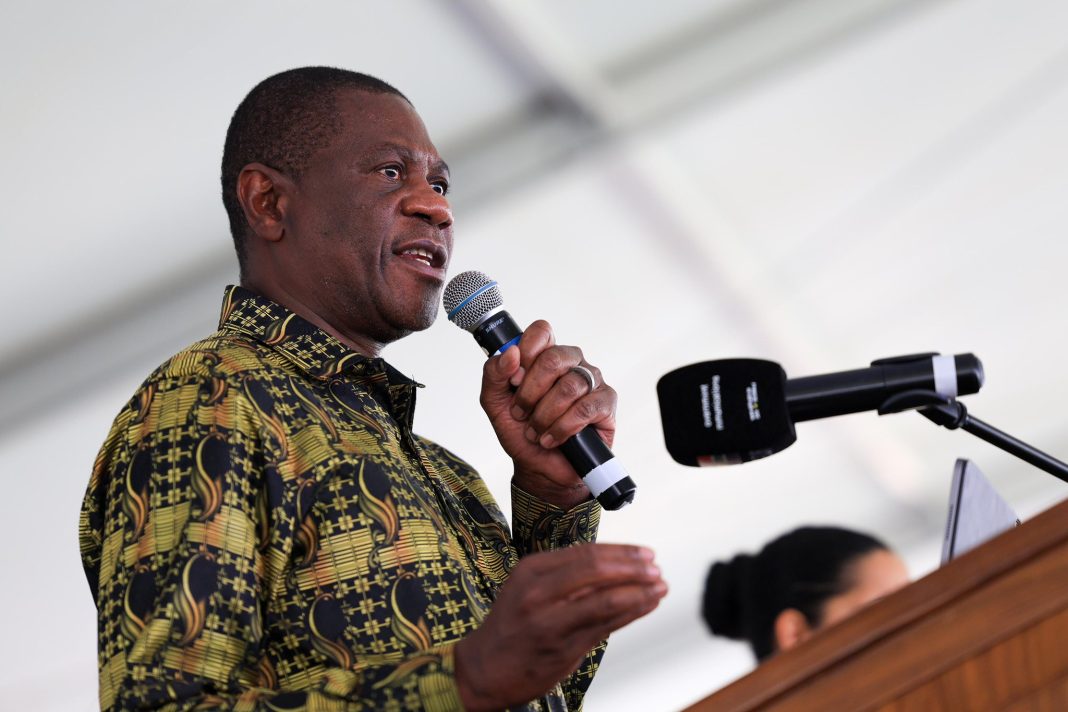
Mashatile was speaking at the national World TB Day commemorative event at the Caledon Sports Grounds in the Western Cape.

“Our National TB (NTB) campaign is showing strong momentum. This year, we have achieved 70% of our ambitious testing targets. Over 3.5 million tests have been conducted since the launch of the NTB campaign, which we unveiled at last year’s World TB Day in KwaZulu-Natal,” said Mashatile.

He added that the campaign has recorded a significant milestone, with more than 3.5 million tests conducted since its launch, reaching 70% of its testing target.

“Despite a slight decrease in overall TB deaths, we have only managed a 17% reduction compared to 2015, far short of the 75% target we have set for ourselves,” Mashatile said.

“We are now seeing a 79% treatment success rate, and for the first time, lost-to-follow-up rates for drug-resistant TB are in single digits. This breakthrough is a result of our accelerated efforts to scale up the introduction of shorter, more effective treatment regimens.”

“This progress is worth celebrating, as it not only saves lives but also restores hope. It exemplifies that through unity, strengthened partnerships and innovation, we can effectively combat disease, reclaim futures, rebuild communities, and revitalise our national spirit.”

Mashatile called for increased investment to support research and strengthen government’s efforts to eliminate tuberculosis.

“This extends to communities. They must organise awareness campaigns, support clinics and create spaces where TB survivors are celebrated, not shunned. Most importantly, our institutions must guarantee access to diagnostics, medicines and social support,” he said on Tuesday.

“But beyond that, we must invest in prevention, research and the strengthening of health systems that leave no one behind. Together, we bear the responsibility to ensure that no child, parent or worker is left to battle TB alone.”

Mashatile also called for a “patient-centred” response, including improved access to TB testing facilities in rural areas to enable rapid detection.

He said government is exploring the provision of mobile clinics to reach isolated communities, ensuring that health services are accessible to all.

“We must find TB to end it. Early detection is key to breaking the cycle of infection and protecting families and communities. When we diagnose and treat TB sooner, we save lives and prevent further spread,” he added.

He also highlighted that government is at an advanced stage in the procurement of the M72/AS01E vaccine, which is currently undergoing late-stage trials, with a significant number of participants drawn from South Africa.

With efficacy results expected in 2027, Mashatile said this scientific development places South Africa at the centre of a potential breakthrough in eliminating the disease.

“Building on this momentum, we have developed a country vaccine preparedness roadmap. We must be ready to implement at pace and at scale, because when an effective vaccine becomes available, delays will cost lives. South Africa must lead from the front in ensuring rapid, equitable access for all who need it,” he added.

INSIDE POLITICS

More articles

LEAVE A REPLY

Please enter your comment!
Please enter your name here

AVBOB STEP 12

Inside Education Quarterly Print Edition

Inside Metros G20 COJ Edition

JOZI MY JOZI

QCTO

Latest article



