- Advertisement -spot_img

Chauke accuses Batohi of misleading Ramaphosa in bid to trigger probe

- Advertisement -spot_img

Must read

By Simon Nare

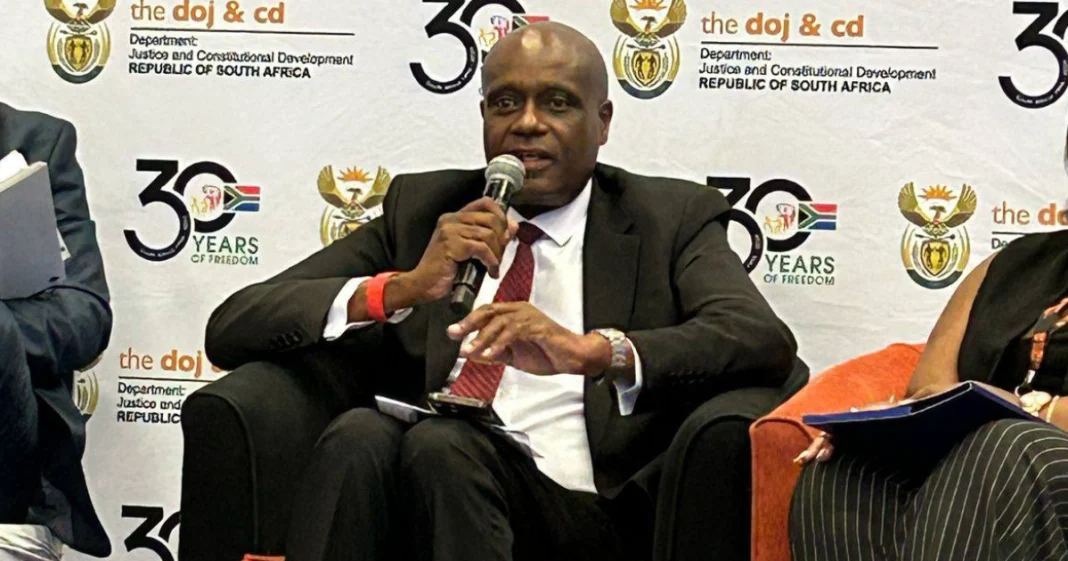
The Nkabinde Inquiry has heard how former National Director of Public Prosecutions, Advocate Shamila Batohi, allegedly misled President Cyril Ramaphosa in her request for an inquiry into South Gauteng Director of Public Prosecutions, Advocate Andrew Chauke, and his fitness to hold office.

Chauke, in his evidence-in-chief before the inquiry chaired by retired Constitutional Court Justice Bess Nkabinde, said that after the Supreme Court of Appeal (SCA) ruled on a matter in which he had been accused of acting irrationally, Batohi sought legal opinions to strengthen her case against him.

He testified that although the SCA did not find his actions or decisions irrational, Batohi went to great lengths to build a case against him, despite what he described as clear evidence to the contrary.

A case in point, Chauke said, was Batohi’s claim that he had forced then KwaZulu-Natal Director of Public Prosecutions, Advocate Simphiwe Mlotshwa, to sign an indictment charging members of the now-disbanded Cato Manor organised crime unit.

However, Mlotshwa’s affidavit, read into the record on Thursday, does not state that Chauke forced him to sign. Instead, it indicates that the decision to sign off on the indictment was taken by former NDPP, Advocate Nomcebo Jiba.

Chauke maintained that Batohi nonetheless persisted with the allegation that he had pressured Mlotshwa.

In his affidavit, Mlotshwa stated that on May 29, 2012, he and Chauke attended a meeting with Jiba, during which Chauke expressed reservations about discussing the Cato Manor matter due to a separate serious case involving him.

“Jiba told the two of us that she had procured a legal opinion from Advocate Gerrie Nel in the Legal Affairs Section (of the NDPP), stating that I (Mlotshwa) could sign the declaration for the prosecutors who would prosecute the matter.

“She further told us that, in terms of this legal opinion, the indictment would be signed by me. I told Advocate Jiba and Advocate Chauke that I would sign the indictment only if it was accompanied by a prosecutors’ memo or report detailing the evidence implicating each accused individually and collectively,” he said.

Chauke said he played only a coordinating role in the Cato Manor cases, but that Batohi had blamed him for authorising the prosecutions and accused him of misconduct.

He also disputed Batohi’s claim that he lacked jurisdiction to work in KwaZulu-Natal because he was based in Gauteng, saying there was no law or policy prohibiting prosecutors from operating across provinces.

“Even now, while I am suspended, there is a DPP from the Northern Cape working in my office in Gauteng,” he said.

Chauke further alleged that when Batohi asked Ramaphosa to institute the inquiry, she withheld an internal report by Advocate Rodney de Kok, which had concluded that Chauke should not be investigated for misconduct.

He said he only became aware of the report when Ramaphosa asked him to explain why he should not be suspended and subjected to an inquiry.

In her request, Batohi raised concerns about Chauke’s role in the Cato Manor matter and his decision to withdraw charges against former Crime Intelligence boss, General Richard Mdluli.

Chauke told the inquiry that evidence had shown he did not take the decision to prosecute the Cato Manor members and that, in the Mdluli matter, the SCA had agreed his decision was not irrational.

He testified that three former NDPPs had not found his actions to constitute misconduct, but that “15 years later, Batohi came and everything changed.”

“It appears the motive was suspicious. But, as one would understand, there was this perception that he (Chauke) came in captured,” he said.

He added that Batohi appeared to have approached her role with the view that certain prosecutors had been captured and should make submissions to the Zondo Commission, noting that those allegations had already been dealt with.

Chauke further claimed that six black prosecutors had been targeted, most of whom had since been pushed out, adding: “I am the last man standing.”

The inquiry has also heard testimony from KwaZulu-Natal DPP Advocate Moipone Noko and former North West DPP Advocate Sello Maema, who described how Batohi allegedly frustrated them out of their positions.

INSIDE POLITICS

More articles

LEAVE A REPLY

Please enter your comment!
Please enter your name here

CATHSSETTA

spot_img

AVBOB STEP 12

spot_img

Inside Education E-Edition

spot_img

Inside Metros G20 COJ Edition

spot_img

JOZI MY JOZI

spot_img

QCTO

spot_img

Latest article