
By Akani Nkuna
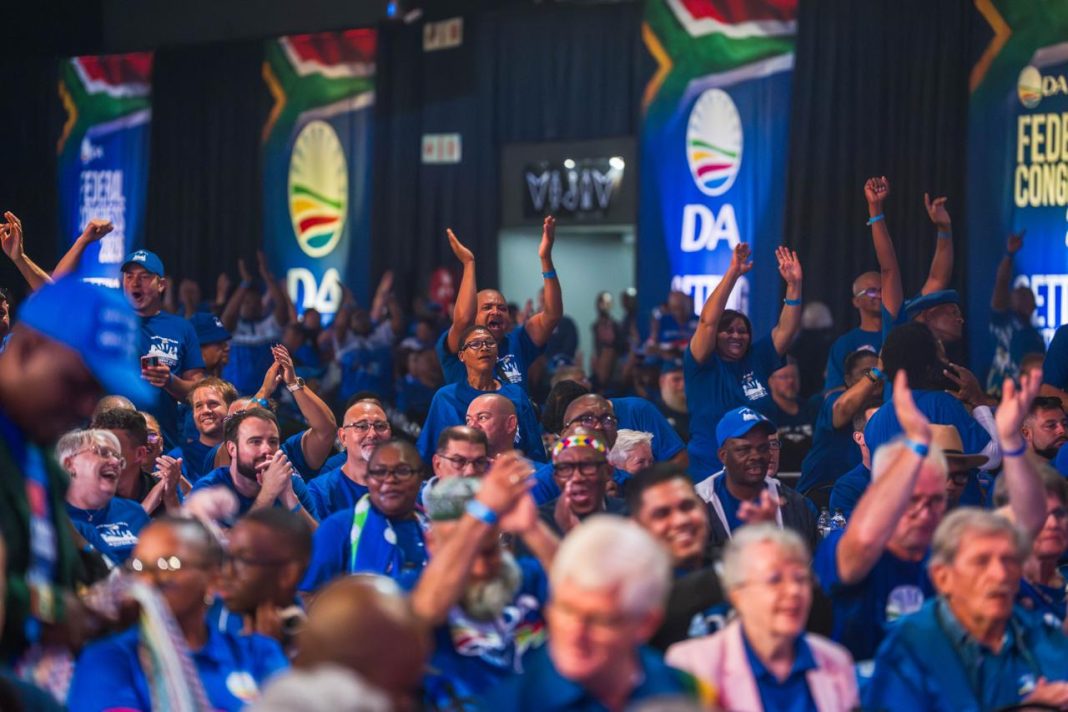
The Democratic Alliance (DA) says it is fully prepared for its federal congress this weekend, describing it as a “historic moment” – the party’s first since entering government of national unity.
More than 2,000 delegates are expected at the two-day gathering in Midrand, Gauteng, on 11–12 April, where new leadership will be elected and key policy decisions adopted.
Cape Town mayor Geordin Hill-Lewis is the frontrunner to succeed outgoing leader John Steenhuisen, facing a challenge from Sibusiso Dyonase.
Congress organiser Werner Horn said all systems were in place for a smooth event, with extensive preparations made to accommodate a record number of delegates.
He described the contest as competitive but “civil”, noting no formal complaints had been lodged between candidates.
“Candidates may campaign until 06:45 on Sunday when voting opens,” Horn said, adding that mechanisms were in place to handle any disputes that may arise.
The congress comes after Steenhuisen confirmed he would not seek re-election, citing his responsibilities as Minister of Agriculture and a desire to make way for younger leaders.
Key contests include the federal leader race and the federal council chairperson position, where Ivan Meyer faces DA Gauteng leader Solly Msimang.
Seven candidates are contesting three deputy federal chairperson positions, including Cilliers Brink, Siviwe Gwarube and Solly Malatsi.
A total of 2,185 delegates will attend, with 45% drawn from party branches to ensure broader representation, according to Horn.
“Gauteng and the Western Cape will contribute the bulk of delegates, but all provinces and municipalities are represented,” he said.
Federal council presiding officer Désirée van der Walt said disqualified candidates had the right to appeal, but DA national spokesperson Karabo Khakhau chose not to do so after failing provincial vetting.
“That is a provincial matter,” she said. “If a candidate is not in good standing, they cannot stand. An appeal process exists, but it was not pursued.”
The DA is also expected to table key policy proposals at its federal congress, including a plan to create two million jobs between 2024 and 2029.
The party says the strategy will begin with improving the ease of doing business, which it estimates could generate between 350,000 and 400,000 jobs within the first year of implementation.
On higher education, the DA proposes reforms to the National Student Financial Aid Scheme (NSFAS) aimed at creating a more sustainable funding model.
Its policy outlines a tiered system of loans and grants, prioritising substantial support for students from low-income households, with the goal of preventing the dilution of financial aid.
INSIDE POLITICS



