By Johnathan Paoli
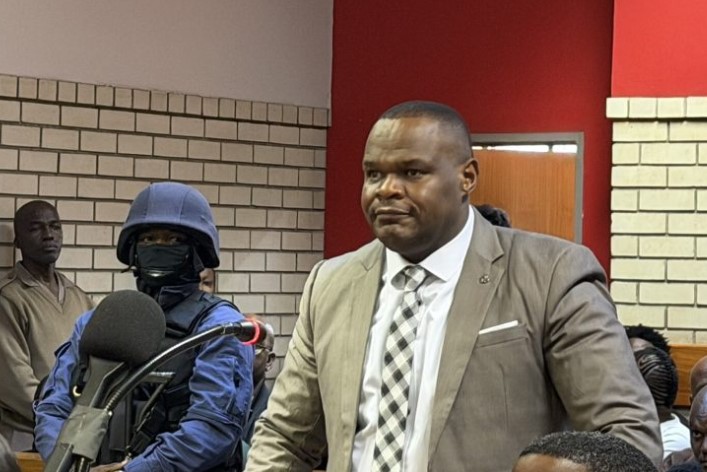
The bail application of suspended SAPS Organised Crime Sergeant Fannie Nkosi has been postponed to next week after proceedings in the Pretoria North Magistrate’s Court were cut short on Monday afternoon.
Presiding magistrate Thandi Theledi ruled that the matter could not continue due to time constraints linked to prison transport arrangements, with the State indicating it would only be available to proceed next week.
“Your case is remanded until the 20th of April 2026 in this court. It is for us to continue with your formal bail application. You will be kept in custody until then,” Theledi ruled.
The postponement came despite objections from Nkosi’s lawyer, Siza Dlali, who argued the bail application was urgent as their client has already spent more than a week behind bars.
Earlier in the day, prosecution presented a detailed affidavit from the investigating officer, painting what they described as a serious and wide-ranging case against Nkosi.
The State told the court that Nkosi faces multiple Schedule 5 offences, including unlawful possession of explosives, firearms and ammunition, defeating the ends of justice, theft, and contraventions linked to organised crime.
“The seriousness of the allegations against him has a direct impact on public confidence in law enforcement. It is public knowledge that the applicant is deeply implicated in serious acts of criminality in the Madlanga Commission of Inquiry and the public outrage emanating therefrom cannot be overemphasised,” the state argued.
According to the affidavit, police conducted a search at Nkosi’s Pretoria North home on 2 April after he signed a consent form.
Officers allegedly uncovered firearms and ammunition stored in contravention of legal requirements, including an unmounted rifle safe and a firearm for which Nkosi could not produce a licence.
In addition, police claimed to have recovered 490 rounds of ammunition across various calibres, along with police-issued equipment allegedly not returned after Nkosi’s suspension.
“The applicant was given an opportunity to return all state property, yet he opted to retain some of the state property. Therefore, his conduct amounts to theft of state property,” the state argued.
The State also highlighted the discovery of more than R52,000 in cash at Nkosi’s home, adding that he had “failed to provide any satisfactory explanation regarding the origin of these substantial amounts of cash”.
Central to the prosecution’s opposition to bail were allegations that Nkosi interfered with criminal investigations.
Several police dockets, including original case files linked to hijackings and robberies involving British American Tobacco-related targets, were allegedly found in his possession.
Meanwhile, Dlali pushed back strongly against the State’s case, arguing that it was based on speculation and failed to meet the legal threshold required to deny bail.
“As a judicial officer, you owe the duty to justice, the court should not be influenced by any other issues that are outside of what this court has to determine,” Dlali told the court.
He emphasised that the central question was whether Nkosi would stand trial and disputed key elements of the State’s evidence, particularly regarding firearms and explosives.
“These firearms, it is not alleged, are unlawful firearms. My client has the permit to hold those firearms. The contention that it is unlawful to have seven firearms does not have merit,” Dlali said.
On the alleged stun grenade, he argued there were evidentiary gaps: “There is no picture of a hand grenade in all these pictures, there is no picture of the hand grenade”.
He also criticised the photographic evidence, arguing that there was no indication of the date or time that they were taken.
Dlali maintained that Nkosi posed no flight risk, pointing to his personal circumstances, and further rejected claims that Nkosi could interfere with witnesses or investigations, noting his suspension from SAPS
As proceedings drew to a close, magistrate Theledi issued a separate ruling regarding Nkosi’s detention conditions.
Nkosi had been held in the hospital wing at the Kgosi Mampuru II Correctional Centre since his first appearance.
However, the magistrate ordered that he be transferred to the general prison population, following an attempt by his lawyer to use his diabetic medical condition and the threat of poisoning as a justification.
“Placement of a prisoner in a prison hospital wing is reserved for detainees who require medical treatment, observation or nursing care. It is not designed to function as a form of protective custody in the absence of any medical necessity,” Theledi ruled.
The case will resume next Monday, when the court is expected to hear the remainder of the defence’s submissions before deciding whether Nkosi should be released on bail.
INSIDE POLITICS