- Advertisement -spot_img

Ramaphosa calls for cross-border cooperation following latest Ebola outbreak

- Advertisement -spot_img

Must read

By Johnathan Paoli

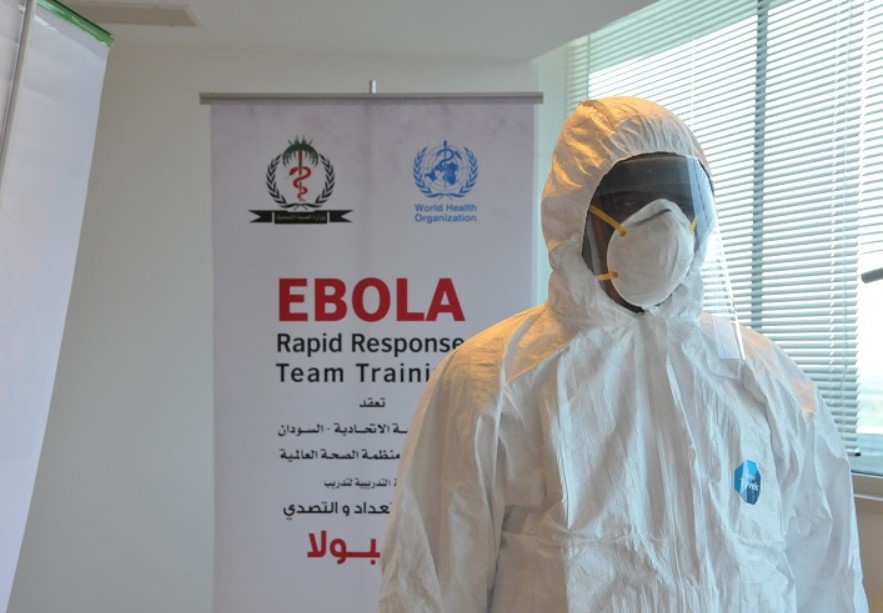
President Cyril Ramaphosa has commended the Democratic Republic of the Congo (DRC) and Uganda governments for reacting swiftly and transparently to the recent escalating Bundibugyo strain of Ebola outbreaks, but called on governments and international partners to act with “urgency, unity and collective action” to contain the deadly virus.

“Ebola does not respect borders. In a region marked by high population mobility, insecurity and humanitarian movement, the risk of regional spread is significant and demands urgent, coordinated action,” Ramaphosa said in a statement on Sunday.

The statement comes as the World Health Organisation (WHO) declared the outbreaks in the DRC and Uganda a “public health emergency of international concern” following a rapid increase in suspected infections and deaths linked to the Bundibugyo virus, a rare Ebola strain for which there are currently no approved vaccines or treatments.

According to the WHO and the Africa Centres for Disease Control and Prevention (Africa CDC), 246 suspected cases and at least 80 deaths have been reported, primarily in the DRC’s northeastern Ituri province near the Ugandan border.

Health authorities have confirmed eight laboratory-confirmed cases in the DRC, while Uganda has recorded two confirmed infections in Kampala, including one death involving a Congolese national who had travelled from the DRC, while a suspected case in Kinshasa later tested negative for the Bundibugyo virus.

The WHO said the outbreak may be “much larger than what is currently being detected and reported”, citing the high positivity rate among tested samples, growing suspected case numbers and the spread into urban centres.

“The high positivity rate of the initial samples collected (with eight positives among 13 samples collected in various areas), the confirmation of cases in both Kampala and Kinshasa, the increasing trends in syndromic reporting of suspected cases and clusters of deaths across the province of Ituri all point towards a potentially much larger outbreak than what is currently being detected and reported, with significant local and regional risk of spread,” the statement said.

Ramaphosa praised the Africa CDC, led by Director-General Dr Jean Kaseya, and the WHO for rapidly mobilising a continental response.

The president urged affected countries to strengthen cross-border surveillance, emergency coordination and information-sharing, particularly in areas affected by conflict and displacement.

“As the chair of the Global Leaders Network for Women’s, Children’s and Adolescents’ Health, I make a special plea to ensure that women, children and adolescents are not left behind and that routine services do not backslide as we handle this crisis,” he said.

Ebola is a severe and often fatal viral disease transmitted through direct contact with bodily fluids of infected people or contaminated materials.

Symptoms include fever, fatigue, muscle pain, vomiting, diarrhoea and internal or external bleeding as the disease progresses.

Fatality rates in previous Ebola outbreaks have ranged from 25% to 90%, with the WHO estimating the average mortality rate at about 50%.

The Bundibugyo strain linked to the current outbreak has historically recorded fatality rates between 25% and 40%.

The current outbreak is the third recorded involving the Bundibugyo strain, following outbreaks in Uganda in 2007 and in the DRC in 2012.

The DRC has experienced 17 Ebola outbreaks since the virus was first identified in 1976.

The country’s deadliest epidemic occurred between 2018 and 2020, when nearly 2,300 people died.

WHO Director-General Dr Tedros Adhanom Ghebreyesus said there were “significant uncertainties” regarding the true scale of infections and geographic spread.

He warned that a large number of active cases remain in communities, complicating contact tracing and containment efforts.

Ramaphosa said the outbreak underscored the need for African countries to invest more heavily in public health systems and pandemic preparedness, especially as international development assistance declines.

“These outbreaks are a reminder that Africa must continue investing in resilient public health systems and regional health security architecture,” he said.

He called on African Union member states and international partners to provide urgent financing, technical assistance, medical countermeasures and direct support to affected communities.

INSIDE POLITICS

More articles

LEAVE A REPLY

Please enter your comment!
Please enter your name here

CATHSSETTA

spot_img

AVBOB STEP 12

spot_img

Inside Education E-Edition

spot_img

Inside Metros G20 COJ Edition

spot_img

JOZI MY JOZI

spot_img

QCTO

spot_img

Latest article