
- Advertisement -spot_img

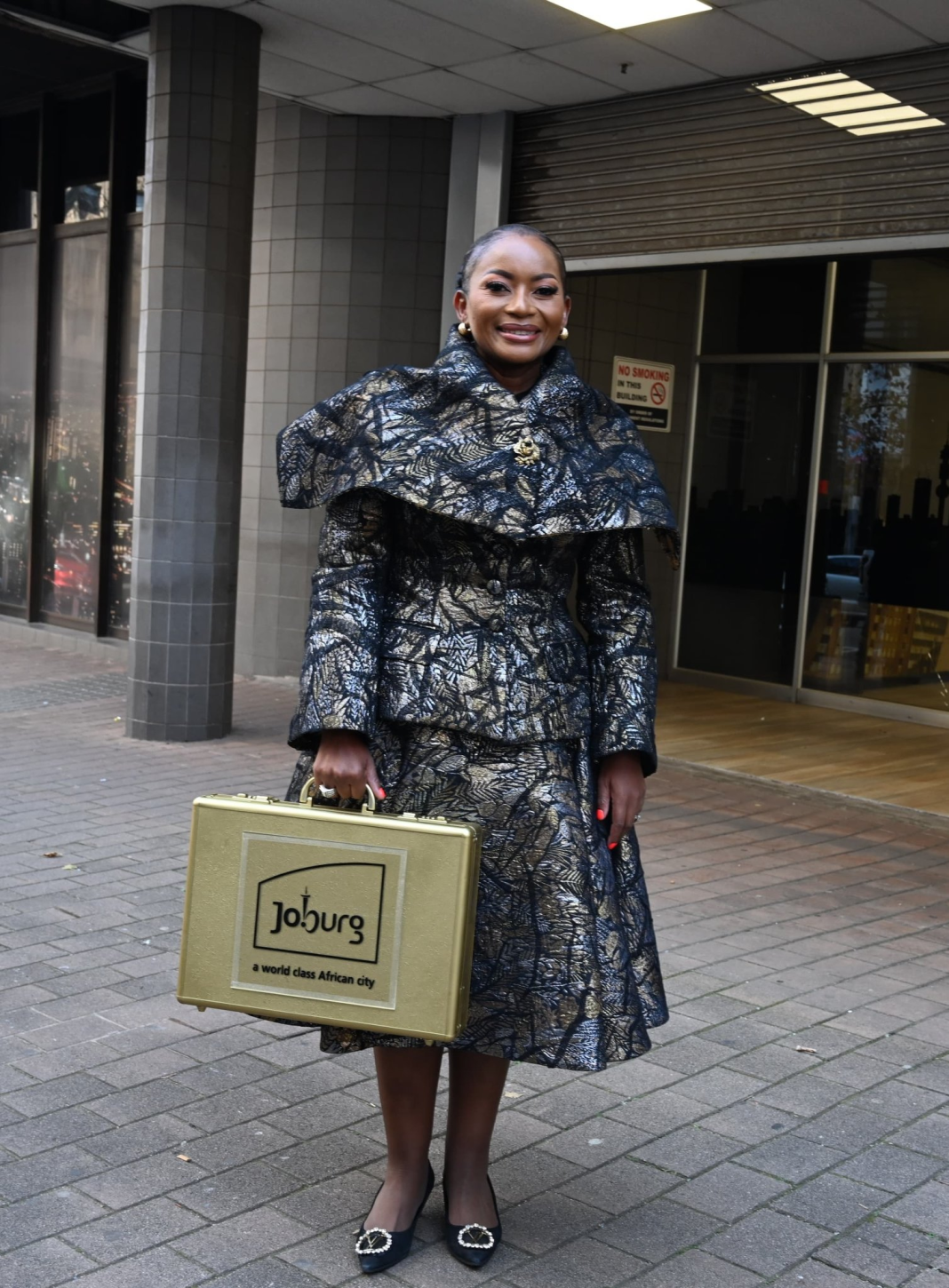
Joburg deputy mayor tables R90bn budget amid pressure on key trading services

- Advertisement -spot_img

Must read

By Simon Nare

Johannesburg deputy executive mayor Loyiso Masuku has tabled the city’s R90 billion mid-term budget, flagging serious weaknesses in three core trading services while insisting it still provides space for financial recovery.

Tabling the budget on Wednesday during a council sitting, Masuku — who also serves as Joburg’s MMC for finance — said electricity, water and sanitation, and waste management, which are expected to generate significant revenue, have been undermined by structural and operational challenges.

She cited split accountability, declining revenue collection, underinvestment in capital infrastructure, governance failures and institutional fatigue as key drivers of the decline.

“Non-revenue water losses exceed 40%. Electricity distribution losses stand at 27%. The combined infrastructure renewal backlog across Johannesburg Water, City Power and the Johannesburg Roads Agency (JRA) exceeds R185 billion,” she said.

“Without meaningful institutional reform, capital investment alone cannot achieve sustainable service delivery.”

Masuku tabled the 2026/27 budget as follows:
• Operating revenue: R90.4 billion
• Operating expenditure: R88.3 billion
• Projected surplus: R2.1 billion (before taxation and capital grants)
• Capital budget: R8.8 billion (R25.3 billion over the medium term)

She said the total budget for the next financial year would amount to R97.1 billion, with key revenue drivers including electricity at R27.8 billion, water and wastewater at R21.5 billion, property rates at R18.8 billion and refuse removal at R3.6 billion.

Masuku outlined the following allocations:
• R28.3 billion for operational expenditure at City Power, with a capital programme of R6.7 billion over the medium term
• R21.6 billion for Johannesburg Water operational expenditure, with R6.4 billion in capital investment over the medium term
• R5.2 billion for waste management, including landfill rehabilitation, fleet reliability, waste diversion and illegal dumping removal
• R1.8 billion for roads and stormwater operations, with R570 million in capital investment for road surfacing, gravel road upgrades and related works
• R7.2 billion for JMPD visibility, by-law enforcement, emergency services, CCTV and the integrated intelligence operations centre, public lighting, urban management, inner-city enforcement and disaster management capacity

“This budget strengthens revenue recovery through the Revenue War Room, enforcement-backed collection, billing credibility improvements, debt collection, Section 118 sales in execution, outdoor advertising enforcement, development contributions, asset optimisation and improved financial controls,” she said.

Masuku said the city’s Debt Relief Programme remained an important intervention for residents genuinely unable to pay, but warned that the municipality could not function if those who could afford to pay refused to do so.

She cautioned that non-payment was crippling service delivery, delaying infrastructure maintenance and ultimately harming poorer communities.

“The social contract is clear: the City must bill correctly, deliver services and respond to complaints — and residents, businesses and government departments that can pay must pay. This is what it means to build Johannesburg together.

“Johannesburg is a microcosm of a South Africa that is riddled with inequality and buckling under pressure — but it remains a city of resilience, work, struggle, ambition and hope,” she said.

She added that the city was finalising development finance linked to energy projects, including a council-approved loan facility from a German state-owned development and promotional bank worth about 200 million euros to support City Power’s infrastructure pipeline.

The city is also in discussions with Eskom over outstanding debt and recovery interventions, with support from national government, SALGA, regulators and financial institutions.

Masuku reminded councillors that the inner city remains the “pulse of Johannesburg”, pointing to a range of revitalisation projects in the pipeline.

These include the Inner-City Eastern Gateway, High Court precinct, Partnership Fund, Walkable Network, rental flat renewal, Florence House, Hillbrow Hospital, Joubert Park, Johannesburg Art Gallery, Jack Mincer Taxi Facility and De Villiers Street upgrades.

“Inner-city spend is distributed across multiple votes towards precinct-based revitalisation, public environment upgrades, building rehabilitation, hijacked building interventions, public lighting, by-law enforcement, informal trading support and partnerships with business and civil society,” she said.

She said the rehabilitation of the inner city required a multi-pronged approach encompassing safety and security, visible policing, governance, investment, housing, transport, culture, cleanliness and economic activation.

INSIDE POLITICS

More articles

LEAVE A REPLY

Please enter your comment!
Please enter your name here

Inside Education E-Edition

spot_img

CATHSSETTA

spot_img

AVBOB STEP 12

spot_img

Inside Metros G20 COJ Edition

spot_img

JOZI MY JOZI

spot_img

QCTO

spot_img

Latest article



