
By Sihle Mavuso
Suspended KwaZulu-Natal Correctional Services Regional Commissioner Mnikelwa Nxele has asked the Madlanga Commission to give him a platform to present evidence of alleged corruption, maladministration and criminal infiltration in the correctional services sector.
Nxele, who has faced repeated suspensions and disciplinary action but has also won several labour-related rulings against the department, first wrote to the commission in October last year, shortly after it began its work.
In 2016, the Department of Correctional Services (DCS) said his suspension followed allegations of gross insubordination and failure to implement instructions from the national office, but the Durban Labour Court later ordered that suspension to be uplifted.
In 2022, the Labour Court recorded that Nxele had faced disciplinary charges that included allegations involving undeclared funds, casino gambling, undeclared properties, and alleged corrupt tender relationships.
An arbitrator acquitted him on the major charges and issued only a written warning on a lesser property-disclosure finding.
The Labour Court later declared his 2022 precautionary suspension unlawful after it exceeded the 60-day limit.
Most recently, Nxele alleged that he was targeted after raising concerns about a centralised prison food supply contract.
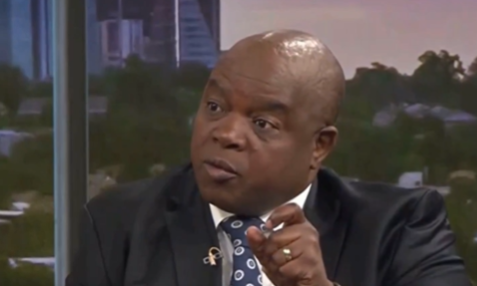
In an interview with eNCA, he said he had questioned the centralisation of the contract before DCS Commissioner Makgothi Thobakgale suspended him.
In his correspondence, which Inside Politics has seen, he told the commission that correctional services were one of the state agencies that formed part of the criminal justice system, and that it had allegedly been affected by infiltration by gangs and criminals, as well as corruption and maladministration on a large scale.
Nxele said it was in that context that he believed he could make an important contribution to the commission’s work by assisting it to identify alleged corruption and those responsible, so that they could be held to account.
“The following issues are among the key issues I wish to address the Commission on: 1. The SAPS search at the Qalakabusha Centre by the special task team deployed in Richards Bay,” he said in one of the letters.
“The drug and contraband smuggling by syndicates inside and outside Correctional Services. 3. The Corrupt deployment and appointments to advance criminal actions 4. The car, food, and cleaning contracts 5. The use of DCS contracts to advance the political objectives of certain politicians. 6. Collaboration and relationships between the wrongdoers and Portfolio Committee and the Public Protector.”
Nxele also told the commission that he wanted to provide information about the appointment of senior officials in the department.
“The appointment of the Director General, the Chief Financial Officer, and the Government Information Officer in the Department and their roles to advance the corrupt practices to advance criminal activities and political objectives of certain politicians 8. The centralisation of power and authority to advance the criminal activities and patronage.”
According to the email trail, the commission replied to Nxele on 27 January and asked him to provide evidence to support the allegations he was making.
The last follow-up email in the correspondence was sent on 12 May, when Nxele wrote to the secretary of the commission, Dr Nolitha Vukuza, asking whether his request to give evidence was being considered.
“I direct this short note to bring to your attention of several attempts to be heard by the Commission about matters pertaining to the Department of Correctional Services as per the terms of reference of the Commission,” Nxele wrote in the follow up email.
“I seek your assistance and assurances that the matters involving Correctional Services are not going to be ignored nor swept under the carpet. I would like to have an opportunity to submit an affidavit to the Commission investigators or evidence leaders about a number of corruption and unlawful activities inside the Department of Correctional Services.”
The spokesperson for the commission, Jeremy Michaels, did not respond to questions from Inside Politics by the time of publication.





