
Simon Nare
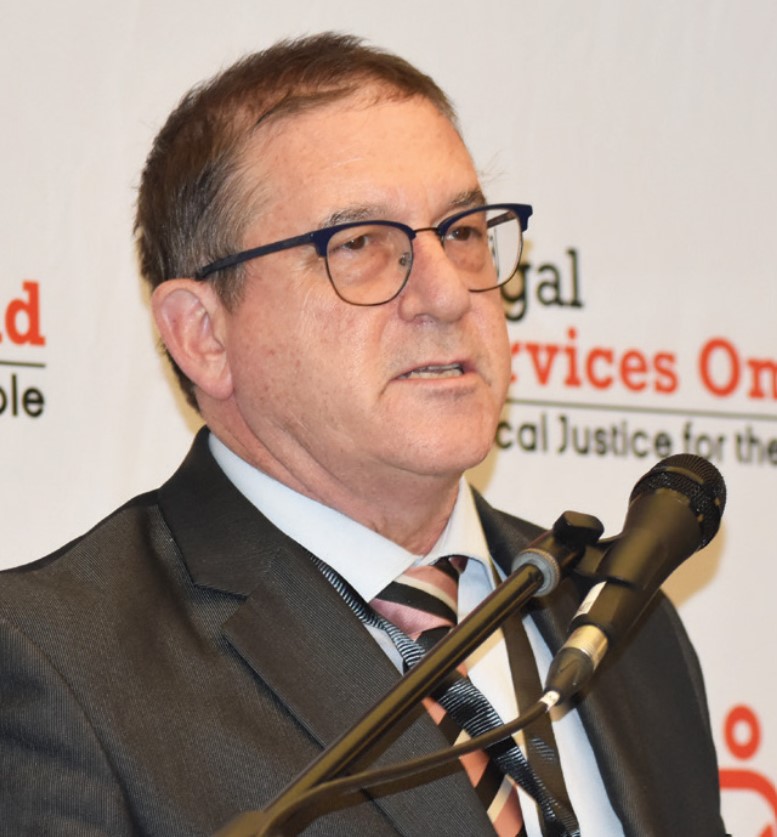
Former Deputy Justice Minister John Jeffery has acknowledged that a broader “political judgment” may have delayed prosecutions during the TRC amnesty process, but denied that the ANC or its government had decided to prevent apartheid-era cases from proceeding.
“Yes, I think there was a political, in my sense, there was a political decision in the first 10 years of not going for having the TRC process, not going for prosecutions,” Jeffery said.
Testifying before the inquiry into the handling of TRC cases on Friday, Jeffery said it had been difficult to run criminal prosecutions at the same time as the commission was considering amnesty applications relating to the same offences.
He told the inquiry, chaired by retired Constitutional Court justice Sisi Khampepe, that the political situation during the country’s transition was volatile and that there may have been a view that prosecutions should be deferred.
Jeffery was being questioned about statements attributed to him by Lukhanyo Calata, the son of anti-apartheid activist Fort Calata, one of the Cradock Four activists murdered by apartheid security forces in 1985.
Calata testified at the inquiry in February about an interview with Jeffery in which the former deputy minister was alleged to have made concessions about the lack of prosecutions in TRC-related matters.
Jeffery denied some of the concessions attributed to him, saying parts of the interview may have been taken out of context.
He disputed that he had conceded that the ANC government had decided not to prosecute TRC cases for a decade or that compromises reached during the Convention for a Democratic South Africa (CODESA) negotiations had prevented some cases from proceeding.
Jeffery said his reference to a political decision concerned the wider question of whether prosecutions should take place while amnesty applications were still being considered.
“Well…maybe it’s… more the broader issue of the broader qualification of political — was it appropriate to be running criminal prosecutions at the same time as TRC amnesty applications were [being taken for those same crimes], and that’s what I think I meant by a political decision.
“What I did not [say was] that the ANC or the ANC government had taken any decision that there shouldn’t be prosecutions,” he said.
Jeffery also referred to difficulties surrounding the National Prosecuting Authority’s prosecution policy for apartheid-era crimes.
Amendments introduced to the policy in 2005 were declared unconstitutional, unlawful and invalid by the Pretoria High Court in 2008.
Jeffery said the NPA’s capacity had also declined after 2009 as prosecutors left the institution for various reasons.
He said widespread corruption linked to the state-capture period had forced the prosecuting authority to prioritise other cases, shifting resources and attention away from outstanding TRC matters.
However, Jeffery said this did not mean the state had been entirely incapable of pursuing the cases.
“I do think it was a problem that there weren’t enough post-TRC prosecutions, and that they sort of did grind to a halt. I mean, that people who applied for amnesty and who didn’t get it should have been prosecuted,” he said.
Jeffery said that during his interview with Calata, he had sought to explain the practical challenges confronting the criminal justice system.
He said it would not have been possible to investigate every apartheid-era offence while simultaneously dealing with contemporary violent crime, corruption and cases arising from state capture.
“I was attempting to explain what I understood to be the practical constraints under which the criminal justice system was operating at the time, including the need to make difficult decisions about the allocation of limited resources.
“In doing so, I was not suggesting that apartheid era crimes were unimportant or undeserving of investigation,” he said.
INSIDE POLITICS





