Johnathan Paoli
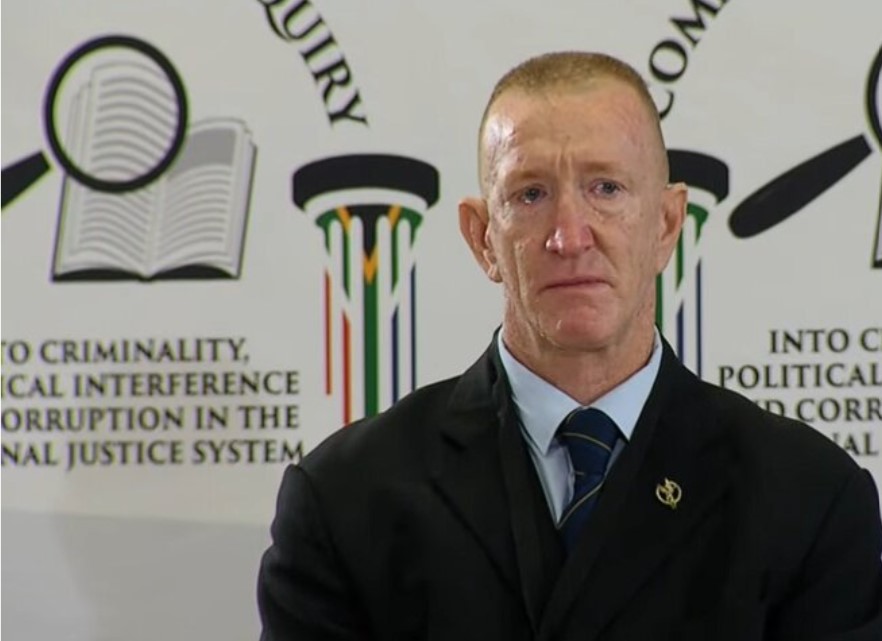
Veteran KZN Hawks officer Karl Sander told the Madlanga Commission that a flawed polygraph test helped fuel suspicion against him over the 2021 theft of 541kg of cocaine from Hawks offices in Port Shepstone.
Sander returned to the witness stand on Tuesday morning for his second and final day of testimony, where he expanded on allegations that he had been targeted and victimised after raising concerns about missing drug exhibits and disrupting major drug trafficking syndicates.
He said the allegations surrounding the disappearance of the cocaine had damaged his reputation and ultimately contributed to his transfer from operational duties.
During proceedings, evidence leader Advocate Lee Seegels-Ncube read into the record an email she received from the KwaZulu-Natal Forensic Science Laboratory explaining the circumstances surrounding the polygraph examination.
According to the report, the initial assessment by the examiner indicated deception.
However, a subsequent administrative review found that the examiner had committed “serious errors” during the testing process.
“The test was considered invalid so that the examinee was not prejudiced by the errors of the polygraph examiner,” the report stated.
The commission heard that a non-conformance investigation was opened against the examiner, who was subsequently barred from conducting further polygraph examinations.
Sander, who had maintained for years that he was innocent, became emotional after learning that the test he had allegedly failed was ultimately invalidated.
He told the commission that members of the unit were initially informed that all officers who had undergone polygraph testing in relation to the missing drugs had failed.
For years, he said, he was never provided with the actual results.
The officer reiterated his belief that he was targeted because of his success in disrupting drug trafficking operations.
“If I was not interfering with someone’s activities, they would have left me [alone]. But if I was efficient to interrupt their activities, I was targeted,” Sander said.
He said that the identities of those responsible for stealing the drugs were known.
“I think it will eventually come out. But the suspects who stole the drugs are known.” he said.
He claimed he had been informed by Lieutenant-Colonel Gavin Jacob of the identities of those allegedly involved and alleged that links between the suspects and senior Hawks management were also known.
Sander said he had never received recognition for major drug recoveries made during his career.
“Commissioner, I’ve made some good recoveries. I think I’ve done a very good job. I don’t need anyone else to tell me that. It’s in my heart. Never have I received an accolade, an appraisal, an award, or a nomination at the Prestige Awards or anything for the work done,” he said.
The commission heard details of Sander’s temporary placement away from operational duties following corruption allegations against him.
In a letter read into the record, Sander complained that despite being moved from his position in February 2024 pending an investigation, he never received formal notification of the outcome.
He said he was later verbally informed that the matter had been finalised with only a verbal warning related to his directorship of a shooting club, adding that the entity had merely been used to preserve a name for banking purposes and generated no income.
Sander alleged inconsistent treatment of employees facing allegations within the Hawks.
He recounted an incident involving Captain Virginia Kupa, arrested on corruption-related charges, who was granted bail and allowed to continue working in a sensitive intelligence environment, while a whistleblower who reported concerns was allegedly victimised and transferred.
Earlier in his testimony, Sander provided insight into the increasingly sophisticated methods used by international drug syndicates.
He told the commission that criminal organisations frequently place tracking devices inside cargo containers and monitor drug consignments in real time.
According to Sander, syndicates often possess surveillance and tracking capabilities that surpass those available to law enforcement, forcing investigators to constantly adapt their tactics.
He stressed the importance of meticulous searches, proper evidence handling and sealing procedures, warning that even seemingly minor interference with exhibits could compromise criminal prosecutions.
The commission continues with Lieutenant-Colonel Duma, an undercover operative, testifying partially in-camera.
INSIDE POLITICS