- Advertisement -spot_img

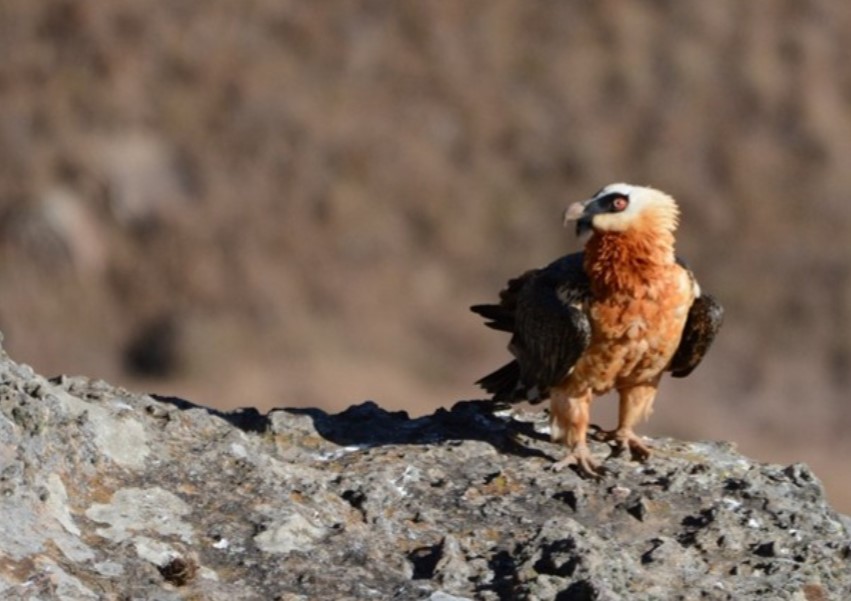
Critically endangered Bearded Vulture recovery effort marks 20 years

- Advertisement -spot_img

Must read

Staff Reporter

A cross-border conservation programme aimed at saving southern Africa’s Critically Endangered Bearded Vulture has marked 20 years of work, with experts warning that only 20 breeding pairs could remain in the region without continued intervention.

Ezemvelo KZN Wildlife hosted the 20th Bearded Vulture Task Force celebration at Midmar Dam in Howick, last week.

The event was attended by Ezemvelo CEO Sihle Mkhize, strategic partners from Lesotho, representatives of the Department of Forestry, Fisheries and the Environment, the Eastern Cape, NGOs and special guests.

The Bearded Vulture Task Force is the bilateral steering committee of the Bearded Vulture Recovery Programme, which has been coordinated by Ezemvelo since its inception.

The programme was established in 2006 after a week-long workshop at which experts modelled the species’ risk of extinction. Nest surveys in the early 2000s raised alarm that fewer pairs may have been breeding on the escarpment than previously thought.

A follow-up workshop almost two decades later confirmed that there could be only 20 pairs of Bearded Vultures left in southern Africa if action is not taken to mitigate the decline.

The Task Force is a cross-border partnership made up of representatives from the Lesotho and South African governments, parastatals and NGOs on both sides of the border. Its mission is to implement the strategy and action plan to halt the species’ population decline.

The Bearded Vulture is a regionally critically endangered species found in the Maloti-Drakensberg mountains of Lesotho and South Africa. It is a large raptor that nests in small caves on high-altitude cliffs.

The species is monogamous, raises only one chick a year, and is a scavenger whose diet consists primarily of bone.

Ezemvelo said the southern African Bearded Vulture population is isolated, genetically distinct and declining because of threats across its range.

These include intentional and unintentional poisoning, persecution for traditional use, habitat loss and degradation, declining food availability and quality, human disturbance, and collisions with energy infrastructure.

The conservation agency said Bearded Vultures play an important ecological role by helping to keep the environment free of carcasses and waste and limiting the spread of disease.

The species is regarded as a flagship species for the Maloti-Drakensberg mountains, and cooperation between South Africa and Lesotho is seen as critical to its survival.

“There have been several small wins over the past 20 years with conservation measures focussing on reducing mortality, increasing productivity in the wild and establishing a breeding programme.

“However, the primary threats of poisoning, lack of food and low productivity in the population still need to be addressed,” said Dr Sonja Krueger, Park Ecologist at uKhahlamba Drakensberg Park and District Ecologist for Harry Gwala District.

“The breeding programme (Bred 4 The Wild), was established to ensure that there is a genetic reserve for the species and to eventually produce chicks that can be released to supplement the wild population.”

Krueger said more work was needed to meet the programme’s long-term goal.

“A lot remains to be done to ensure that the vision of the Bearded Vulture Recovery Programme, which is that Bearded Vultures in Southern Africa are restored and thriving in the wild as a vital part of our heritage, is realised,” she said.

More information is available from the Bearded Vulture Recovery Programme’s live nest camera on YouTube and at www.projectvulture.org.za.

INSIDE POLITICS

More articles

LEAVE A REPLY

Please enter your comment!
Please enter your name here

Inside Education E-Edition

spot_img

CATHSSETTA

spot_img

AVBOB STEP 12

spot_img

Inside Metros G20 COJ Edition

spot_img

JOZI MY JOZI

spot_img

QCTO

spot_img

Latest article