
- Advertisement -spot_img

Mtshweni-Tsipane urges African unity as migrant tensions flare

- Advertisement -spot_img

Must read

Staff Reporter

Parliament leadership called for African unity and deeper continental cooperation on migration on Tuesday, as African presiding officers gathered in Gauteng amid rising anti-immigrant tensions in the country.

Opening the Conference of Speakers and Presiding Officers of the Commonwealth Africa Region at Emperors Palace, National Council of Provinces chairperson Refilwe Mtshweni-Tsipane said Africa’s migration and coexistence challenges could not be separated from the continent’s history of colonialism, poverty and inequality.

“To this extent, the unity of Africa remains very sacrosanct and South Africa remains the home for all Africans, and open to the community of nations across the globe,” Mtshweni-Tsipane said.

“The current shared challenges of immigration and the problem of co-existence, as global and continental phenomenon, are the manifestations of the unresolved questions and challenges of history.”

Her remarks came as South Africa confronts rising anti-immigrant sentiment and protests by groups demanding that undocumented foreign nationals leave the country by 30 June. The tensions have placed Pretoria under pressure from other African countries and sharpened debate over migration, unemployment, crime and public services.

Mtshweni-Tsipane did not refer directly to the protests, but said migration was a continental issue requiring political cooperation rather than fragmentation.

“Our destiny and prospects of a more politically stable and sustainable future are intertwined,” she said.

The 19th CSPOC Africa Region conference is being co-hosted by Parliament and the Gauteng Provincial Legislature from June 16 to 20. It is being held under the theme: “Proactive Parliaments and Sustainable Development: An imperative for Political Stability in Africa.”

Mtshweni-Tsipane said the theme pointed to the need for African parliaments to become more responsive institutions capable of promoting democracy, peace and sustainable development.

“This theme underscores, through its thematic areas, the necessity and the verying ways in which we can strengthen our parliamentary institutions as responsive and transformative spaces, for the promotion of democracy, peace and a sustainable future of all the people of Africa,” she said.

She urged African legislatures to use parliamentary diplomacy to assert the continent’s interests at a time of global instability and widening inequality between rich and poor nations.

“The gap between our nations in terms of wealth and power deepens daily, where our resources continue to benefit rich nations through patterns that reproduce exploitation and the continued making of the poor,” she said.

Mtshweni-Tsipane also called on African countries to make greater use of the African Continental Free Trade Area (AfCFTA), saying the continent could not achieve global influence if it remained divided into small political and economic units.

“We therefore call on our nations to explore the possibilities of the Africa Continental Free Trade Area, understanding our shared belief that Africa cannot be split into tiny political and economic units and hope to command its share of the globe and redress its historic challenges,” she said.

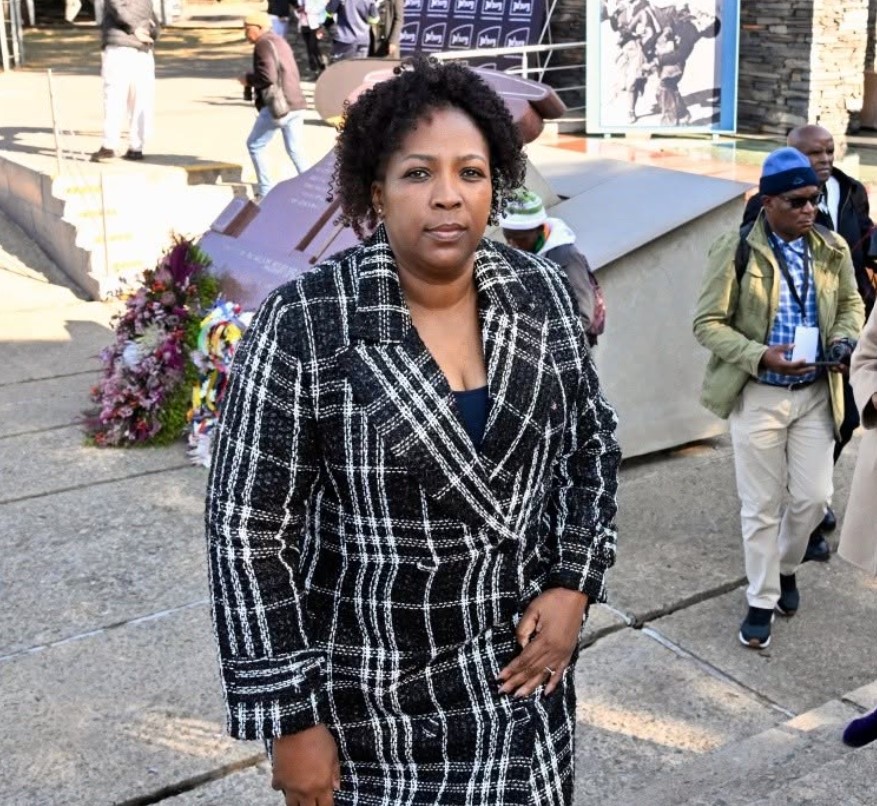
The conference opened on Youth Day, as South Africa marked 50 years since the June 16, 1976 Soweto uprising. Mtshweni-Tsipane said delegates had started the day with a wreath-laying ceremony at the Hector Pieterson Memorial with President Cyril Ramaphosa.

“For Africa and the people of this nation, today is not a day of celebration, however a moment when we pause to mourn, and remember all our fallen heroes, whose ultimate sacrifice shaped the freedoms we enjoy today,” she said.

She said the choice of Emperors Palace was symbolic because of its links to the Convention for a Democratic South Africa negotiations, which helped pave the way for South Africa’s transition from apartheid to democracy.

The conference, she said, should conclude with clear resolutions reflecting Africa’s collective priorities, including democracy, peace, good governance, gender equality, fundamental rights and social and economic development.

“In our considered view, there is no one to catch up with, only for Africa to become the best version of itself,” Mtshweni-Tsipane said.

She said African parliaments had to play a stronger role in shaping policies affecting ordinary people, especially women, young people, the elderly, people with disabilities and vulnerable communities.

“We must recreate a transformative agenda, through maximum use of parliaments, more involved and rooted in the core issues that affect our people,” she said.

Mtshweni-Tsipane said the meeting would also help shape the CPA Africa Region’s common agenda ahead of the Commonwealth Parliamentary Conference, which South Africa is expected to host in Cape Town in September.

“We are confident that the conference objectives will build consensus on the collective role of parliaments and enhance mechanisms for parliamentary diplomacy towards a sustainable and more stable future,” she said.

INSIDE POLITICS

More articles

LEAVE A REPLY

Please enter your comment!
Please enter your name here

Inside Education E-Edition

spot_img

CATHSSETTA

spot_img

AVBOB STEP 12

spot_img

Inside Metros G20 COJ Edition

spot_img

JOZI MY JOZI

spot_img

QCTO

spot_img

Latest article



