
By Thapelo Molefe
Government will expand the Jobs Boost Outcomes Fund from R300 million to R1 billion after a pilot programme exceeded its employment targets and demonstrated that outcomes-based funding can help young people secure and retain jobs.
The announcement was made on Friday during a briefing on the fourth-quarter performance of the Presidential Youth Employment Intervention (PYEI), in which officials outlined progress in tackling youth unemployment during the final quarter of the 2025/26 financial year.
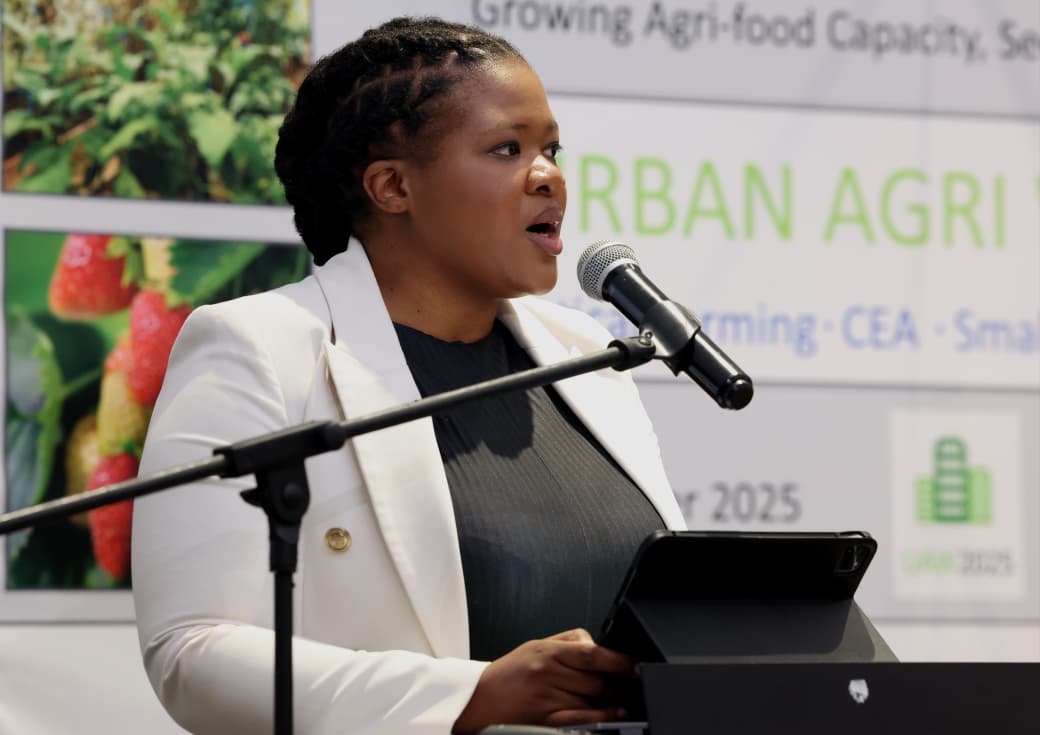
Deputy Minister in the Presidency Nonceba Mhlauli said the Jobs Boost Outcomes Fund pilot, which concluded at the end of March, had become one of the most successful initiatives under the PYEI.
ALSO READ: SAPS ballistics expert Captain Makgotloe granted R15,000 bail
The fund was launched as a R300 million pay-for-performance programme designed to incentivise organisations to place young people in jobs and ensure they remain employed. Under the model, implementing partners receive only a portion of their funding upfront, with the remaining 80% paid only after employment outcomes are independently verified.
Mhlauli said the programme exceeded expectations across all key indicators.
“As of 30 March 2026, the pilot achieved extraordinary success,” she said.
According to the results, 9,174 young people were enrolled in the programme, reaching 110% of the enrolment target. A total of 7,044 job placements were secured, exceeding the original target by 54%.
The programme also recorded strong retention rates. Government has already verified that 5,211 participants remained employed for at least three months, while 3,795 sustained employment for six months. Final verification processes are still underway.
Mhlauli said one of the most significant findings was that the programme succeeded in reaching young people who are often excluded from economic opportunities.
“Most importantly, it proved that outcomes-based financing successfully supports the most disadvantaged, with youth from Quintile 1 schools achieving higher retention rates,” she said.
PYEI official Thulebona Mhlanga said the pilot had demonstrated that public funds could be linked directly to measurable employment outcomes rather than programme activities.
“The programme demonstrated the value of outcomes-based financing,” Mhlanga said.
She added that the initiative had also shown how partnerships between government, business and civil society could be used to create sustainable employment opportunities for young people.
The success of the pilot has prompted government to prepare a major expansion of the fund. Mhlauli said the new R1 billion programme is expected to deliver 20,000 quality job placements through a public-private partnership model.
Mhlanga said lessons learned during the pilot phase would be used to strengthen the expanded programme and improve its ability to connect young people to quality and sustainable employment opportunities.
The Jobs Boost Outcomes Fund forms part of the broader Presidential Youth Employment Intervention, launched by President Cyril Ramaphosa in 2020 to address South Africa’s youth unemployment crisis.
ALSO READ: In Pictures: Morolong hands over digitised studios to Mamelodi community radio
The intervention coordinates programmes across government, the private sector and civil society to help young people move from education and training into employment, entrepreneurship and other income-generating opportunities.
According to the latest quarterly report, more than 5.9 million young people have registered on the SA Youth platform, while over 5.36 million are registered on the Employment Services of South Africa (ESSA) database.
Since the launch of the PYEI, more than 2.5 million earning opportunities have been accessed through SA Youth and a further 422,667 opportunities through ESSA.
During the January to March 2026 quarter alone, 155,161 earning opportunities were secured by young people through the intervention’s network. Of these, more than 135,000 were accessed through SA Youth, while over 20,000 were secured through ESSA.
The Youth Employment Service (YES), a private sector-led programme, placed 18,310 young people in workplace experience opportunities during the quarter.
The Department of Higher Education and Training also facilitated 5,005 work-integrated learning placements for TVET college students and graduates, more than doubling the number achieved in the previous quarter.
Mhlauli said Phase 4 of the Revitalised National Youth Service recruited an additional 5,272 young people during the quarter, bringing the total number of paid community service opportunities created since the programme’s inception to 138,056.
Mhlauli said Phase 5 of the National Youth Service is set to recruit a further 100,000 young people across South Africa, providing them with paid community service opportunities and work experience.
Mhlauli said government’s focus in the 2026/27 financial year would be on scaling successful programmes, increasing quality work placements and expanding innovative approaches that connect young people to sustainable livelihoods.
“The success of this entire ecosystem relies heavily on coordinated, demand-led action driven by the Presidency’s Project Management Office, our national departments and our diverse implementation partners,” she said.





