
By Lebone Rodah Mosima
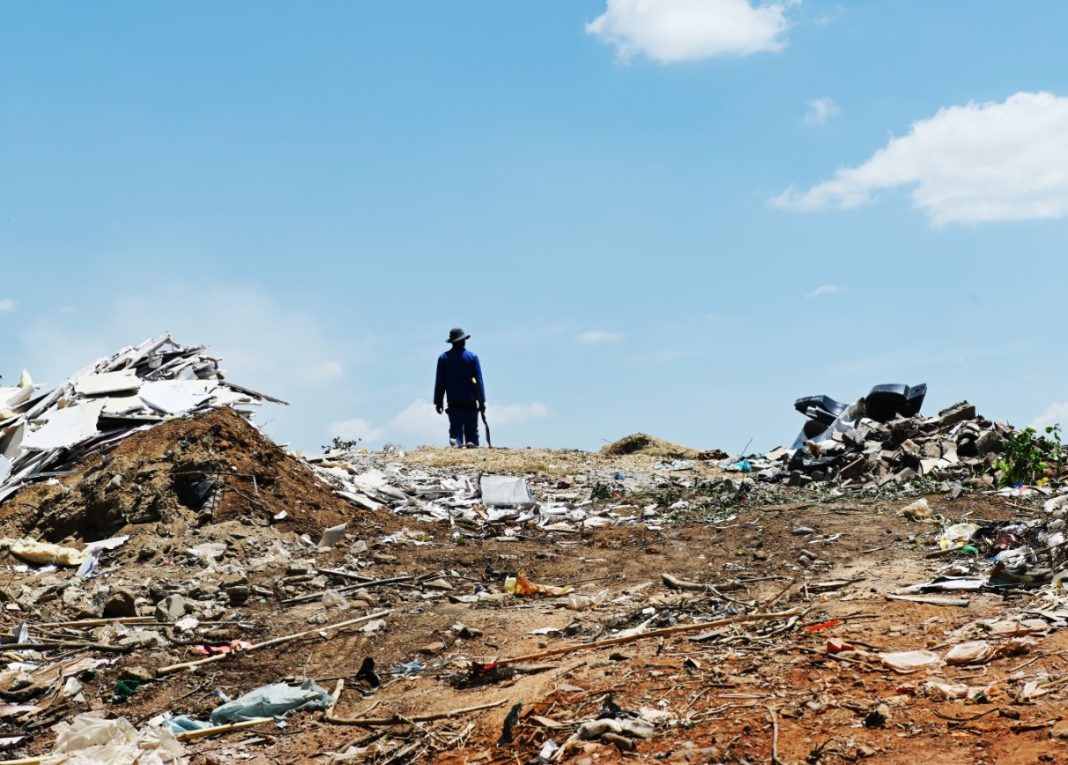
Gauteng will tighten waste rules, develop a zero-waste plan and pursue a regional Eco-Park serving Tshwane, Johannesburg and Ekurhuleni as it moves to cut reliance on landfills and build a recycling economy, Environment MEC Ewan Botha said on Thursday.
Tabling the Gauteng Department of Environment’s 2026/27 budget vote in the provincial legislature, Botha said the province generated 45% of South Africa’s 106 million tons of waste annually, while only 11% was diverted from landfill.
“We landfill the rest, and our landfills are running out of airspace,” Botha said. “That is not a waste statistic. That is a market failure. Every ton we bury is a feedstock someone could have processed, a job someone could have held, an SMME that never got started.”
He said the department would convert its seven-year-old Integrated Waste Management Plan into a Zero Waste Plan and finalise Waste Minimisation Regulations that would mandate separation at source and ban the landfilling of organics, construction waste, paper, packaging and e-waste.
The province has also commissioned a feasibility study for a regional Eco-Park, described as an integrated waste management facility structured as a public-private partnership, while 180 buy-back centres are set to receive equipment and formalisation support.
“This budget breaks that open,” he said.
Botha tabled a total departmental budget of R646.6 million for the 2026/27 financial year, down from R673.6 million last year, but rejected suggestions that the department had been cut.
“The R27 million difference is not a cut. It is the fall-away of last year’s once-off R107.2 million allocation, which included R50 million for the one-time cleaning of 18 CBDs. That intervention is complete. The base is intact,” he said.
Waste Management will receive R18.9 million, including R2.5 million for the revised Integrated Waste Management Plan, R2.9 million for Waste Minimisation Regulations, R3.5 million for the Buy-back Centre Infrastructure Programme and R10 million for the Eco-Park feasibility study.
Environment Empowerment Services will receive R30.3 million, including R10.3 million for cleaning programmes and R20 million for greening, while Environment Policy Planning and Co-ordination will receive R8 million for climate work, including the Climate Change Action Plan, Climate Indaba, climate finance work and the Gauteng Schools programme.
“We will be told that this budget was cut. It was not. It was, however, normalised. No programme defunded. No commitment abandoned,” Botha said. “We will be told 11% diversion proves failure. I agree it is not good enough, which is exactly why we are legislating, commissioning, and building.”
Botha said Gauteng’s environmental pressures were being sharpened by climate change, with the province home to 16.4 million people and responsible for 34% of national GDP despite occupying just 1.8% of South Africa’s landmass.
“Climate change is no longer a forecast. It is our present reality,” he said, adding that the province faced intensifying heat stress, deepening drought, flash floods overwhelming township stormwater systems and river pollution with high E. coli levels.
He said the province would update its Gauteng Climate Change Strategy this year around resilience, emissions reduction and a just transition that grows the green economy while protecting workers in coal, mining and steel.
The department would also intensify enforcement against environmental crime after conducting 310 inspections, 117 enforcement actions, 34 criminal referrals and 15 arrests in the previous financial year, with 377 wildlife specimens seized and more than R5.7 million recovered.
“Operations in Mooiplaats and Kya Sands exposed illegal dumping, wetland destruction, and waste burning linked to cable theft and infrastructure vandalism,” Botha said. “This is organised environmental crime. Not a littering problem. Our Green Scorpions are the frontline.”
Botha said joint operations with SAPS, the Hawks, Home Affairs and municipalities would be intensified.
“Environmental criminals will be held accountable. Full stop,” he said.





