- Advertisement -spot_img

Ramaphosa urges re‑imagined SACU as Catalyst for regional economic sovereignty

- Advertisement -spot_img

Must read

Simon Nare

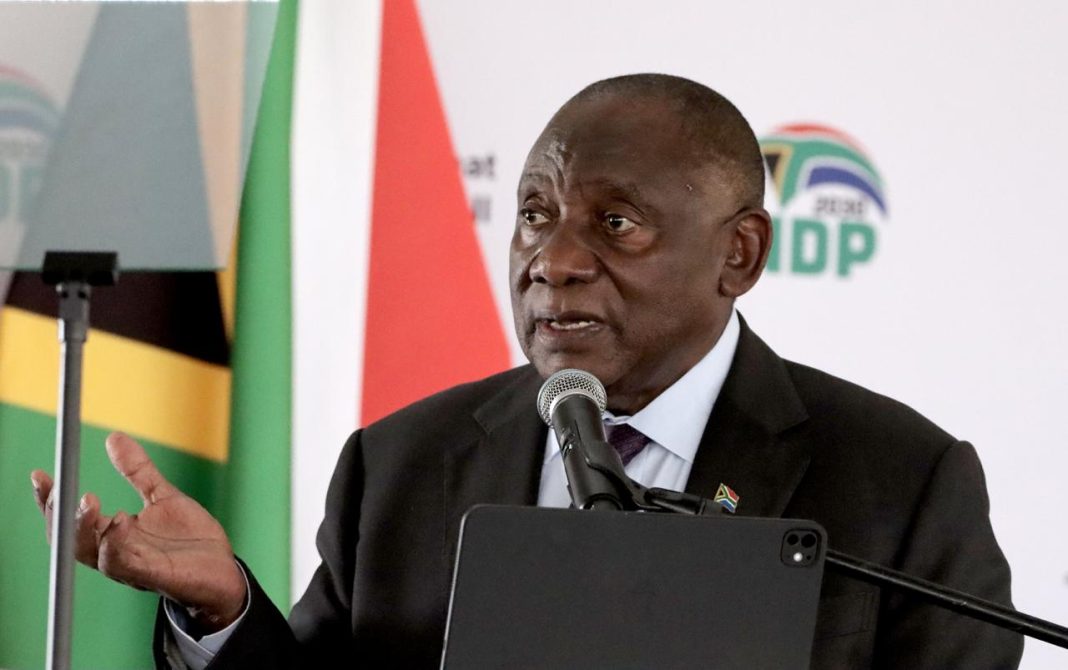
President Cyril Ramaphosa has called for the Southern African Customs Union to be transformed into a premier regional economic platform from its traditional role of a customs arrangement to create a self-reliant economy for the bloc.

Opening the 9th SACU Summit in Cape Town on Friday, Ramaphosa said the union must adapt its framework and instruments to advance industrialization, strengthen regional value chains, promote economic diversification, attract investment, and improve the economic competitiveness of member states.

“This is essential because institutions that fail to adapt to changing realities ultimately become custodians of the past rather than architects of the future. Our Union has the potential to be more than a fiscal instrument. It must be a catalyst for development,” said the president.

ALSO READ: Suspended Police Commissioner Fannie Masemola and co-accused Medicare24 tender case postponed to August

The union is a regional economic bloc, comprised of member states South Africa, Botswana, Namibia, Lesotho, and Eswatini that shares revenue generated from tariffs at customs in the bloc, which is then deposited into a single pool.

The member states have a uniform tariff applied to goods imported from outside the union and goods grown, produced or manufactured within the common customs area move between member countries free of customs duties.

Ramaphosa, addressing heads of state of the bloc, said at a time when the global economic environment remained precarious and uncertain, marked by trade tensions, tariff disputes, supply chain disruptions, and growing economic fragmentation, it was time to strengthen economic resilience.

“A Re-imagined SACU, therefore, becomes the vehicle that would enable our region to navigate the turbulent economic environment, but the current moment continues to present us with.

“New technologies are redrawing industrial competitiveness. Supply chains are being reconfigured. Around the world, nations are reorganising themselves for a far more uncertain future. In such a world, no African country, regardless of its size, can prosper alone. Our strength will increasingly depend on the strength of our region,” he said.

The president added that the global economy was being reshaped and trade patterns were changing, and for a union that has lived through two world wars, the Great Depression, the struggle against colonialism and apartheid, it was time to put a re-imagined union agenda on the table.

ALSO READ: KZN police say 30 June talks produced no-violence ‘understanding’ as Durban route dispute lingers

He called for the need to build resilience and reduce the economic dependencies that render African economies vulnerable to the whims of international trade, adding that certainties upon which the international trading system rested for decades were steadily giving way to uncertainty.

Ramaphosa said the World Bank estimates that global growth will slow to 2.5% this year because of the conflict in the Middle East but the overall gross domestic product growth in SACU was expected to grow to 2.64% percent in 2026 and 2.1% in 2027.

“The SACU economies have, however, proven to be resilient against external shocks, supported by stronger regional integration, the diversification of export destinations and effective risk-mitigation measures. It is through regional integration that our region will continue to strengthen economic sovereignty,” he said.

The president lauded some of the joint projects by members states and those achieved by individual member states. He pointed to cooperation by farmers from member states on citrus and sugar cane production, cooperation between South Africa and Botswana on Foot and Mouth vaccines.

Further, he acknowledged Eswatini’s manufacturing base, Lesotho’s textile sector, Namibia’s green hydrogen and uranium processing potential, Botswana’s diamond beneficiation experience and South Africa’s automotive and steel capacity.

“Industrialisation is the only durable path from commodity dependence to an economy capable of sustaining our growing populations. The next chapter in SACU’s history must be written not in customs schedules alone, but in factories that produce, laboratories that innovate, railways that connect our economies and young people whose talents are fully realised,” he said.

INSIDE POLITICS

More articles

LEAVE A REPLY

Please enter your comment!
Please enter your name here

Inside Education E-Edition

spot_img

CATHSSETTA

spot_img

AVBOB STEP 12

spot_img

Inside Metros G20 COJ Edition

spot_img

JOZI MY JOZI

spot_img

QCTO

spot_img

Latest article