
By Johnathan Paoli
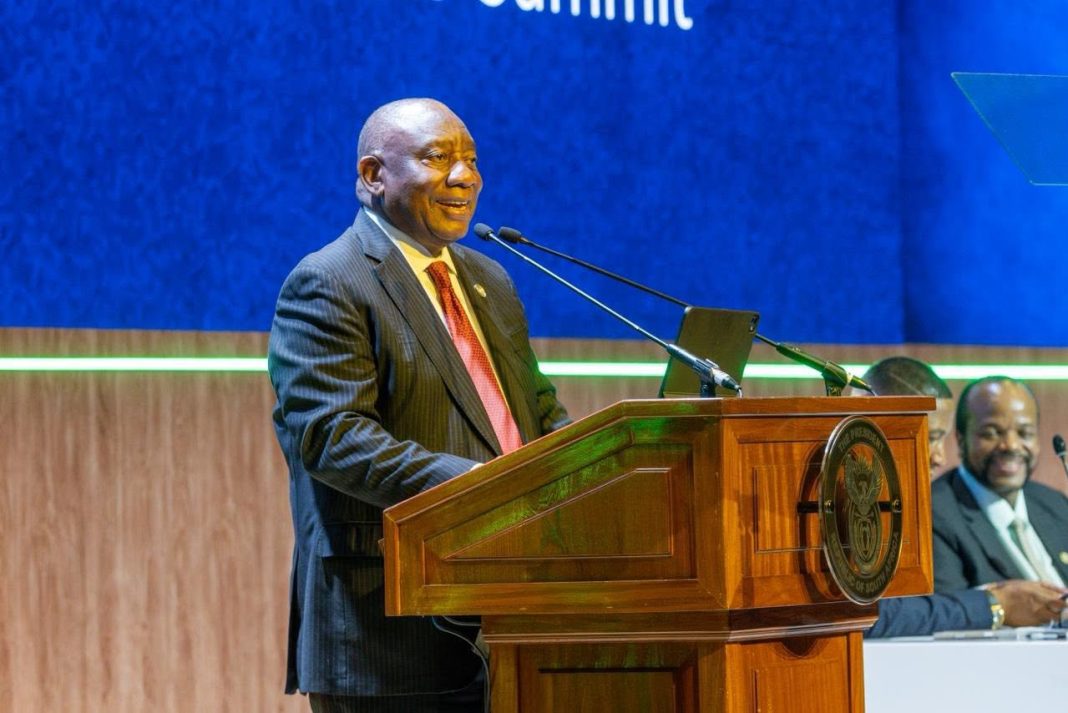
President Cyril Ramaphosa has called on South Africa’s traditional leaders to use their moral authority to help prevent intolerance, discrimination and violence against foreign nationals, warning that growing anti-foreigner mobilisation poses a serious threat to communities, social cohesion and the country’s international standing.
Addressing a meeting with the country’s monarchs on Saturday, Ramaphosa said traditional monarchs were uniquely positioned to calm tensions as the government implements its comprehensive strategy to manage migration while combating illegal immigration within the bounds of the Constitution.
“Our Kings and Queens have a vital role to play in this effort. As the traditional sovereigns of many of our people, as leaders who command deep trust and moral authority, you are well placed to speak out against intolerance and instability,” Ramaphosa said.
The president urged traditional leaders to actively intervene before tensions escalate into violence.
“You can use your standing to calm tensions, resolve disputes through dialogue and prevent communities from being mobilised for violence and disorder. Through the spirit of Ubuntu that you embody and protect, you can remind our people that we are defined by our humanity towards one another,” Ramaphosa said.
The meeting formed part of the government’s broader consultation process following the cabinet’s adoption of a “comprehensive approach to managing migration”, which the president first outlined during a national address earlier in the month.
The strategy seeks to address illegal immigration while rejecting vigilantism and xenophobic violence.
Ramaphosa acknowledged that migration had become an increasingly contentious issue amid South Africa’s high unemployment, poverty, crime, and pressure on public services.
ALSO READ: Tensions rise ahead of June 30 ultimatum as anti immigration marches intensify
“Over recent months, South Africans from every walk of life have raised concerns about migration, and illegal immigration in particular,” he said.
He said these concerns emerged in conditions of persistently high unemployment, poverty and hardship and in communities that are “plagued by crime, violence and corruption, and where there is increasing pressure on public services”.
However, he cautioned against blaming migrants for the country’s broader socio-economic challenges.
“To tackle the challenges our country faces, we need faster and more inclusive growth, job creation and development. Migration is not the cause of our problems, but it is something that we must manage constructively and collectively,” Ramaphosa said.
The president warned that recent anti-foreigner mobilisation risked destabilising communities and damaging South Africa’s reputation across the continent.
“We are mindful that the recent mobilisation against foreign nationals carries real risks for our communities and for our country. Unrest, violence and intimidation tear at the social fabric of our communities. They endanger lives and they damage the standing and the reputation our country has worked hard to build,” he said.
Ramaphosa also noted growing concern from neighbouring countries.
“We have seen how some other African countries have raised concerns about the mobilisation of anti-foreigner sentiment in South Africa. This has been worsened by the spread of misinformation and disinformation,” the president said.
Reiterating the government’s position, Ramaphosa said the responsibility for enforcing immigration laws rested solely with the state.
“Responsibility for enforcing our laws rests with the state, and no individual may stop another to demand documentation or proof of nationality,” he said.
Ramaphosa outlined Cabinet’s five-pillar strategy for managing migration: stricter enforcement of immigration and labour laws, stronger border security, a corruption-free and technology-driven immigration system, legislative reforms, and greater cooperation with SADC and the African Union to address the root causes of migration.
The strategy includes intensifying the identification and deportation of undocumented foreign nationals, establishing dedicated immigration courts, recruiting 10,000 labour inspectors, increasing penalties for employers who hire undocumented migrants, deploying smart border technologies, digitising Home Affairs systems, introducing biometric identification systems, reforming immigration legislation and working with regional partners to address the root causes of migration.
The plan also envisages closer cooperation between government, municipalities and traditional authorities, particularly in border communities, while strengthening contingency planning to respond to unrest linked to anti-foreign national sentiment.
Ramaphosa said traditional leaders already played an important role in addressing poverty, unemployment and underdevelopment, which often fuel community tensions.
“You continue to guide and unite your communities, working with government and other social partners to address the very conditions of poverty, unemployment and underdevelopment in which these tensions take root,” he said.
ALSO READ: Holomisa unveils UDM’s local election manifesto, vows clean governance and municipalities
Concluding his address, the president expressed hope that the engagement would strengthen cooperation between government and traditional leadership on one of the country’s most pressing challenges.
He said that while there were immediate pressures, the issue of migration was something that communities, traditional leadership and the government must remain engaged with into the future.
INSIDE POLITICS





