

Staff Reporter
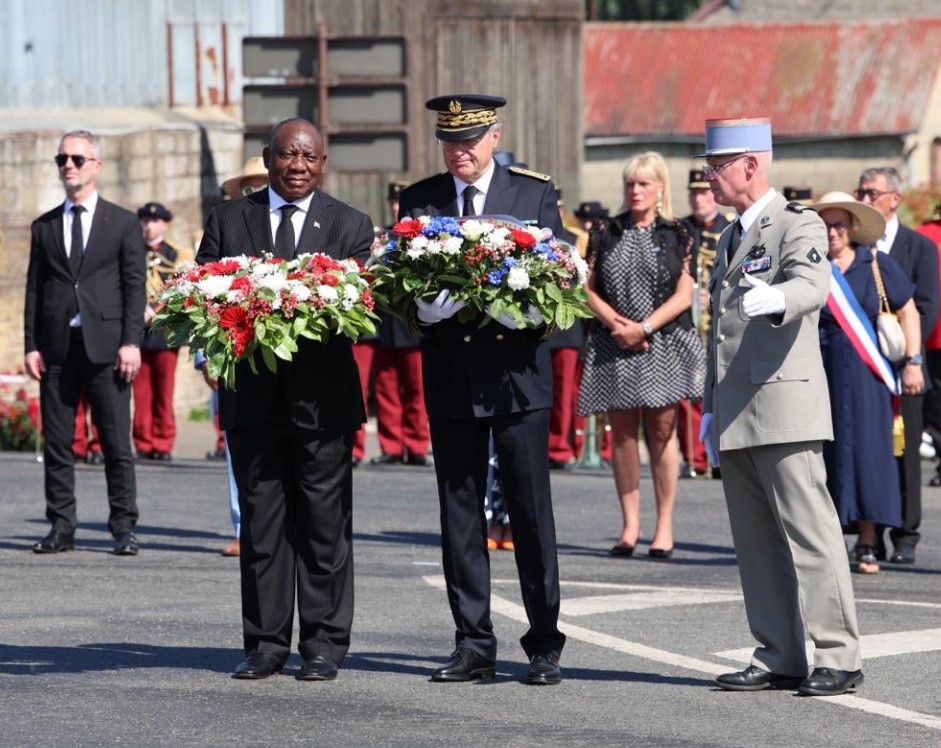
President Cyril Ramaphosa said on Sunday that South Africa must correct the racial injustice that excluded black servicemen from the country’s official memory of the First World War, declaring that national sacrifice could not be divided according to race.
Speaking at the 110th commemoration of the Battle of Delville Wood in northern France, Ramaphosa said South Africa had for decades honoured only part of its wartime history while diminishing the contributions of black labourers and servicemen.
“We gather to affirm that the memory of a nation cannot be divided according to race,” Ramaphosa said.
“Sacrifice has no colour — and courage belongs to no single community.”
The ceremony formed part of Ramaphosa’s official visit to France from 10 to 12 July, during which he held talks with French President Emmanuel Macron, participated in high-level education meetings at UNESCO headquarters in Paris and met French business leaders.
Ramaphosa paid tribute to the South African soldiers who fought at Delville Wood, members of the Cape Corps, the South African Native Labour Contingent and more than 600 black South Africans who died when the SS Mendi sank in the English Channel in February 1917.
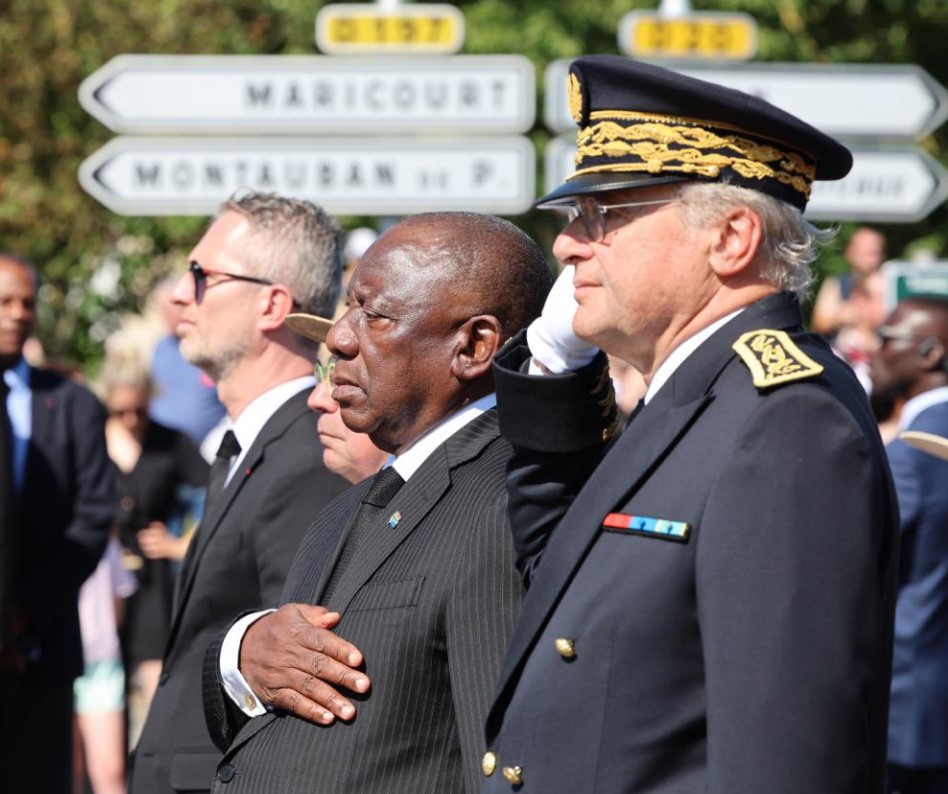
He said the contributions of many black South Africans had been ignored or deliberately excluded from the official history of the country under racial rule.
“For too long, South Africa remembered only part of this history,” he said. “Today, we remember it in full.”
More than 3,000 soldiers from the 1st South African Infantry Brigade entered Delville Wood on 15 July, 1916, during the Battle of the Somme, after being ordered to capture and hold the wooded area “at all costs”.
The troops endured six days and five nights of artillery bombardment, repeated attacks, scarce water and dwindling supplies. Only a small number were able to leave the wood in organised formation when the brigade was relieved on 20 July.
Ramaphosa said the battle had become a symbol of South African courage, but warned against glorifying the conditions in which the soldiers died.
“War is not glorious to those who lie wounded in the mud,” he said.
“There is no glory in a mother receiving a telegram informing her that her son will not return.”
Ramaphosa said the history of South Africa’s participation in the war could not be told solely through the experiences of white combat soldiers.
More than 20,000 black South Africans travelled to France as members of the South African Native Labour Contingent, where they unloaded ships, built roads, maintained railway lines, carried supplies, handled ammunition and buried the dead.
Under the racial policies of the Union of South Africa, they were generally barred from carrying arms as equal soldiers in the European theatre.
“They were willing to serve. They were willing to risk their lives. But they were denied the status, recognition and dignity afforded to white combatants,” Ramaphosa said.
He said their work was essential to the Allied war effort but was treated for decades as though it mattered less.
“This was not merely an omission,” he said. “It was an injustice.”
Ramaphosa said the tragedy of the SS Mendi was among the clearest examples of that injustice.
The ship was carrying more than 800 members of the labour contingent towards France when it was struck by another vessel in thick fog near the Isle of Wight on 21 February, 1917.
More than 600 black South Africans died after the ship sank.
“Their deaths were deaths in service. Their sacrifice was a national sacrifice. Yet their recognition was not equal,” Ramaphosa said.
He said black South Africans had been expected to demonstrate loyalty to a country that denied them political rights, equality and adequate protection.
“They fought for a country that did not grant them equal citizenship,” he said.
“Their service exposed the moral bankruptcy of racial rule.”
He said the Delville Wood Memorial’s transformation from a monument primarily associated with white soldiers into a site commemorating all South Africans who served was an act of historical justice.
But he said memorials alone were insufficient and called for the fuller history of black servicemen to be included in textbooks, classrooms and national ceremonies.
“We cannot honour the soldier and forget the labourer who supplied him,” Ramaphosa said.
“We cannot remember Delville Wood and neglect the SS Mendi. We cannot speak of national sacrifice while excluding the majority of the nation.”
Ramaphosa also used the address to call for diplomacy and the peaceful resolution of modern conflicts, saying the First World War demonstrated how failures by political leaders were ultimately paid for in human lives.
“As South Africa, we must remain committed to the peaceful resolution of conflict,” he said.
“We must defend the principles of international law. We must oppose aggression and the targeting of civilians. We must support diplomacy, dialogue and negotiation.”
Ramaphosa said South Africa must build a common national memory that recognised the different experiences of those who served without diminishing their equal humanity.
“Their experiences were not the same. Their treatment was not equal. But their humanity was equal. Their courage was equal. The grief of their families was equal,” he said.
He said restoring the forgotten contributions of black servicemen was part of building the democratic and equal country that those who served during the war had been denied.
“True patriotism does not require us to hide injustice,” he said. “True patriotism requires us to correct it.”
“To all South Africans who served and died in the First World War, we say: You belong to one national memory. You are part of one shared history. You are mourned by one people.”
INSIDE POLITICS