By Lebone Rodah Mosima
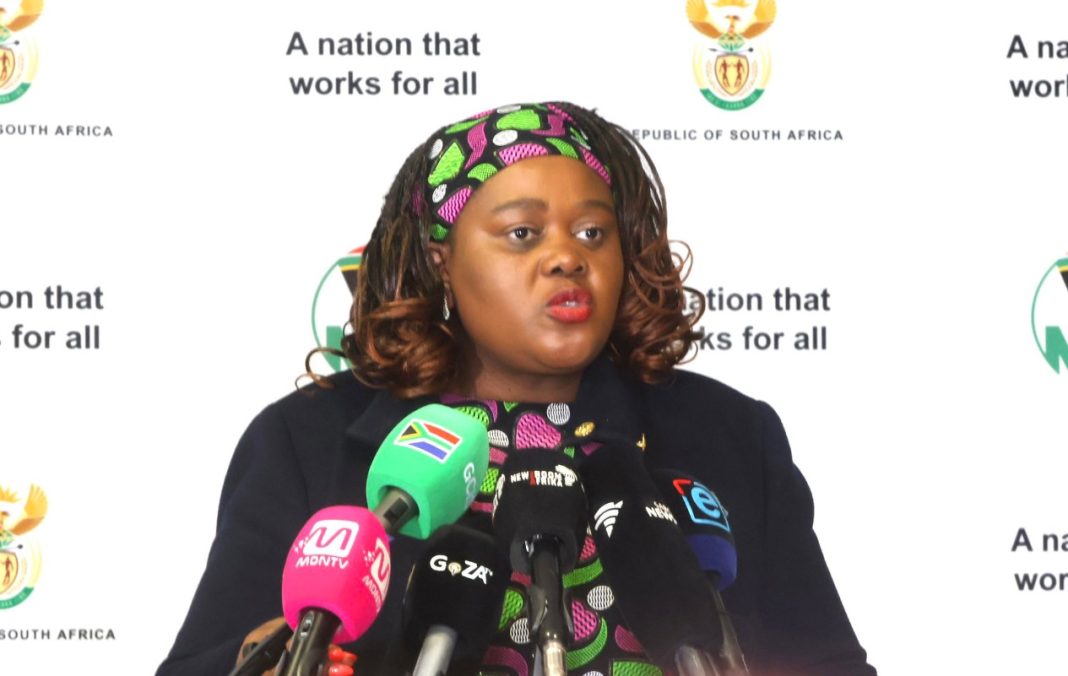
South Africa processed 53,449 foreign nationals through deportation and voluntary repatriation channels by close of business on Saturday, Justice and Constitutional Development Minister Mmamoloko Kubayi said on Sunday.
Kubayi said Malawian nationals accounted for more than 80% of the combined total recorded by the close of business on Saturday, followed by Zimbabweans and Mozambicans.
The figure combines formal deportations carried out under South African immigration law with voluntary repatriation arrangements involving foreign governments and their citizens.
Kubayi told a media briefing hosted by the Inter-Ministerial Committee on Migration in Pretoria that immigration enforcement remained the sole responsibility of the state.
“Government reiterates that the management of immigration, border management, deportation and facilitated repatriation is the exclusive responsibility of the State,” she said.
She said that individuals and organisations had no authority to search homes, demand identity documents or remove suspected undocumented migrants from communities.
The warning followed reports of groups entering homes and businesses while searching for foreign nationals, amid heightened migration-related tensions in several parts of the country.
“[W]e are striving to achieve an orderly and regular migration which is mindful and sensitive to the concerns raised by our people, while observing human rights and dignity of all people in our country, irrespective of their citizenship and immigration status,” Kubayi said.
At the same briefing, Acting Police Minister Firoz Cachalia said police would protect the right to peaceful protest but would act against intimidation, vigilantism and other criminal conduct.
He said that respectful dialogue with other African nations to reduce tensions required a two-way effort, acknowledging that inflammatory rhetoric had appeared on social media and recognising the involvement of political leaders in some countries.
“We are not confused about our identity and where we stand on important matters concerning our mutual interests.”
He said further unlawful activity could occur in the run-up to elections.
Cachalia also defended the government’s spending of more than R600 million on police deployments for the 30 June anti-illegal migration demonstrations, saying that the operation had helped prevent violence, damage and instability.
The IMC said that, as of 8 July, police had registered 205 cases and arrested 350 people over alleged intimidation, incitement and related offences. Sixty-nine cases remained under investigation and 112 were on the court roll.
It said 29 migration-related gatherings recorded nationally on 9 July had taken place without injuries, arrests, property damage or unrest.
Kubayi said the government had stepped in to assist with repatriation after Malawi was unable to provide enough buses from 14 June.
Government said 2,615 people had been returned to countries outside the Southern African Development Community region. These included 1,159 people returned to Nigeria, 939 to Uganda, 431 to Kenya and 86 to the Republic of Congo.
The IMC separately reported that 15,398 foreign nationals were formally deported between 1 April and 30 June, during which authorities conducted 2,519 joint law-enforcement operations.
Minister in the Presidency Khumbudzo Ntshavheni said at the same briefing that the government’s strategy extended beyond removing people who were in South Africa unlawfully.
She said the government was engaging diplomatic missions and countries of origin about political instability, limited economic opportunities, difficulties obtaining passports and other conditions that contributed to irregular migration.
Ntshavheni said South Africa’s participation in regional peace, investment, trade and industrialisation initiatives formed part of a longer-term attempt to address the conditions that pushed people to leave their home countries.
Government has established a Temporary Repatriation Processing Centre in Musina, near the Zimbabwean border. The facility began operating on 1 July and has capacity for about 20,000 people.
The centre is supported by national, provincial and municipal authorities, police, the defence force, humanitarian organisations, United Nations agencies and private companies.
Government said biometric screening during the processing operation had identified people wanted in connection with murder, armed robbery and rape cases.
A 24-hour clinic at the Musina facility had treated 402 patients, with nine referred to Musina Hospital. Authorities were also investigating the death of a Malawian national who became ill while travelling towards the border.
Daily repatriation numbers fell from a peak of 4,850 on 5 July to 1,139 on 11 July, prompting discussions about gradually reducing the temporary resources deployed to the operation.
Kubayi said the scaling down would be phased to ensure that deportations and voluntary repatriations were not disrupted.
The government also plans to publish a unified legislative framework dealing with citizenship, immigration and refugee matters for public comment during 2026. It is separately preparing regulations intended to stop traffic registration numbers from being used improperly as identity documents.
The IMC said South Africa would continue enforcing its immigration laws while protecting the rights and dignity of citizens and foreign nationals.
“Our law enforcement authorities will not hesitate to act against those who continue to conduct these unlawful searches and identity checks,” Kubayi said.
INSIDE POLITICS