



By Johnathan Paoli
A classified intelligence report that the Inspector-General of Intelligence (IGI) had previously refused to provide to the Investigating Directorate Against Corruption (IDAC) allegedly passed from suspended Police Minister Senzo Mchunu to suspended IDAC investigator Dylan Perumal and was later sent to IDAC state advocate Drushantha Ramsamy via WhatsApp.
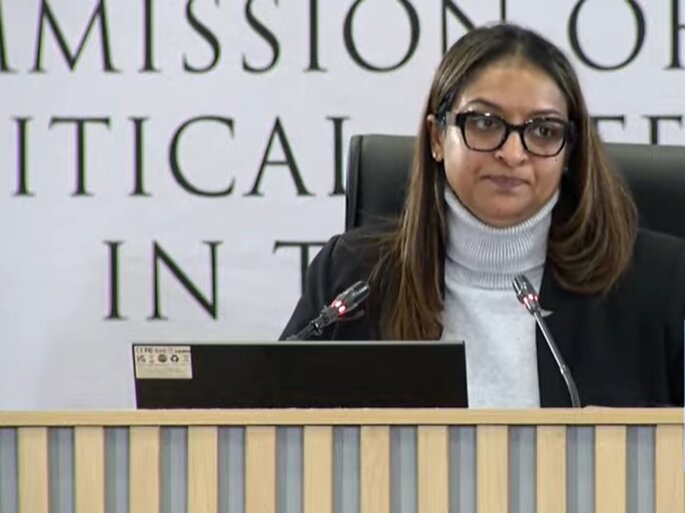
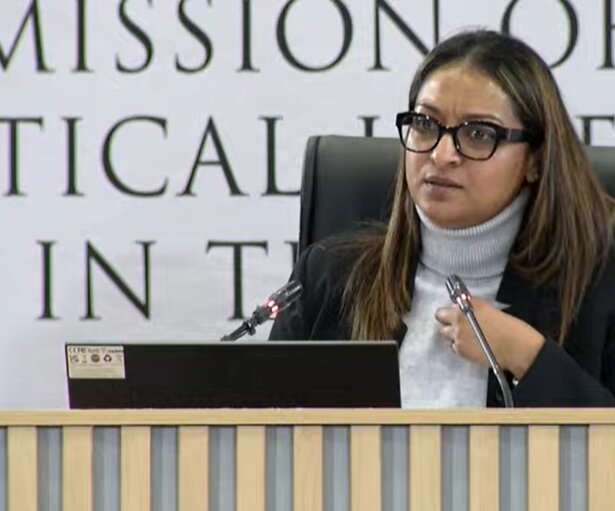
Resuming her testimony before the Madlanga Commission of Inquiry on Tuesday, Ramsamy said Perumal told her that Mchunu had arranged for an IGI report on Crime Intelligence (CI) investigations to be flown to the Eastern Cape and delivered to him.
The report was still classified when it reached Perumal, Ramsamy said, and had not been declassified before he shared it with her via WhatsApp.
ALSO READ: South Africans increasingly ignore spam as calls surge to 17.47 billion
“It was a draft, was a classified report, and would have had to be declassified. It was sent by WhatsApp,” Ramsamy said.
She said the transmission was particularly concerning because the IGI had previously refused to make the report available to IDAC.
Parts of the report dealt with CI appointments and vetting. Perumal allegedly told Ramsamy that the document was intended to assist IDAC with its investigations.
Ramsamy also returned to evidence concerning Democratic Alliance (DA) MP Cameron, who had submitted a statement to IDAC dealing with several matters, including the investigation involving Brigadier Dineo Mokwele, allegations involving suspended Crime Intelligence head Lieutenant-General Dumisani Khumalo and National Police Commissioner Fannie Masemola, as well as the vetting of Major-General Nosipho Madondo, head of the Component for Intelligence Analysis and Co-ordination.
Last week, Ramsamy’s evidence suggested Cameron may have been linked to an alleged effort by Perumal and former IDAC head Andrea Johnson to target Masemola.
On Tuesday, however, Ramsamy stressed that she was not drawing a definitive conclusion about Cameron’s involvement, but was explaining why the sequence of events had raised suspicions.
Evidence leader Lee Seegels-Ncube clarified that Ramsamy’s evidence was intended to show that discussions about the alleged strategy were taking place within IDAC. While it was possible that members of Parliament’s Portfolio Committee on Police were involved, Ramsamy said she had no evidence proving this.
The evidence included an email showing that Johnson requested a meeting on 16 January 2025. The meeting, held on 22 January, allegedly involved discussions about a strategy concerning Masemola’s appearance before Parliament.
Ramsamy said she questioned how Johnson and Perumal could have known what questions Masemola would face, leading her to suspect that someone within the Portfolio Committee may have been communicating with IDAC.
The evidence then turned to what Ramsamy described as “leg 1”, relating to the Lushaba matter, and “leg 2”, concerning the Mokwele matter.
The Lushaba investigation concerned allegations that CI chief financial officer Major-General Philani Lushaba used Secret Service account funds to cover up a house robbery and the theft of equipment by a sex worker. The Mokwele investigation concerned her appointment as head of CI’s Technical Support Services.
On the Lushaba matter, Ramsamy described mounting pressure over arrests and the handling of the investigation.
She said Johnson and Perumal wanted her to submit another application relating to Lushaba’s laptop, but she refused after being told there were insufficient grounds.
Ramsamy also described plans for arrests in June 2025, saying Johnson wanted J50 arrest warrants authorised before informing her, after which Johnson would notify the National Director of Public Prosecutions and arrest teams would be deployed.
Ramsamy said she became frustrated because Johnson and Perumal wanted the arrests conducted as a spectacle, with the “flash and lights of cameras”.
The arrests took place on 12 and 13 June, with two suspects arrested and two others surrendering.
ALSO READ: Unemployment rises to 33.6% as 345,000 join ranks of unemployed
On the Mokwele matter, Ramsamy said Johnson compared the case to the corruption prosecution of former national police commissioner Jackie Selebi.
According to Ramsamy, Johnson believed Mokwele’s appointment by Khumalo amounted to gratification because of allegations involving Mokwele’s father, who worked for the Hawks and was alleged to have faced bribery charges.
Johnson, Ramsamy said, was convinced that Mokwele’s appointment could lead to “state capture” within CI and sought to persuade IDAC deputy director of public prosecutions Peter Serunye to accept the merits of the case despite contrary assessments by Ramsamy and fellow state advocate Joy Hlatshwayo.
Ramsamy also questioned why documents relating to Mokwele were submitted in her name while she was on sick leave and after another prosecutor had been assigned to the enrolled case.
She said she was instructed only on 27 May 2025 to prepare an “umbrella” Section 28(1) authorisation covering the CI and Project Diversion matters.
She submitted her draft on 3 June, saying it was incomplete and largely recycled from an earlier December 2024 application.
Ramsamy told the commission that the version presented as having been signed on 30 May 2025 could not have been legitimately authorised in that form.
She has described the document as a fabrication and requested that the signature be subjected to forensic testing.
The commission continues.






