

By Thapelo Molefe
President Cyril Ramaphosa says police and security agencies are investigating whether forces outside South Africa have helped instigate recent violence targeting foreign nationals.
Ramaphosa told the National Assembly on Tuesday afternoon that authorities were following leads involving people outside the country who may be seeking to destabilise South Africa by fuelling tensions between South Africans and other Africans.
ALSO READ: Ramaphosa grilled over water crisis as MPs point to failing municipalities and corruption
“It’s been interesting, as we have also found, that there have been activities that we have observed by a number of forces outside our country that have been bringing to bear their influence in this whole process,” Ramaphosa said.
He said some African governments had also recognised the possible outside influence and indicated that not all of the unrest was being driven from within South Africa.
“They have said, we know and we can see that quite a bit of this, certainly not all of it, but quite a bit of this is being propelled and instigated from outside of South Africa,” he said.
ALSO READ: Madlanga Commission: Matlala concedes dealings with Msibi went beyond security services
Ramaphosa was responding to questions from EFF leader Julius Malema, who pressed the president on what concrete steps the government was taking to protect foreign nationals and prosecute those responsible for the violence.
Malema said the attacks had caused serious damage to South Africa’s relations with other African countries and accused the government of failing to act against people who had participated in the violence.
He said some perpetrators had allegedly carried out attacks in the presence of police officers without being arrested, creating the impression that the violence was state-sanctioned.
Malema also questioned why Ramaphosa had not ordered the arrest of two anti-immigration activists who met the president ahead of the 30 June protests. Ramaphosa met Ngizwe Mchunu and Nkosikhona Ndabandaba, also known as Phakel’umthakathi, on the eve of the demonstrations and told them to ensure the protests remained peaceful.
“The two of them came to meet with you. You should have locked them up that day when they came to meet you,” Malema said.
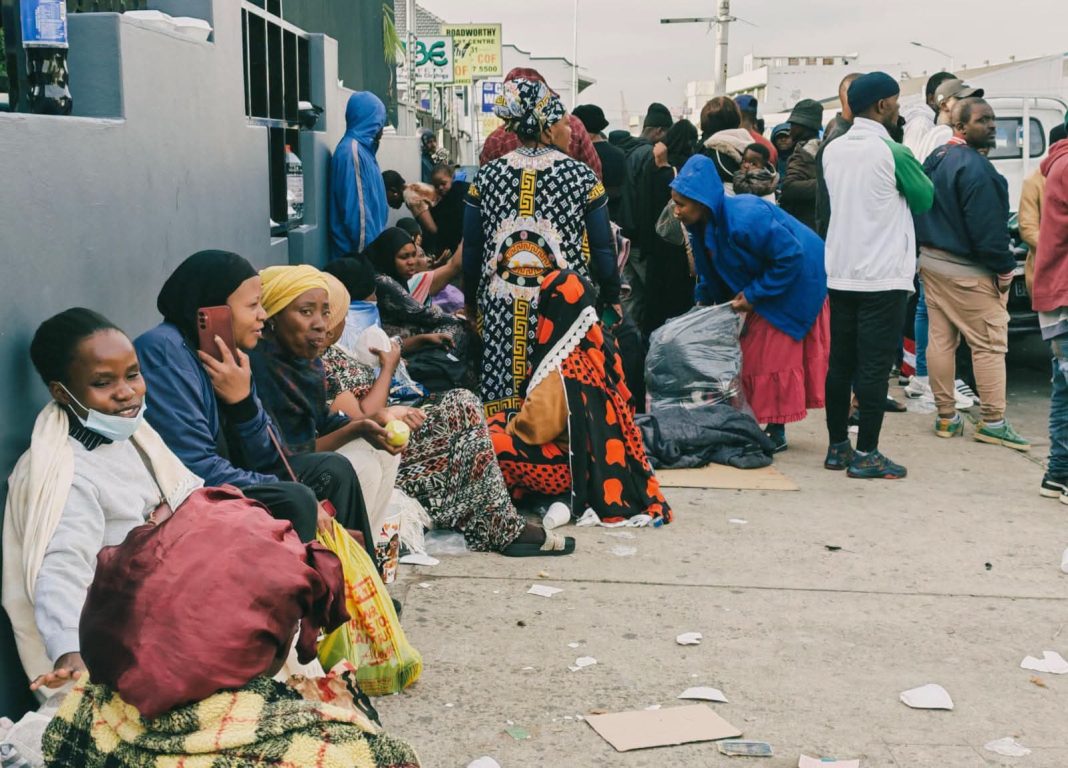
March and March was among the main organisers of the June demonstrations. While marches in many areas were peaceful, violence and looting were reported in some places amid a broader anti-migrant campaign in which documented as well as undocumented foreign nationals were targeted.
Malema asked Ramaphosa to commit to a timeline for arrests and prosecutions.
Ramaphosa said police and security agencies were investigating the violence and that those responsible would be arrested and prosecuted.
ALSO READ: Dolly Parton, music star, actor and beloved figure who spanned generations, dies at 80
“The commitment I can make is that those who are perpetrating acts of violence against foreign nationals are going to be dealt with,” he said.
“The police and the prosecuting authorities have been given the responsibility to make sure that anyone who commits criminal activity in our country is followed up and brought to book.”
Ramaphosa said the investigation would look at both local perpetrators and people who may be operating from outside the country.
“We are following those threads and those threats as well,” he said.
He described the situation as a “complex” and “multifaceted” problem, saying authorities were working to establish the roles played by South Africans as well as people perceived to be outsiders.
“We are at work and working it through and deciphering precisely the various roles that have been played by our own people as well as those we perceive to be outsiders who want to disturb the stability in South Africa,” Ramaphosa said.
He said the government was particularly concerned about attempts to make it appear as though South Africans were “at war with Africans from other nations”.
Ramaphosa said the government had firmly rejected xenophobia, Afrophobia, vigilantism and discrimination against people from other countries.
He said South Africa had also stepped up diplomatic engagement with African governments to explain the situation and reassure them of its commitment to Pan-Africanism.
Last week, South Africa raised the issue at the 46th Ordinary SADC Summit in eThekwini, despite the matter not initially being on the summit’s agenda.
“We put it on the agenda and then took the time to explain what had happened. And we put on the table the actions that we are taking,” Ramaphosa said.
The SADC summit subsequently called for coordinated and multidimensional regional dialogue to address the underlying causes of migration and develop sustainable responses.
Ramaphosa said South Africa was also pursuing reforms to its migration system, including strengthening border management, tackling corruption in the immigration system, improving legal migration pathways and implementing reforms arising from the Revised White Paper on Citizenship, Immigration and Refugee Protection.
He said these measures were intended to improve public confidence in the state’s ability to manage migration while upholding the rights of foreign nationals and South Africa’s constitutional and international obligations.
Ramaphosa also rejected suggestions that South Africa had been isolated by its African neighbours because of the violence.
He said International Relations and Cooperation Minister Ronald Lamola had travelled to several African countries as his envoy and had been well received.
“While other people might have thought that we are being snubbed and we are being isolated, actually, the contrary has been the case,” Ramaphosa said.
He said several African governments had expressed an understanding of South Africa’s challenges and were willing to work with the country to resolve the crisis.
Ramaphosa maintained that the wider migration problem could not be solved by South Africa alone, saying that economic hardship, insecurity and other conditions in migrants’ countries of origin were among the factors driving people to South Africa.
ALSO READ: Johannesburg is stuck in a ‘debt doom loop,’ new study shows
He said the regional response should also address economic management, social support, healthcare and security across the continent.
“We are a product of our region. We are a member of our region. And we must act in unison with our region,” Ramaphosa said.
He said the government would continue working through SADC, the African Union and other regional partners while ensuring that those responsible for violence were dealt with under South African law.
Ramaphosa said South Africa’s response would be closely watched by its neighbours and other African countries, which would judge the government by how seriously it enforced the rule of law and protected foreign nationals.