

By Lebone Rodah Mosima
The Electoral Commission of South Africa (IEC) has approved 2,655,067 special-vote applications for the November 4 local government elections, a 131% increase from the 1,147,759 approved for the 2021 elections.
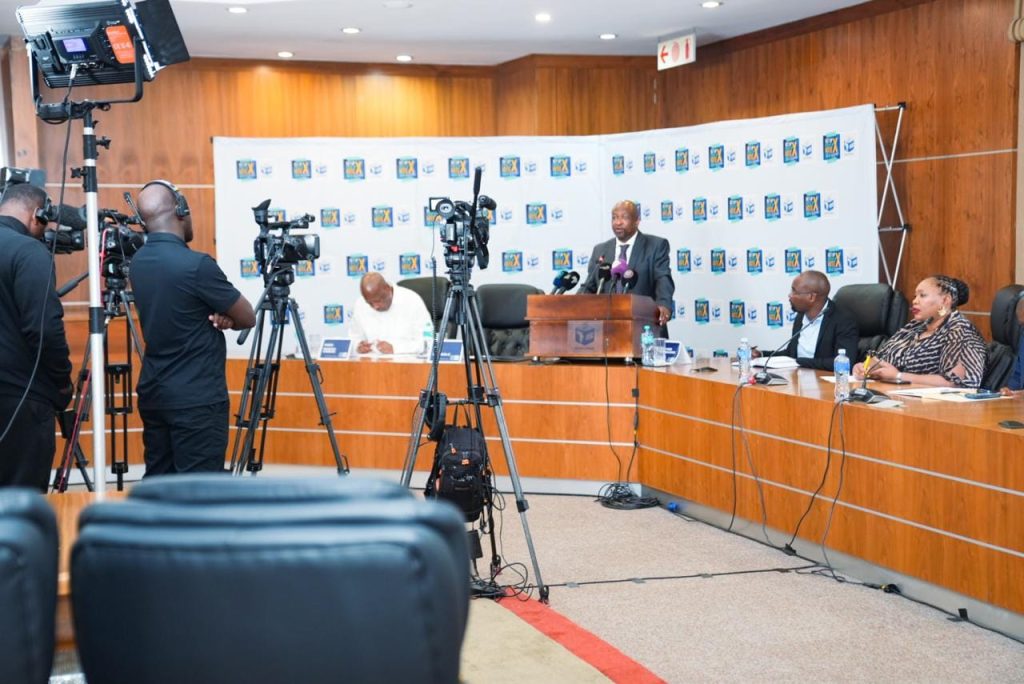
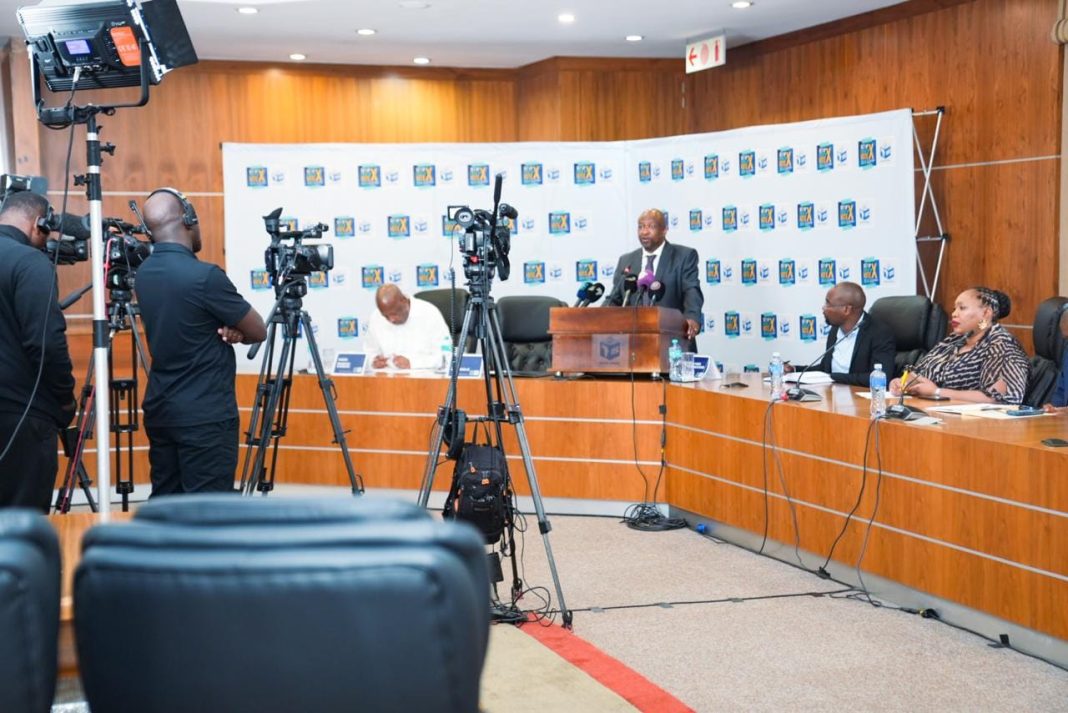
Chief Electoral Officer Sy Mamabolo said on Wednesday that applications opened on September 21 and closed at 5pm on October 12.
Special votes are divided into two categories: home visits for voters unable to travel to voting stations because of physical infirmity or disability, and voting-station visits for those who can attend their stations but cannot vote on Election Day.
The IEC approved 678,525 home-visit applications, up from 507,407 in 2021, an increase of 171,118, or 33.7%. KwaZulu-Natal recorded the highest number in this category, with 143,714.
ALSO READ: Mashatile urges unions to adapt to AI as technology reshapes workplace
Voting-station-based special-vote applications rose to 1,976,542 from 602,850 in 2021, an increase of 1,373,692, or 227.9%. Gauteng recorded the highest number, with 391,589.
“Most applications, 2,426,066, came through online platforms. So far, 171,214 manually submitted applications have been captured across the IEC offices,” Mamabolo said.
He said the capturing of manually submitted applications was being finalised, with completion targeted for October 16.
Gauteng recorded the highest number of approved special votes overall, with 480,721, followed by the Eastern Cape with 401,971.
KwaZulu-Natal recorded 348,971 applications, Limpopo 341,623, Mpumalanga 292,775 and the Western Cape 291,866. North West recorded 235,733, the Free State 132,088 and the Northern Cape 129,319.
The IEC’s analysis showed differences in the age and gender profiles of special-vote applicants.
Women accounted for 74% of home-visit applications and 64% of voting-station-visit applications.
Voters aged 60 and older accounted for 79.6% of home-visit applications, with those aged 70 to 79 making up the largest group.
“The data therefore indicates that home visits are predominantly utilised by older voters, particularly older female voters. The voting-station visits display a relatively younger and more gender-balanced profile,” Mamabolo said.
Gauteng recorded the highest numbers of female and male applicants, with 305,586 women and 172,200 men. The Eastern Cape followed, with 267,539 female applicants and 137,550 male applicants.
Special voting is scheduled for November 2 and 3, ahead of Election Day on November 4.
Election preparations
ALSO READ: WATCH: Katlehong shooting death toll rises to four as two more ANCYL members die
Mamabolo said that, following an external independent audit of the Election Results System and the implementation of remedial measures, the IEC had given political contestants access to the system from October 5 to 12 to test its integrity, functionality, security and reliability.
The Democratic Alliance, African National Congress, African Christian Democratic Party, Economic Freedom Fighters and Vryheidsfront Plus designated information and communications technology experts to review the system.
The IEC had printed more than 66% of the 79 million ballot papers required for the elections, Mamabolo said.
The printing followed a ballot-paper draw on September 23 to determine the order of parties and contestants, and the certification of candidates on September 25. Production was expected to be completed by October 18.
He said most non-security election materials had been distributed to municipalities ahead of special voting and Election Day.
All 23,696 voting stations had been secured, while leases had been signed for 22,659 permanent voting stations.
“Arrangements are being finalised to establish temporary infrastructure at 1,005 temporary stations, and to support 33 mobile voting stations,” he said.
The IEC had also finalised the locations of its national and provincial Results Operation Centres (ROCs).
The national centre will be at the Gallagher Convention Centre in Midrand and is scheduled to be launched on October 28.
Provincial centres will be located at the East London International Convention Centre in the Eastern Cape; 24 Ben Jones Street in Hamilton, Bloemfontein, in the Free State; Alberton Civic Centre in Gauteng; the Durban International Convention Centre in KwaZulu-Natal; Protea Hotel Polokwane Ranch Resort in Limpopo; ANEW Hotel Sports and Conferencing in White River, Mpumalanga; The Light House in Ernestville, Kimberley, in the Northern Cape; 50 First Street in Mahikeng, North West; and Century City Convention Centre in Cape Town, Western Cape.
Recruitment was underway for about 188,500 electoral officials, particularly presiding officers and deputy presiding officers.
At the time of the statement, 96% of presiding officers, 93% of deputy presiding officers, 94% of area managers and 79% of electoral officers had been recruited.
The names of presiding officers, deputy presiding officers and area managers had been shared with Municipal Party Liaison Committees to allow objections in line with recruitment criteria.
Training was also underway to prepare electoral staff for their duties, Mamabolo said.
Voter education and election integrity
The IEC has shifted its outreach efforts towards voter education, with campaigns designed to familiarise voters with the voting process.
These include a television campaign encouraging registered voters to participate and reminding them of the required documentation and voting procedures.
The commission has also produced a reality documentary, Let Your Voice Be Heard, featuring citizens and constitutional experts discussing democracy and active citizenship.
An animation series covering democracy, special votes, election dos and don’ts, voting and counting procedures, and the allocation of seats was being broadcast across multimedia platforms, including community media.
To strengthen information integrity, the IEC had partnered with civil society organisations and online platforms. It planned to sign a framework of cooperation with Meta, Google, TikTok and Microsoft on October 20.
“This framework is a sequel to another agreement signed with these platforms during the 2024 National and Provincial Elections,” Mamabolo said.
“It helps with concrete mitigation interventions to thwart the dissemination of disinformation during the election period.”
The commission had accredited 109 domestic observer organisations to strengthen transparency, accountability and credibility in the electoral process. The organisations were briefed on September 30 to prepare them for independent observation across all provinces.
As part of its stakeholder engagement, the IEC also briefed the diplomatic corps on October 8 on key electoral milestones, voting processes and its readiness for the elections.
The commission reminded voters that they may vote only at the station where they are registered and urged them to verify their registration details before Election Day.
Voters can check their details by sending their identity document number via WhatsApp to 0600 88 0000 or by SMS to 32810 at a cost of R1 per message.
Mamabolo said voters would receive the name of their registered voting station and their sequence number on the voters’ roll, helping election officials locate their names more quickly on Election Day.