

By Thapelo Molefe
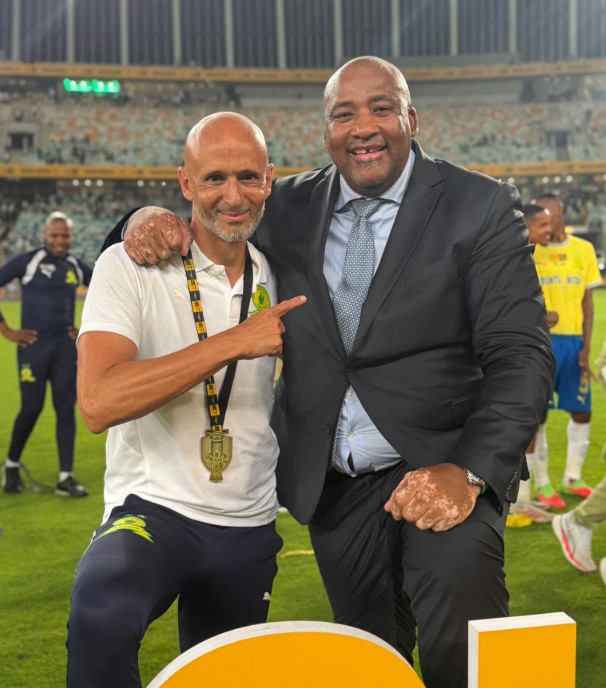
Sports, Arts and Culture Minister Gayton McKenzie has handed full responsibility for South Africa’s video assistant referee (VAR) rollout to the South African Football Association (SAFA), saying he has done everything he can to support the project and will no longer be involved in its implementation.
“Now, South Africans, there’s nothing more I can do as your minister. I am handing over to the people who have the money and the expertise. I can’t be part of the whole thing,” McKenzie said during a briefing on Wednesday.
His decision comes after months of uncertainty over the rollout, which was initially expected to begin at the start of the 2026/27 football season.
SAFA received R20 million from the department on 6 March to fund the project. However, after raising concerns about slow progress and missed milestones, McKenzie’s department requested the money back in August, giving the association 21 days to provide an update.
McKenzie said he became concerned when SAFA failed to communicate progress on the project.
“When SAFA was quiet, I became worried,” he said.
He said he wrote to SAFA requesting repayment, but the association’s chief executive, Lydia Monyepao, sent him bank statements showing that the funds remained in its account.
“The CEO then sent me the bank statements, and I saw them. I verified them. I saw that the money was there,” he said.
By 23 September, the balance stood at approximately R20.57 million, including accrued interest, in a dedicated account.
“The R20 million allocated by government and transferred to SAFA remains unspent and protected,” Monyepao said.
After SAFA requested more time, the department granted it a 21-day extension to submit a comprehensive report and revised implementation plan. SAFA submitted its report on 9 September, outlining its governance reviews, technical assessments, financial controls and proposed way forward.
The department subsequently decided not to immediately demand repayment, allowing the project to continue subject to stronger governance controls and reporting requirements.
McKenzie said he had pushed for the funding after SAFA president Danny Jordaan told him the association did not have the money to implement VAR.
“I then asked Treasury for money for VAR. So I’ve been fighting in the portfolio committee, I was attacked because of VAR. But I stood my ground,” he said.
He defended the decision to keep the funding available, saying it had been allocated specifically for VAR and could not simply be redirected to other government priorities.
“The money is gaining interest. So it’s not lying there like it’s been buried in the yard,” he said.
Monyepao said SAFA was prioritising referee training and technical preparations, with trials targeted for the end of the 2026/27 season in selected competitions rather than an immediate introduction in the country’s major leagues.
“We are looking to the end of the season, 2026-2027, to be testing the VAR in the playoffs,” she said.
She said a rollout in the Premier Soccer League (PSL) would require further discussions with the National Soccer League, broadcasters and other stakeholders. Outstanding technical and financial questions also need to be resolved.
SAFA has identified challenges involving camera coverage, broadcast compatibility, stadium infrastructure, internet connectivity, referee communication systems, equipment maintenance and long-term operating costs.
Eleven technology providers submitted proposals, of which five met the required criteria. However, SAFA has not appointed a supplier and is still considering whether to buy equipment or lease it on a match-by-match basis.
The association is also prioritising referee development. Eight South African referees have received VAR training through the Council of Southern African Football Associations (COSAFA), with three fully approved as VAR and assistant VAR officials.
Monyepao said training and certification were expected to take four to six months. SAFA plans to expand the programme while consulting FIFA and COSAFA.
She acknowledged that SAFA should have engaged COSAFA’s VAR specialists earlier in the process.
“We should have consulted him earlier. Maybe if we had done it in 2024 or early 2025, we would have actually had our 90 referees trained by now,” she said.
SAFA plans to begin with controlled trials in competitions under its control, including the Hollywoodbets Super League and ABC Motsepe League playoffs. Trials in competitions such as the Nedbank Cup would require permission from the PSL.
Monyepao said a wider rollout would depend on FIFA approval, referee training, technical readiness, procurement compliance and agreement among football stakeholders.
INSIDE POLITICS