

By Simon Nare
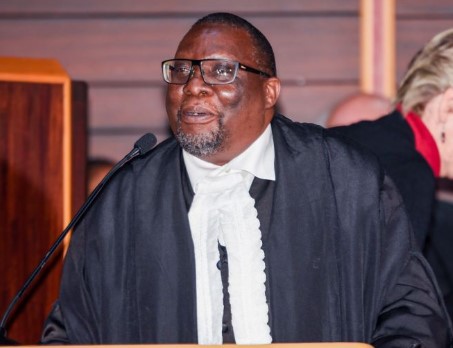
Parliament’s Section 89 Impeachment Committee has defended its decision to withdraw Advocate Griffiths Madonsela SC’s nomination as evidence leader, saying that new information about his previous legal work for the ANC justified the reversal.
The committee’s legal representative, Advocate Kameel Premhid, told the Western Cape High Court on Wednesday that correspondence from ANC secretary-general Fikile Mbalula revealed the extent of Madonsela’s advisory role, which had not been fully disclosed when the committee recommended him on 5 August.
ALSO READ: Teen accused of stabbing six-year-old girl to remain at youth facility ahead of bail hearing
The Economic Freedom Fighters (EFF) and the African Legal Professionals Association (ALPA) have challenged the committee’s decision, saying that the reversal was unlawful and irrational.
The dispute centres on the committee’s decision to rescind Madonsela’s recommendation on 1 September, following objections from President Cyril Ramaphosa over a potential conflict of interest.
The committee is overseeing the impeachment process arising from the theft of foreign currency from Ramaphosa’s Phala Phala farm.
Premhid told the court that Madonsela had disclosed in an initial letter to Parliament that he had previously provided legal advice to a parliamentary “study group”, but had not identified it as the ANC or fully explained the scope of the work.
The additional information emerged after the committee had recommended Madonsela, but before his formal appointment was finalised.
ALSO READ: Sibiya’s alleged victims oppose bail as defence dismisses charges as frivolous
Madonsela secured nine votes when the committee considered candidates for the position on 5 August, compared with seven for Advocate Kate Hofmeyr SC. The ANC’s 11 committee members abstained from voting.
The committee subsequently voted by 18 votes to nine on 1 September to rescind its recommendation.
The EFF argues that there had been no material change in circumstances between Madonsela’s recommendation and the decision to reverse it. The party maintains that the ANC drove the reversal to delay the impeachment proceedings against Ramaphosa.
But Premhid submitted that the additional correspondence had revealed information that was not before committee members when they originally considered Madonsela’s nomination.
He argued that the committee was entitled to reconsider its recommendation before the appointment process was concluded and that it had acted within the established rules, procedures and practices of the National Assembly.
Premhid said correspondence between Madonsela and Mbalula indicated that the advocate had been engaged to provide legal opinions on matters arising from impeachment processes.
“So, in Madonsela SC characterisation, he’s providing these ad hoc opinions, which I think we can generously assume say they arise as and when, and he’s talking about impeachment processes unqualified, in the broadest possible sense,” he said.
Premhid submitted that Mbalula’s letter suggested Madonsela’s brief was not confined to a single issue, as the advocate’s initial disclosure had indicated, but covered a wider range of impeachment-related matters.
“In fact, it’s an unqualified open brief that is dealing with this entire impeachment process. It shows a degree of entanglement of Madonsela SC closer to the Section 89 process as it’s being contemplated by the ANC internally, which is also not in front of the committee, and the committee doesn’t know about,” he said.
Premhid argued that the advocate’s advisory role could have placed him close to the ANC’s thinking on the impeachment process, raising concerns about his suitability to serve as an independent evidence leader.
“He is at the heart (of it), it looks like, of what the ANC is planning or not planning,” he said.
The ANC stated in its August correspondence that it was not objecting to Madonsela’s recommendation or questioning his integrity or independence. It said the information was being placed on record before the appointment process was completed.
Ramaphosa subsequently objected to the recommendation on two grounds. Apart from Madonsela’s previous advisory work for the ANC, he raised concerns about their earlier interactions, including Madonsela’s removal as his appointee to the Judicial Service Commission in 2022.
The President argued that these circumstances could create a reasonable apprehension of bias.
The EFF and ALPA dispute the grounds for reversing the recommendation. Their challenges also raise questions about the committee’s authority to reconsider its decision and whether Ramaphosa’s objections should have influenced the process.
Premhid maintained that the committee had acted independently and within its powers, arguing that Ramaphosa did not have a veto over its decision-making.
The Section 89 inquiry follows a Constitutional Court ruling requiring Parliament to reconsider allegations against Ramaphosa arising from the Phala Phala scandal.
The committee must determine whether the President committed a serious violation of the Constitution or the law, or engaged in serious misconduct that could warrant impeachment proceedings.
Judgement was reserved.