



By Thapelo Molefe
The Electoral Commission of South Africa (IEC) will hold five ward by-elections following the conclusion of the 2026 local government elections, as the commission moves to finalise the constitution of municipal councils.
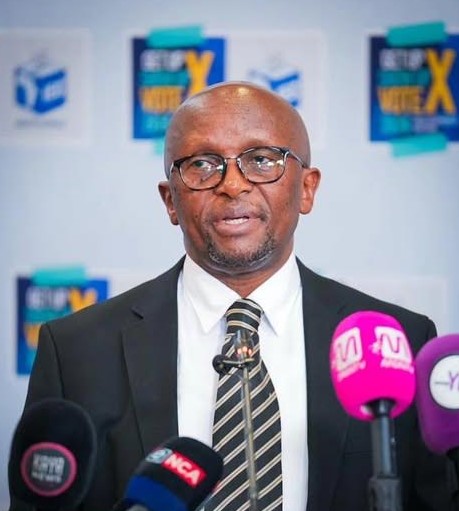
IEC chairperson Mosotho Moepya announced on Friday that two by-elections would follow decisions by the uMkhonto weSizwe (MK) Party and the African National Congress (ANC) to designate councillors who had won more than one ward seat to other wards.
The first involves Ward 12 in the Johannes Phumani Phungula Municipality in KwaZulu-Natal, where an MK Party candidate won more than one ward seat.
The second concerns Ward 13 in the Dihlabeng Municipality in the Free State, involving an ANC candidate.
Three further by-elections will be held following the deaths of ward councillors in Raymond Mhlaba Municipality in the Eastern Cape, Merafong Municipality in Gauteng and Umlalazi Municipality in KZN.
Moepya said the commission was also preparing to publish the names of councillors declared elected in the Government Gazette on Friday, a process that would pave the way for the inaugural sittings of municipal councils.
“The publication of the list of councillors today will enable planning for the inaugural sittings of municipal councils,” he said.
READ: IEC receives 1,708 election objections as Moepya warns against baseless claims of rigging
In terms of the Local Government: Municipal Structures Act, municipal managers must convene the first meetings of their respective councils within 14 days after councillors have been declared elected.
Moepya clarified that the 14-day period would begin once the councillors’ names had been gazetted.
Before publication, the IEC had to address issues involving political parties that had won more proportional representation (PR) seats than the number of candidates on their submitted lists.
The parties were notified on Monday and given until Wednesday to submit additional names to fill the shortfall.
However, Moepya said the process was not an opportunity for parties to change the order of their lists or replace candidates.
“This opportunity was for parties to provide the names and details of candidates to make up the shortfall and was not an opportunity for parties to change their lists or replace candidates,” he said.
The commission also notified parties and independent candidates who stood to be allocated more than one seat, requiring them to indicate which seat they wished to occupy.
Meanwhile, the IEC confirmed that four ward contests had been decided by lot after candidates received equal numbers of votes.
The ANC won Ward 7 in Mnquma Municipality in the Eastern Cape and Ward 5 in Ba-Phalaborwa Municipality in Limpopo.
The African Content Movement won Ward 14 in Maluti-a-Phofung Municipality in the Free State, while the South African Communist Party won Ward 17 in Steve Tshwete Municipality in Mpumalanga.
Moepya said the use of a lot was provided for in law to ensure that elections produced a definite outcome.
“An election must result in an outcome. Deadlock breaking mechanisms must exist,” he said.
The commission said the councillor gazette would exclude Siyancuma Municipality in the Northern Cape, where a revote has been ordered in a voting district in Ward 3.
Special voting for the revote is scheduled for 17 November, with voting taking place on 18 November.
Moepya said the municipality’s seat allocation and the identity of the winning candidates would only be finalised after the revote.
The IEC also confirmed that the Electoral Court had barred a candidate who impersonated an IEC official to gain access to election material in Ngqushwa Municipality in the Eastern Cape from holding councillor office for the five-year term of councils elected on 4 November.
The candidate’s accomplice was fined R100,000 and suspended for three years.
Moepya said the publication of the councillor lists would also allow the commission to proceed with preparations for the election of local council representatives to district councils.
Of the 1,701 district council seats available, 707 had already been filled through the district council proportional representation ballot, while the remaining 994 would be filled by local councillors electing representatives from among themselves.
The IEC is responsible for managing that election process.
INSIDE POLITICS






